Chervil (Anthriscus cerefolium)
If you’ve been struggling with sluggish digestion, lingering fatigue from a long winter, or the quiet frustration of blood pressure that won’t cooperate — you’re far from alone. For thousands of years, people across Europe and the Mediterranean have turned to a delicate, bright-green herb for gentle renewal. That herb is chervil — one of the most underappreciated plants in the Creator’s pharmacy.
This graceful herb, with its feathery leaves and subtle aroma of myrrh, is one of many quiet gifts embedded into creation for our benefit. Long before clinical trials and nutrition databases, chervil was already here — provided by a Designer who knew that after every long winter, our bodies would need a gentle hand to guide them back to vitality.
The Plant
Common Names: Chervil, French Parsley, Garden Chervil, Gourmet’s Parsley, Rich Man’s Parsley
Botanical Name: Anthriscus cerefolium (L.) Hoffm.
Family: Apiaceae (Umbelliferae) — the carrot and parsley family, known for aromatic foliage, umbel-shaped flower clusters, and hollow stems
Description
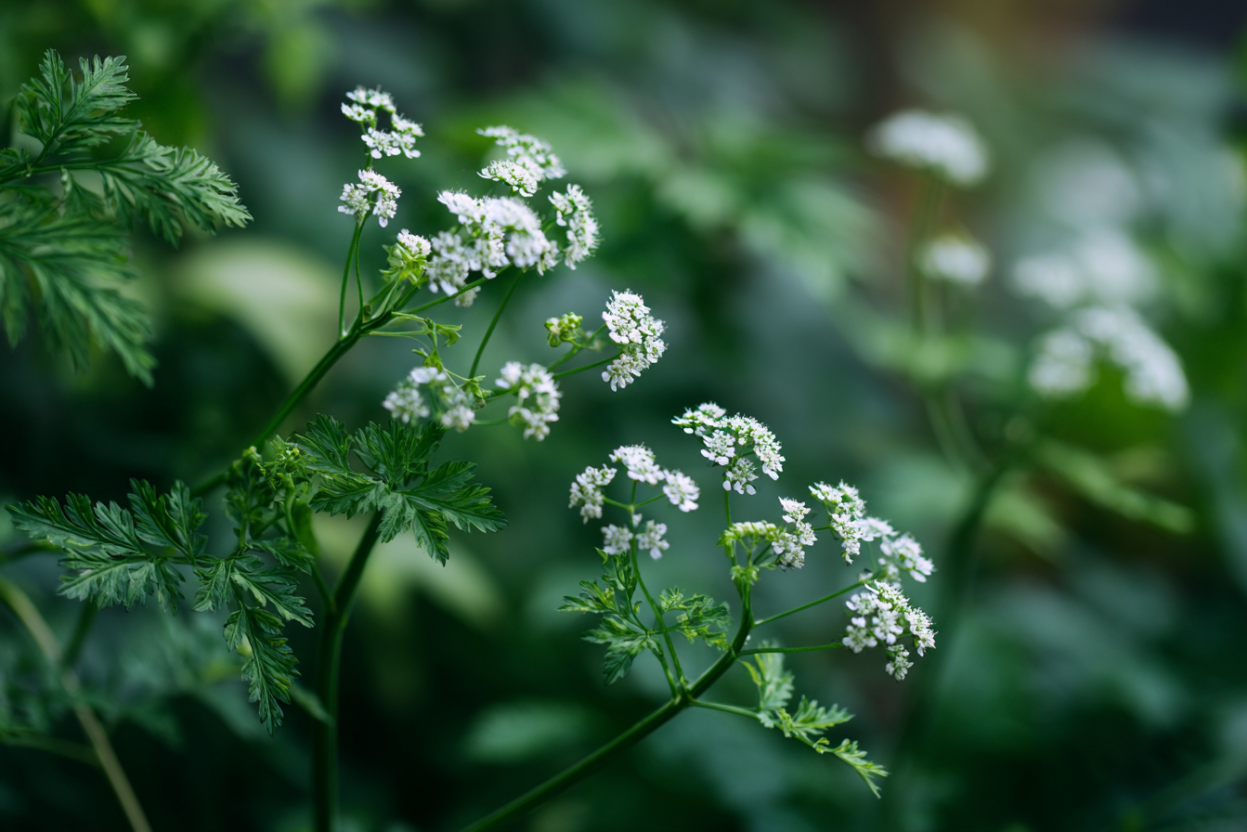
Chervil is a delicate, graceful herb that grows 40–70 cm (16–28 inches) tall. Its leaves are finely divided — tripinnate — resembling a more refined, lighter-colored version of flat-leaf parsley or carrot tops. The foliage is bright to pale green, feathery and lace-like, with a gentle, almost fern-like quality that sets it apart from its sturdier relatives.
Small white flowers appear in late spring to early summer, arranged in tiny umbels (flat-topped clusters) measuring 2.5–5 cm across — a miniature version of the Queen Anne’s Lace pattern common in the Apiaceae family. The fruits are oblong-ovoid, about 1 cm long, with a slender, ridged beak that distinguishes chervil from similar species in the genus. Beneath the soil, chervil develops a long, slender taproot — a feature that makes transplanting difficult but anchors the plant firmly in its preferred cool, moist ground.
Two main varieties exist: a plain-leaved form and a curly-leaved form. The plain variety tends to carry more flavor, while the curly variety is often used as an ornamental garnish. A third variety, the Brussels Winter (Vertissimo), is darker green and slower to bolt, making it ideal for cooler-season growing.
Origin
Chervil’s native range centers on the Caucasus region and extends across southeastern Europe and southwestern Asia — from Switzerland in the west to Iran in the east. The Romans are credited with spreading chervil throughout most of Europe during the expansion of their empire, cultivating it both as a culinary herb and for its gentle medicinal properties. By 1597, it was being cultivated in England, and by 1806 it had arrived in North America.
Today, chervil grows wild or cultivated across most of Europe, North Africa, and temperate regions of North America. It naturalizes readily in cool, partially shaded environments — woodland edges, hedgerows, and moist garden beds — wherever conditions remind it of its ancestral home.
Brief History
The name “chervil” traces through Anglo-Norman from the Latin chaerephylla, itself derived from the Greek chairephyllon — meaning “leaves of joy” or “leaves of delight.” This name reflects both the plant’s pleasant aroma and the sense of renewal it has carried through the centuries. The Romans once called it myrhis because its volatile oil carried an aroma reminiscent of myrrh — a connection that hints at something sacred about even this humble kitchen herb.
The first-century Roman naturalist Pliny the Elder documented chervil as a remedy for hiccups when infused with vinegar. The seventeenth-century Danish scientist Simon Paulli reported its use against gallstones. Throughout medieval Europe, chervil was cultivated in monastery gardens — those quiet repositories of botanical knowledge — where monks preserved the art of herbal healing through centuries of upheaval. In European folk tradition, chervil symbolized new life and renewal, linking it to Easter ceremonies and the return of spring.
Growing & Cultivation
Climate & Zones
Chervil thrives in USDA Hardiness Zones 3 through 7, where cool, moist conditions prevail. In warmer zones (8–10), chervil performs best as a fall, winter, and early spring crop — it bolts rapidly in summer heat. This is a cool-season herb at heart, preferring temperatures between 50°F and 65°F (10°C–18°C). It can tolerate light frost, making it one of the first herbs you can sow in spring and one of the last to linger in autumn.
For gardeners in Zone 8 and above — including much of Georgia — plant chervil in late September through early November for a winter and early spring harvest. Provide afternoon shade and consistent moisture to extend its productive life.
Soil Requirements
Chervil prefers humus-rich, well-draining loam — the kind of soil that holds moisture without becoming waterlogged. A pH range of 6.0–7.0 is ideal. Amend heavy clay soils with aged compost to improve drainage and texture. For container growing, use a high-quality potting mix enriched with compost, and choose a deep pot (at least 10 inches) to accommodate the taproot.
Water & Sunlight
Keep the soil consistently moist but never soggy. Chervil’s greatest enemy is drought — once the soil dries out, the plant shifts into survival mode and bolts to seed. Water at the soil level in the morning when possible, and apply organic mulch to retain moisture and regulate soil temperature. Container-grown plants need more frequent watering.
Unlike many herbs that demand full sun, chervil actually prefers partial shade — four to six hours of gentle morning sunlight with afternoon protection is ideal. In hot climates, dappled shade beneath taller plants or a shade cloth is essential. This makes chervil a perfect understory herb, thriving in spots where sun-loving herbs like basil would struggle.
Propagation
Seed (Preferred Method): Direct sow chervil seeds outdoors as soon as the soil can be worked in spring, or in late summer for a fall crop. Sow seeds ¼ inch deep and 3 inches apart. Seeds require some light to germinate, so press them gently into fine soil or cover lightly with vermiculite. Germination takes 7–14 days in soil temperatures of 60–65°F (15–18°C). Thin seedlings to 6–12 inches apart once they’re a few inches tall.
For continuous harvest, succession sow every 2–4 weeks throughout the growing season. Chervil does not transplant well due to its long, delicate taproot. If starting indoors, use biodegradable peat pots that can be planted directly into the ground without disturbing the root. Chervil also self-sows readily when allowed to flower, providing a naturalized patch that returns on its own.
Planting
Space plants 6–12 inches apart in rows at least 12 inches apart. Chervil works beautifully interplanted between taller crops like cabbages, kale, or tomatoes that provide natural shade. Because it resists transplanting, plan your planting location carefully from the start.
Harvesting
Begin harvesting 6–8 weeks after sowing, when plants reach about 6 inches tall. Snip outer leaves first, allowing inner growth to continue. Harvest before the plant begins to flower — once flowers appear, the leaves become bitter and the plant’s energy shifts to seed production. The best flavor is found in young leaves harvested in the morning after the dew has dried.
Pinch off flower stalks as soon as they appear to extend the productive life of each plant. When flowers are allowed to develop, the plant will complete its lifecycle and die back.
Drying & Storage
Chervil is notoriously difficult to preserve — its delicate volatile oils dissipate rapidly during drying. For best results, use fresh whenever possible. For longer storage, freezing is far superior to drying. Chop fresh leaves and freeze in ice cube trays with a small amount of water or olive oil. Frozen chervil retains much more flavor than dried.
If drying, use a low-temperature dehydrator (95–105°F) and process quickly. Store dried chervil in airtight glass jars away from light and heat. Expect dried chervil to retain only a fraction of its fresh flavor — plan to use it within 3–6 months.
Pest & Disease Management
Chervil is relatively pest-resistant and actually helps protect its garden neighbors. It repels slugs and is said to deter ants and aphids from nearby lettuce. Aphids are the most common pest — manage them with a strong spray of water, insecticidal soap, or by encouraging beneficial insects like ladybugs and lacewings. Grow companion plants such as coriander to attract aphid predators.
The moist, shaded conditions chervil prefers can invite slugs and snails to attack young seedlings. Use organic slug controls, copper barriers, or hand-picking in the evening. Ensure adequate air circulation to prevent fungal issues. Chervil has few serious disease problems when grown in appropriate conditions.
Companion Planting
Chervil is an excellent companion plant for brassicas (cabbage, kale, broccoli), lettuce, and radishes. It improves the flavor of radishes when planted nearby and provides ground-level shade that helps retain soil moisture for its companions. Avoid planting near herbs that prefer hot, dry conditions (like oregano or rosemary), as their growing requirements conflict.
The Healing of Growing
Growing chervil offers benefits that begin long before the first harvest. The act of gardening — hands in soil, the quiet rhythm of sowing and tending — has been shown to reduce cortisol, improve mood, and support immune function. The soil itself contains Mycobacterium vaccae, a beneficial bacterium with documented antidepressant effects. When you grow your own chervil, you receive healing before you ever taste it.
Nutritional Profile
Macronutrients
Per 100g of dried chervil (USDA data): approximately 237 calories, 23.2g protein, 49.1g carbohydrates, 11.3g dietary fiber, 3.9g fat (with no cholesterol), and 7.2g water. Fresh chervil is significantly lower in calories — roughly 40 calories per 100g — because of its high water content. While chervil is used as a seasoning rather than a staple food, its nutrient density per gram is remarkable.
Vitamins
Vitamin A: Dried chervil provides approximately 195% of the recommended daily value per 100g, primarily through beta-carotene and other carotenoids including zeaxanthin, lutein, and cryptoxanthin. These compounds support healthy vision, protect cells from oxidative damage, and play a role in immune function and skin integrity.
Vitamin C: Approximately 83% DV per 100g dried. Vitamin C is a powerful antioxidant essential for collagen production, immune defense, and the absorption of iron from plant sources. It also supports the body’s ability to combat free radical damage at the cellular level.
Folate (Vitamin B9): Approximately 69% DV per 100g dried. Folate is critical for DNA synthesis, cell division, and proper fetal development. It also plays a role in the conversion of homocysteine — an amino acid linked to cardiovascular risk when elevated.
Pyridoxine (Vitamin B6): Approximately 71% DV per 100g dried. Pyridoxine supports over 100 enzyme reactions in the body, particularly those involved in protein metabolism, neurotransmitter synthesis (including serotonin and dopamine), and immune function.
Chervil also contains meaningful amounts of riboflavin (B2), niacin (B3), thiamin (B1), pantothenic acid (B5), and choline — all B-vitamins that function as co-enzymes in the metabolism of carbohydrates, fats, and proteins.
Minerals
Iron: 31.95mg per 100g dried (approximately 178% DV). Iron is essential for the production of hemoglobin, the oxygen-carrying protein in red blood cells. Chervil is one of the richest herbal sources of iron — a remarkable provision for those prone to anemia or fatigue.
Potassium: 4,740mg per 100g dried. Potassium is an essential electrolyte that helps regulate heart rate, blood pressure, and fluid balance. It counteracts the effects of excess sodium, supporting cardiovascular health.
Calcium: 1,346mg per 100g dried (approximately 135% DV). Calcium supports bone density, muscle contraction, nerve signaling, and blood clotting. The vitamin C in chervil may assist calcium absorption.
Manganese: 2.10mg per 100g dried (approximately 117% DV). Manganese is a co-factor for the antioxidant enzyme superoxide dismutase and supports bone formation, blood clotting, and metabolism.
Magnesium: 130mg per 100g dried (approximately 46% DV). Essential for over 300 enzymatic reactions in the body, magnesium supports muscle and nerve function, blood sugar regulation, and bone health.
Additional minerals include phosphorus (450mg, 75% DV), zinc (approximately 80% DV), copper, and selenium.
Phytonutrients & Active Compounds
Apiin (Apigenin 7-O-apiosylglucoside): The dominant flavonoid in chervil. Apigenin, the aglycone form, has been studied for neuroprotective properties and may help protect against neuronal damage. Research suggests apigenin may support cognitive health and has demonstrated anxiolytic (anxiety-reducing) and anti-inflammatory effects in preclinical studies.
Luteolin 7-glucoside: A flavone identified in chervil with documented antioxidant and anti-inflammatory activity. This compound has been shown to help protect cell membranes from oxidative damage.
1,3-Dicaffeoyl-5-malonyl-δ-quinide: A novel polyphenolic compound first characterized in chervil by Norwegian researchers in 2022 — a previously undescribed compound unique to this plant. Chervil contains 1,260 mg gallic acid equivalents per 100g dry matter of total phenolics, placing it among the most phenolic-rich culinary herbs.
Coumarins: Naturally occurring compounds with potential anti-inflammatory and blood-thinning properties.
Estragole (Methyl Chavicol): The primary volatile oil compound, also found in basil and tarragon. Estragole contributes to chervil’s mild anise-like flavor and has demonstrated antiseptic properties.
Falcarindiol-3-acetate: A polyacetylene compound reported to possess antibacterial properties, particularly against E. coli, S. aureus, and H. pylori.
Nutrient Notes
Chervil’s iron content is best absorbed when paired with vitamin C-rich foods — conveniently, chervil itself provides both. The carotenoids (vitamin A precursors) are fat-soluble, so consuming chervil with a small amount of healthy fat (olive oil, butter) improves their bioavailability. As a member of the Apiaceae family, chervil shares many nutritional characteristics with parsley but offers a gentler, more delicate flavor profile that makes it versatile in dishes where parsley might dominate.
Connection to Body Compounds
The B-vitamins in chervil — particularly B6 and folate — support the synthesis of serotonin and dopamine, neurotransmitters critical for mood regulation. The high potassium and magnesium content may help regulate cortisol and support the nervous system’s ability to manage stress. Chervil’s nitrate content contributes to nitric oxide production — essential for vascular health and cardiovascular function.
Culinary Uses
Edible Parts
Leaves: The primary culinary part. Used fresh as a garnish, seasoning, and salad green. The flat-leaved variety has the strongest flavor. Young leaves are sweetest; older leaves develop more pronounced anise notes.
Stems: Tender young stems are edible and carry similar flavor to the leaves, though milder. Use in soups and stocks.
Flowers: The tiny white flowers are edible and make a beautiful garnish, though they signal the end of the plant’s best-tasting leaf production.
Roots: Technically edible but thin and not particularly flavorful in garden chervil. (Note: turnip-rooted chervil, Chaerophyllum bulbosum, is a different species grown specifically for its root.)
Flavor Profile
Chervil’s flavor is subtle, refined, and nuanced — often described as a delicate blend of parsley and tarragon with soft hints of anise, mint, and pepper. The aroma carries a gentle warmth reminiscent of myrrh. The flavor is mild enough to complement delicate dishes without overpowering them, which is why French chefs have long considered it essential. When cooked, the flavor diminishes quickly — chervil is best added at the very end of cooking or used raw. When dried, it loses most of its character, retaining only a shadow of its fresh personality.
Preparation
Always use chervil fresh whenever possible — this is its natural state of expression. Add it as the final touch to warm dishes, stirring in just before serving. Never subject chervil to prolonged heat, as this destroys its delicate volatile oils. For salads, scatter whole sprigs or gently torn leaves. For sauces, stir into the finished preparation off the heat.
Chervil is a foundational herb in the classic French blend fines herbes — equal parts chervil, chives, parsley, and tarragon. This blend is used in omelets, fish dishes, cream sauces, and compound butters. Chervil is also traditional in Béarnaise sauce, hollandaise, beurre blanc, and many vinaigrettes.
Culinary Pairings
Chervil pairs beautifully with eggs (omelets, scrambled eggs, quiche), fish (especially white fish and shellfish), chicken, spring vegetables (peas, asparagus, carrots, new potatoes), butter and cream-based sauces, soft cheeses, and delicate greens like butter lettuce. It also complements carrots, leeks, and sorrel. Pair with light fats — butter, olive oil, crème fraîche — that carry its gentle flavor without masking it.
Storage
Store fresh chervil wrapped in a damp paper towel inside a loosely sealed bag in the refrigerator for up to one week. For longer storage, freeze chopped leaves in ice cube trays with water or oil. Dried chervil should be stored in airtight glass containers away from heat and light, but use it within a few months — it fades quickly.
Ready to cook with chervil? View Recipes on Chefts →
Wellness & Therapeutic Uses
Traditional Uses
Chervil’s medicinal history stretches back thousands of years. The ancient Greeks used young chervil leaves in spring tonics to revitalize the body after winter — combining chervil with dandelion and watercress to address vitamin and mineral deficiencies. Pliny the Elder (23–79 CE) recommended chervil infused in vinegar to cure hiccups. The seventeenth-century herbalist Nicholas Culpeper praised it for warming “old and cold stomachs.”
In European folk medicine, chervil has traditionally been used as a digestive aid, a mild diuretic, an expectorant, and a blood purifier. It was employed to support kidney and bladder health, ease menstrual discomfort, settle the stomach, and promote gentle detoxification. European herbalists used chervil poultices for slow-healing wounds and as a wash for sore or inflamed eyes. The fresh juice was applied to skin conditions including eczema and chronic skin irritations.
In Traditional Chinese Medicine and Ayurvedic traditions, plants with similar profiles to chervil — cooling, mildly bitter, aromatic — are valued for clearing heat, supporting digestion, and gently moving stagnant energy.
Modern Research
Antioxidant Activity: Multiple studies have confirmed that chervil extracts demonstrate significant antioxidant and free radical-scavenging properties. A study published in the Journal of Ethnopharmacology (2000, Hungary) found that aqueous chervil extracts showed strong antilipoperoxidant activity in rat brain homogenates, along with effective hydroxyl radical scavenging. The herb extracts outperformed root extracts in all experiments. A 2022 Norwegian study published in Scientific Reports confirmed that chervil contains 1,260 mg gallic acid equivalents per 100g dry matter of total phenolics — comparable to parsley and placing it among the most antioxidant-rich culinary herbs.
Antimicrobial Properties: Research indicates that compounds found in chervil — particularly falcarindiol and the lignan deoxypodophyllotoxin — demonstrate antibacterial activity against E. coli, S. aureus, and H. pylori. A 2024 Serbian study published in Fitoterapia applied a broad spectrum of bioactivity tests on A. cerefolium extract and confirmed uniform and moderate antibacterial and antifungal potential.
Anti-inflammatory Potential: The flavonoids apigenin and luteolin 7-glucoside found in chervil have been studied for anti-inflammatory effects. The same 2024 Serbian study assessed anti-inflammatory activity using a bacteria-mediated inflammation model and confirmed biological relevance of the extract’s phenolic compounds.
Cardiovascular Support: Chervil is recognized as one of the richest green leafy sources of dietary nitrate, which the body converts to nitric oxide (NO) — a critical molecule for blood vessel dilation, blood pressure regulation, and cardiovascular function. Research suggests that adequate dietary nitrate intake may support healthy blood pressure and circulation.
Neuroprotective Potential: The flavonoid apigenin, a major constituent of chervil, has been studied for neuroprotective properties. Research suggests apigenin may help protect against neuronal damage and has shown promise in preclinical models of neurodegenerative conditions.
Body Systems Supported
Digestive System: Chervil has been traditionally valued as a digestive aid. Its mild carminative properties may help ease gas and bloating, while its volatile oils gently stimulate gastric secretions.
Cardiovascular System: Through its high nitrate content supporting nitric oxide production, its potassium content supporting blood pressure regulation, and its antioxidant compounds protecting blood vessels from oxidative damage.
Urinary System: Traditional use as a mild diuretic supporting kidney and bladder function.
Respiratory System: Historically used as an expectorant to ease congestion and support mucus clearance.
Immune System: High vitamin C and A content, combined with antimicrobial volatile oils, may support general immune function.
Integumentary System (Skin): Traditional use as a poultice for wounds and skin conditions. Antioxidant compounds may support skin health from the inside.
Nervous System: Apigenin and B-vitamin content may support cognitive function and calm the nervous system.
Body Compounds Affected
Research and traditional use suggest chervil may influence several key body compounds. Its B-vitamin content (particularly B6 and folate) supports the synthesis of serotonin and dopamine. Its high nitrate content supports nitric oxide production in the vascular system. The magnesium and potassium may help modulate cortisol response. The flavonoid apigenin has been shown to interact with GABA receptors in preclinical research, which may partially explain its traditional use as a calming herb.
Methods of Use
Tea/Infusion
Use 1–2 tablespoons of fresh chervil leaves (or 1 teaspoon dried) per cup of hot water (not boiling — 170–180°F is ideal to preserve delicate volatile oils). Steep covered for 5–10 minutes. Drink 1–3 cups daily. Traditionally used to support digestion, ease bloating, and promote gentle detoxification.
Fresh Juice
The fresh juice of chervil has been used traditionally as a spring tonic — often combined with the juice of dandelion and watercress. This combination was valued across Europe for its mineral-replenishing and liver-supporting properties.
Poultice/Compress
Bruised fresh leaves may be applied as a poultice to slow-healing wounds. A warm poultice has been traditionally applied to painful joints. An infusion of fresh leaves was historically used as an eyewash for sore or inflamed eyes (consult a practitioner before using any preparation near the eyes).
Culinary Medicine
One of the most accessible ways to receive chervil’s benefits is simply to eat it — generously and often. Add it fresh to soups, salads, eggs, and sauces. The French tradition of fines herbes is essentially culinary medicine in its most elegant form.
This information is for educational purposes only and is not intended to diagnose, treat, cure, or prevent any disease. Always consult with a qualified healthcare provider before making changes to your health regimen.
Cosmetic & Beauty Uses
Skin Benefits
Chervil has a long history of topical use for skin health. Its antioxidant compounds — particularly vitamin C, carotenoids, and flavonoids — may help protect skin cells from oxidative stress and support a healthy, even complexion. Traditionally, chervil was used as a skin cleanser and was applied to address inflammatory skin conditions including eczema, acne, and general irritation. Pregnant women in European folk tradition bathed in chervil infusions as a skin softening treatment.
Chervil may benefit oily, combination, and acne-prone skin due to its gentle astringent and anti-inflammatory properties. Its mild nature also makes it suitable for sensitive skin that cannot tolerate stronger botanicals.
Hair Benefits
A chervil tea rinse may help maintain a healthy scalp, reduce flakiness, and add subtle shine to the hair. The mineral content — particularly iron, zinc, and silica — supports hair health from within when consumed regularly as food.
Application Methods
Facial steam: Add a handful of fresh chervil to a bowl of hot water, drape a towel over your head, and steam for 5–10 minutes. This opens pores and allows the herb’s volatile compounds to contact the skin gently.
Infused toner: Brew a strong chervil tea, cool completely, and use as a facial toner applied with a cotton pad. Store in the refrigerator for up to 5 days.
Poultice for skin irritation: Crush fresh leaves and apply directly to areas of redness, minor irritation, or insect bites.
Bath addition: Add a generous handful of fresh chervil or a strong chervil infusion to bath water for a whole-body skin treatment.
DIY Formulation Notes
Chervil’s delicate nature means its compounds are best extracted in water or light carrier oils (jojoba, grapeseed). Avoid high-heat processing. Homemade chervil preparations have a short shelf life — use within 3–5 days when stored refrigerated. Pair with chamomile or calendula for enhanced soothing effects.
Chervil is among the botanicals being explored for holistic cosmetic applications, where the wisdom of traditional beauty practices meets modern understanding of skin science.
Aromatherapy & Scent
The Aroma
Fresh chervil emits a subtle, warm, and complex aroma — gentle enough to require proximity to fully appreciate. The scent is often described as a delicate blend of parsley, anise, and myrrh — sweet, slightly herbal, with a faint licorice undertone and a warm, almost resinous quality that earned it the ancient name myrhis. The scent is strongest when the leaves are gently crushed between the fingers, releasing their volatile oils, and during the morning hours when the plant is at peak freshness.
When dried, chervil’s aroma diminishes significantly — perhaps more so than any other common culinary herb. This is because its primary volatile compounds (estragole, methyl eugenol, undecane) are highly volatile and evaporate quickly at room temperature. Fresh or freshly crushed chervil is always the aromatic ideal.
How Scent Affects Your Body
When you inhale the gentle fragrance of chervil, volatile molecules released by the plant enter your nasal passages and contact olfactory receptors. These receptors send signals directly to the limbic system (the emotional brain) and hypothalamus (the hormone control center) — bypassing conscious thought entirely. This means the plant’s aroma can affect your emotional state and hormonal balance within seconds, before you even consciously register the scent.
Emotional & Mood Effects
Chervil’s aroma is generally considered calming, warming, and gently uplifting. Its subtle sweetness and anise undertone may promote a sense of comfort and well-being without being stimulating or sedating. The warmth of the scent aligns with its traditional description as a “warming herb” — one that soothes without exciting. In aromatherapy terms, it is a grounding, centering aroma that promotes quiet focus.
Body Compounds Affected
While specific research on chervil’s aroma and neurotransmitter effects is limited, related aromatic compounds (estragole, anise-type volatiles) have been associated with calming effects in aromatherapy research. The general profile suggests potential support for serotonin and a mild modulating effect on cortisol, consistent with the herb’s traditional reputation as a gentle nerve-calming plant.
Ways to Experience the Scent
Because chervil does not yield a commercially available essential oil, the best ways to experience its aroma are through direct interaction with the living or fresh plant: grow chervil on a windowsill and brush the leaves as you pass, crush fresh leaves between your fingers while cooking, add fresh sprigs to a bedside vase, simmer fresh chervil gently in water on the stove for a light room scent, or add fresh handfuls to a warm bath.
Color Therapy
The Colors of Chervil
Chervil’s dominant color is a bright, fresh green — ranging from pale, almost lime green in new growth to a deeper, richer green in mature leaves. The curly varieties tend toward lighter green, while the Vertissimo variety displays a notably darker green. Small white flowers appear in delicate umbels during blooming. The overall visual impression is one of lightness, freshness, and vitality — a plant that looks as gentle as it tastes.
Color Wavelengths
Green: 495–570nm — the center of the visible spectrum. Green light is the wavelength our eyes are most sensitive to, and it dominates natural environments. White: Full visible spectrum — the combination of all wavelengths, associated with clarity and purity.
How Green Affects the Body
Green is the color of balance, calm, and heart-centered energy in color therapy. Exposure to green wavelengths has been associated with reduced stress, lowered heart rate, and a sense of emotional equilibrium. Green is considered the most restful color for the human eye. Surrounding yourself with green plants — including chervil — taps into the biophilic response that humans have evolved over millennia: the deep, instinctive calming effect of being in a green, living environment.
Body Compounds Affected
Viewing green has been associated with reduced cortisol levels and activation of the parasympathetic nervous system (the “rest and digest” response). The visual presence of green plants may subtly support serotonin production and promote a state of calm alertness.
Using Chervil for Color Therapy
Grow chervil in a windowsill planter in your kitchen or work area to benefit from its green visual presence. Use fresh chervil sprigs as a garnish — the act of seeing green on your plate supports the eating experience at a wavelength level. Place potted chervil near areas where you need calm, focused energy. The white flowers, when present, add the purifying, full-spectrum quality of white to the visual experience.
Frequency & Vibration
The Frequency of Chervil
Specific MHz frequency measurements for chervil have not been widely documented in the existing bio-frequency literature. However, fresh herbs as a category are generally considered to vibrate at a higher frequency than processed or cooked foods. Living, fresh plants carry the highest frequencies in the plant kingdom — and chervil, with its delicate volatile oils and high water content, would fall within the range typical of fresh culinary herbs.
For reference, a healthy human body is measured at approximately 62–78 MHz, while fresh herbs as a category have been measured in ranges that support and maintain this healthy frequency range. According to bio-frequency research by Bruce Tainio, the frequency of the body drops when illness begins — to 58 MHz at the onset of a cold, and progressively lower with more serious conditions.
Human Frequency Interaction
Proponents of vibrational medicine suggest that consuming fresh, living foods — like chervil straight from the garden — may help support and maintain the body’s natural frequency. The principle of entrainment holds that a stronger or more coherent frequency can influence a weaker or less coherent one. Being around high-frequency living plants and consuming them fresh may contribute to an overall state of energetic vitality, though this is an area where research is still emerging.
Vibrational Applications
To benefit from chervil’s vibrational qualities, prioritize consuming it fresh and raw — this preserves the maximum energetic potential. Growing your own chervil and harvesting moments before eating maximizes the frequency of the plant material entering your body. Spending time near living chervil plants, particularly while gardening, combines the plant’s frequency with the grounding frequency of the earth itself.
The Living Plant
Benefits of Presence
There is something quietly restorative about having chervil in your space. Its bright green, feathery foliage creates a visual softness that invites the eye to rest. Research on biophilic design — the principle that humans benefit from contact with natural elements — supports what most gardeners already know: living plants in our environment reduce stress, improve focus, and create a sense of well-being that goes beyond aesthetics.
Air Purification
While chervil was not included in NASA’s Clean Air Study (which focused primarily on larger indoor foliage plants), all living green plants contribute to indoor air quality through photosynthesis — absorbing carbon dioxide and releasing oxygen. Chervil’s contribution is modest compared to larger houseplants, but as part of an indoor herb collection, it adds to the overall oxygenation and humidity regulation of your living space.
Phytoncides
Many aromatic plants release phytoncides — antimicrobial volatile organic compounds that protect the plant and, research suggests, benefit nearby humans. Chervil’s volatile oils (including estragole and methyl eugenol) are released in small amounts from the living plant, particularly when leaves are disturbed. While the concentration is subtle compared to coniferous forests studied in shinrin-yoku (forest bathing) research, any aromatic plant contributes to the phytoncide environment of your home.
Visual & Psychological Benefits
Studies consistently show that patients with views of green plants heal faster, office workers near plants report higher productivity and satisfaction, and students in environments with plants demonstrate improved attention. Even small herb plants like chervil on a windowsill provide these benefits. Caring for a living plant — watching it grow, tending it daily — activates the attention restoration system described by environmental psychologists as crucial for mental recovery from cognitive fatigue.
Growing Indoors vs Outdoors
Chervil is well-suited to indoor growing, particularly in cooler rooms with indirect light — conditions that actually match its preferences. A north or east-facing windowsill is ideal. Outdoors, chervil thrives in the filtered light beneath trees or taller crops. For maximum “living plant” benefit, keep a pot of chervil in your kitchen where you’ll see it, touch it, smell it, and harvest from it daily. This creates a living relationship with a plant that nourishes you through multiple channels simultaneously.
Touch & Physical Interaction
Gardening Therapy
Horticultural therapy — the therapeutic use of gardening activities — is an established practice recognized by healthcare institutions worldwide. Growing chervil engages all the principles of this modality: the quiet focus of sowing tiny seeds, the daily attention of watering and monitoring, the satisfaction of watching new growth emerge. Chervil’s fast germination (7–14 days) and quick time to harvest (6–8 weeks) make it especially rewarding for those new to gardening or those who benefit from seeing results promptly.
Soil Contact Benefits
When you garden barefoot or with bare hands, you benefit from grounding — direct contact with the earth allows the transfer of electrons that research suggests may reduce inflammation and improve sleep. The soil itself harbors Mycobacterium vaccae, a naturally occurring bacterium that studies have shown stimulates serotonin production in the brain, producing measurable antidepressant effects. Every time your hands touch soil while tending chervil, your microbiome receives beneficial exposure that modern indoor living often denies us.
The Tactile Experience
Chervil offers a particularly gentle tactile experience. The leaves are soft, thin, and feathery — almost lace-like between the fingers. Running your fingers along the finely divided foliage produces a light, delicate sensation and releases the plant’s subtle aroma simultaneously. The stems are slender and slightly crisp. Harvesting chervil is a mindful act — the leaves require gentle handling, which naturally slows you down and draws attention to the present moment.
Harvesting & Processing
The repetitive, meditative quality of pinching off chervil leaves — carefully selecting the outer growth, letting the inner leaves continue — is a form of moving meditation. Sorting fresh chervil for cooking, gently washing and patting the leaves dry, arranging sprigs on a dish — each step engages the senses and the hands in purposeful, calming activity. In a world of screens and abstraction, this kind of direct physical interaction with a living thing provides a grounding counter-balance that the body craves.
Water-Based Applications
Teas & Infusions
Standard Infusion: Place 1–2 tablespoons of fresh chervil leaves (or 1 teaspoon dried) in a cup. Pour hot water (170–180°F — not boiling) over the herb. Cover and steep for 5–10 minutes. Strain and drink. The resulting tea is mild, slightly sweet, and gently aromatic. Traditionally consumed 1–3 times daily to support digestion, ease bloating, and promote gentle cleansing.
Cold Infusion: For a more delicate extraction, place fresh chervil in cool water and allow to steep in the refrigerator for 4–8 hours. This method preserves the most volatile aromatic compounds and produces a refreshing, mild herbal water.
Herbal Baths
Add a generous handful of fresh chervil (or a quart of strong chervil tea) to warm bath water. Soak for 20–30 minutes. This was a traditional European practice for skin softening and general relaxation. A chervil foot bath — steeping the feet in warm chervil infusion — is a more accessible alternative that still provides topical benefits and relaxation.
Compresses
Warm compress: Soak a clean cloth in a warm, strong chervil infusion and apply to painful joints — a traditional application documented in European herbalism. Cool compress: A cool chervil-infused cloth applied to the forehead or eyes has been used traditionally to soothe irritation and refresh tired eyes.
Steam Inhalation
Add a handful of fresh chervil to a bowl of hot (not boiling) water. Drape a towel over your head and the bowl. Breathe gently through your nose for 5–10 minutes. This method was traditionally used to ease respiratory congestion and support clear breathing. The mild volatile oils in chervil make this a gentler option than more potent herbs like eucalyptus or peppermint.
Hair Rinses
Brew a strong chervil tea (double the usual amount), cool completely, and use as a final hair rinse after shampooing. This traditional practice may help maintain scalp health, add gentle shine, and leave a faint, pleasant herbal fragrance. Particularly suited for fine or delicate hair that may be weighed down by heavier herbal rinses.
Historical, Cultural & Biblical Significance
Biblical References
Chervil is not directly mentioned by name in Scripture. However, plants of the Apiaceae family — including related umbellifers — were well known in the biblical world and grew throughout the regions of ancient Israel and the surrounding lands. The broader principle of God’s provision through plants is woven throughout Scripture: “And God said, Behold, I have given you every herb bearing seed, which is upon the face of all the earth” (Genesis 1:29, KJV).
Ancient Civilizations
The ancient Greeks knew chervil well and used it medicinally for thousands of years — the tender young leaves formed the basis of spring tonics dating back to classical antiquity. Pliny the Elder (23–79 CE), in his encyclopedic Historia Naturalis, recommended chervil steeped in vinegar as a remedy for hiccups. The Romans are credited with spreading chervil throughout their empire, carrying it from its Caucasian homeland across Europe as both a culinary and medicinal herb. The Greek name anthriskos or anthriskon was used for the plant, and the species name cerefolium derives from the Greek chairephyllon — “leaf of joy” — reflecting the delight its aroma brought to those who encountered it.
The ancient Greeks observed that chervil provided gentle renewal to bodies weakened by winter. They documented these uses carefully. While they may not have known the Creator by name, they were observing His design — and their observations align with what modern research confirms about chervil’s nutritional and antioxidant properties.
Eastern Traditions
While chervil is not a primary herb in Traditional Chinese Medicine or Ayurvedic practice (both traditions developed independently with their own indigenous flora), its properties — cooling, mildly bitter, aromatic, and gently moving — align with principles valued in both systems. In Ayurvedic terms, chervil’s qualities would be considered supportive for Pitta-type conditions (excess heat, inflammation, irritability) due to its cooling, soothing nature.
European Heritage
During the Middle Ages, chervil was preserved and cultivated in monastery gardens across Europe — those quiet sanctuaries where monks maintained the botanical knowledge that might otherwise have been lost. It was particularly valued in French monastic cooking and healing traditions. By 1597, chervil was cultivated in England. The seventeenth-century Danish scientist Simon Paulli documented its use against gallstones in 1648. The renowned English herbalist Nicholas Culpeper praised chervil as a warming herb that “does much please and warm old and cold stomachs.”
In European folk tradition, chervil became linked with Easter and springtime renewal. It symbolized new life and was served in ceremonial spring meals — a beautiful echo of the resurrection symbolism that pervades the season. Holy Thursday soup, a traditional European dish served before Easter, featured chervil prominently. The herb became so deeply woven into French cuisine that it earned the title of one of the four essential fines herbes.
How Knowledge Was Preserved
Chervil’s story is one of quiet persistence. The Romans carried it across an empire. Monks tended it through the Dark Ages. French cooks elevated it to culinary art. Herbalists documented its properties generation after generation. Each culture received this gentle plant and passed its knowledge forward — an unbroken chain of observation reaching back millennia, all rooted in the same truth: this plant was designed to serve the human body.
Cultural Symbolism
Across European cultures, chervil has symbolized new life, joy, and renewal. Its very name — “leaves of joy” — encodes this meaning. It was served at Easter meals, associated with spring’s return, and given to those recovering from illness as a symbol of revitalization. In the language of flowers, chervil represents sincerity and the quiet, unassuming gifts that carry the greatest nourishment.
Safety & Precautions
Contraindications
Chervil is generally recognized as safe (GRAS) for culinary use. It can be consumed in normal food amounts without known danger. However, concentrated preparations (tinctures, high-dose extracts) should be used with more caution, as the effects of large doses have not been well studied.
Drug Interactions
Blood Thinners (Anticoagulants): Chervil contains vitamin K, which plays a role in blood clotting. Those taking warfarin or similar medications should maintain consistent intake rather than dramatically increasing or decreasing consumption, and should inform their healthcare provider about any dietary changes.
Diuretic Medications: Due to chervil’s mild diuretic properties, combining it with prescription diuretics could theoretically increase fluid loss. This is unlikely to be clinically significant at culinary doses but merits awareness for those using concentrated preparations alongside diuretic medications.
Blood Pressure Medications: Chervil has been traditionally associated with blood pressure support. If taking antihypertensive medications, be aware that combining them with regular, concentrated chervil preparations could have additive effects.
Pregnancy & Nursing
Chervil in normal culinary amounts is generally considered safe during pregnancy and nursing. However, concentrated preparations (strong teas, tinctures, supplements) have not been adequately studied in pregnant or breastfeeding women. Not recommended in therapeutic doses during pregnancy or breastfeeding without guidance from a qualified healthcare provider. Some historical sources note that chervil was used by pregnant women as a bath herb, but this should not be interpreted as blanket safety approval for all preparations.
Children
Chervil is generally safe for children in normal food amounts. It is a mild herb without the intensity of stronger botanicals. For therapeutic use (such as teas for digestive support), use reduced amounts — approximately half the adult amount for children over 6, and consult a healthcare provider for children under 6.
Elderly
Safe for elderly adults in culinary amounts. Those on multiple medications — particularly blood thinners, blood pressure medications, or diuretics — should be aware of the potential interactions noted above and consult their healthcare provider about regular, concentrated use.
Pets
Dogs: Non-toxic. The ASPCA lists chervil (Anthriscus cerefolium) as non-toxic to dogs.
Cats: Non-toxic. The ASPCA lists chervil as non-toxic to cats.
Horses: Non-toxic. The ASPCA lists chervil as non-toxic to horses.
While chervil is considered safe for pets, consumption of any plant material in large amounts may cause mild gastrointestinal upset. If your pet shows signs of vomiting or diarrhea after consuming chervil, discontinue access and consult a veterinarian.
Allergies & Sensitivities
Individuals with allergies to other members of the Apiaceae family — including parsley, celery, carrots, fennel, dill, and cilantro — may experience cross-reactive allergic responses to chervil. Reactions may include skin rashes, contact dermatitis, itching, or gastrointestinal distress. Chervil has been implicated in cases of phytophotodermatitis — skin reactions caused by plant compounds (psoralens/furocoumarins) activated by sunlight, particularly from contact with plant sap followed by UV exposure. While this is more commonly associated with wild chervil species, exercise caution when handling the plant in bright sunlight.
Perform a patch test before using chervil preparations topically, especially if you have sensitive skin or known plant allergies.
Dosing Guidelines
Culinary use: Unlimited within normal food seasoning amounts. Therapeutic tea: 1–3 cups daily of standard infusion. Concentrated preparations should be used under the guidance of a qualified herbalist or healthcare provider. There are no established maximum safe doses for chervil specifically, but moderation is always advisable with any herb used therapeutically.
Quality & Sourcing
Purchase fresh chervil from reputable growers or farmers’ markets. Look for bright green, unwilted leaves with firm stems. Avoid yellow, spotted, or limp foliage. When buying dried chervil, choose products in airtight, light-protected packaging from trusted suppliers. Growing your own is the best guarantee of quality and freshness.
CRITICAL WARNING: Chervil closely resembles several toxic plants in the same family, including young poison hemlock (Conium maculatum). Never forage wild chervil unless you are absolutely certain of the identification. The consequences of misidentification can be fatal. Always obtain chervil from cultivated, known sources.
Signs of Adverse Reaction
Mild reactions: Skin rash or itching at contact site, mild gastrointestinal discomfort. More serious reactions (rare): difficulty breathing, significant swelling, or severe skin blistering after sun exposure following contact — seek medical attention immediately.
Disclaimer
This information is for educational purposes only. It is not intended to diagnose, treat, cure, or prevent any disease. Always consult with a qualified healthcare provider before using any herbal product, especially if you are pregnant, nursing, taking medications, or have a medical condition. If you experience any adverse reaction, discontinue use immediately and seek medical attention.
Want Personalized Guidance?
Every body is unique. What works for one person may not be right for another. If you’d like personalized support in incorporating chervil into your wellness journey, consider working with a qualified practitioner who can assess your individual needs.
Sources & References
Peer-Reviewed Studies
- In vitro antioxidant activity of Anthriscus cerefolium L. (Hoffm.) extracts — Fejes S, et al. Journal of Ethnopharmacology, 2000; 69(3):259-65. Hungary.
- Free radical scavenging and membrane protective effects of methanol extracts from Anthriscus cerefolium L. (Hoffm.) and Petroselinum crispum — Fejes S, et al. Phytotherapy Research, 2000; 14(5):362-5. Hungary.
- A novel bicyclic lactone and other polyphenols from the commercially important vegetable Anthriscus cerefolium — Slimestad R, et al. Scientific Reports, 2022; 12:7805. Norway.
- Chemical profiling of Anthriscus cerefolium (L.) Hoffm., biological potential of the herbal extract, molecular modeling and KEGG pathway analysis — Stojković D, et al. Fitoterapia, 2024. Serbia.
- Chervil: A Multifunctional Miraculous Nutritional Herb — Asian Journal of Plant Sciences, 2012; 11(4):163-171.
- Antioxidant Activity of Different Compounds from Anthriscus cerefolium L. (Hoffm.) — Fejes S, et al. Acta Horticulturae (ISHS), 2003; 597:26. Hungary.
- Ethnomedicinal, Phytochemical and Pharmacological Profile of Anthriscus sylvestris as an Alternative Source for Anticancer Lignans — Molecules, 2015; 20(8):15003. Review covering the Anthriscus genus.
- Essential Oil Composition of Chervil Growing Wild in Hungary — Petri G, Lemberkovics E, et al. Acta Horticulturae (ISHS), 1993; 344:6. Hungary.
Traditional Medicine & Nutritional Sources
- Chervil: calories and nutritional value — Aprifel (Agency for Research and Information on Fruits and Vegetables), France.
- Anthriscus cerefolium — Chervil — Plants For A Future Database, UK.
- Chervil — Overview — ScienceDirect Topics (compilation of academic references).
- Anthriscus cerefolium (PROSEA) — Plant Resources of South-East Asia, PlantUse Database.
Institutional Sources
- Chervil: Non-Toxic to Dogs, Cats, Horses — ASPCA Animal Poison Control Center.
- Nutrition Facts for Chervil, Dried — Nutriely (based on USDA FoodData Central).
- Chervil, Anthriscus cerefolium — Fact Sheet — The Herb Society of America.
Historical References
- Pliny the Elder. Historia Naturalis, 77 CE. Book XX. (Earliest documented medicinal reference to chervil.)
- Paulli, Simon. Flora Danica, 1648. Denmark. (Documentation of chervil’s use against gallstones.)
- Culpeper, Nicholas. The Complete Herbal, 1653. England. (Chervil as a warming digestive herb.)