St. John’s Wort (Hypericum perforatum)
If you’ve been struggling with low mood, restless nights, or the weight of daily stress pressing down on your spirit, you are far from alone. Millions of people carry this burden quietly — and yet one of the most extensively researched plants on earth has been quietly growing in fields, roadsides, and meadows for thousands of years, waiting to offer support. St. John’s Wort is not a new discovery. It is an ancient gift, documented by Greek physicians, preserved by medieval monks, and now validated by hundreds of modern clinical studies across the globe.
This remarkable plant is one of the most powerful examples of the Creator’s pharmacy — a living testament to a Designer who knew that the human mind, heart, and body would need help long before modern medicine existed. Every golden flower, every translucent-dotted leaf, every drop of ruby-red oil reflects a wisdom that no laboratory invented — only discovered.
The Plant
Common Names: St. John’s Wort, Common St. John’s Wort, Perforate St. John’s Wort, Klamath Weed, Goatweed, Chase-Devil, Tipton’s Weed, Rosin Rose, Amber Touch-and-Heal
Botanical Name: Hypericum perforatum L.
Family: Hypericaceae (formerly placed in Clusiaceae/Guttiferae) — a family of flowering plants that includes over 400 species in the genus Hypericum alone.
Description
St. John’s Wort is an upright, herbaceous perennial that typically reaches 1 to 3 feet (30–90 cm) in height, with a spread of about 2 feet (60 cm). The plant grows from an extensive rhizomatous root system that allows it to form dense colonies over time. Stems are erect, many-branched, and distinctly ridged with two raised lines running along their length — a helpful identification feature.
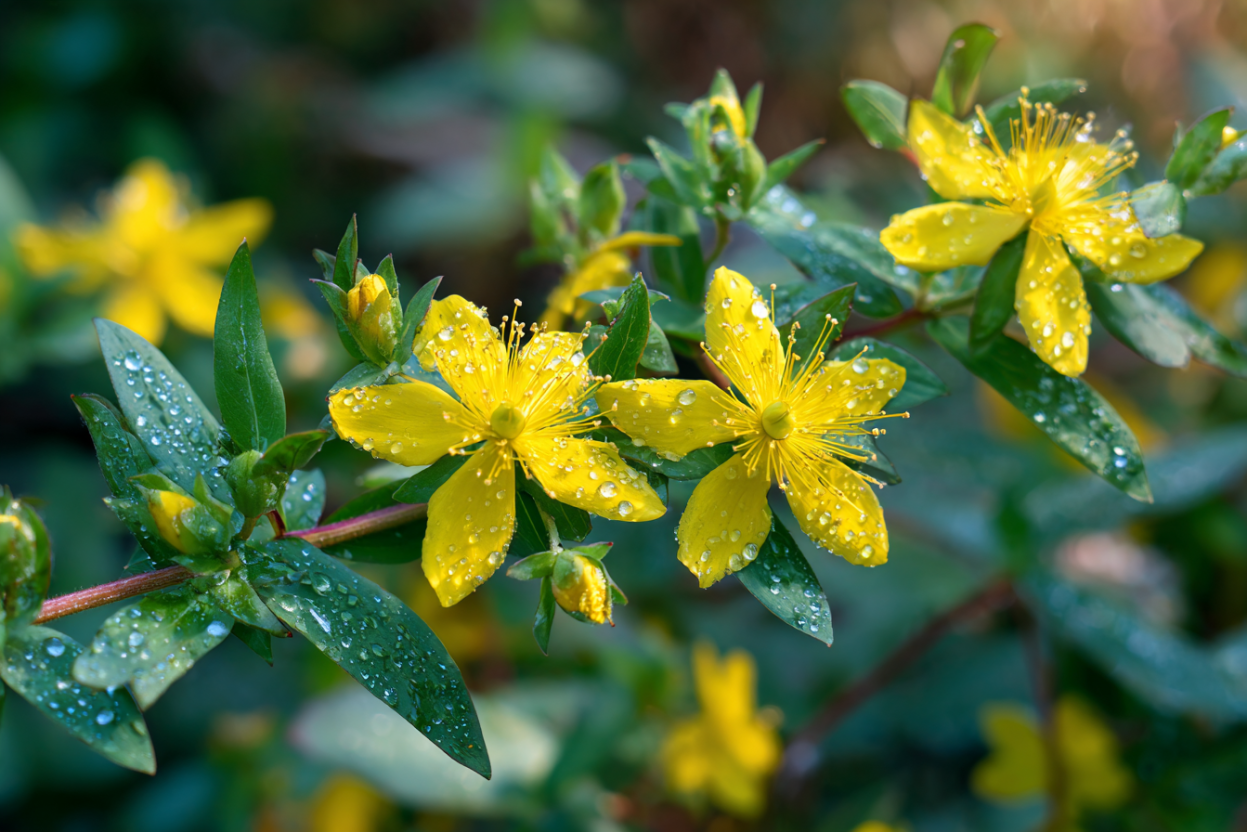
The leaves are the plant’s signature. They are opposite, oblong to elliptic, and appear to be covered in tiny pinpricks when held up to the light. These translucent dots are actually oil glands filled with hypericin and other compounds — hence the name perforatum, meaning “perforated.” Many leaves also have tiny black dots along their margins, which contain the naphthodianthrone compounds responsible for the plant’s deep red pigment.
The flowers are bright, cheerful yellow with five petals, each adorned with black dots along the margins. A burst of prominent stamens gives each bloom a fluffy, sunburst appearance. When the flower buds or petals are crushed between the fingers, they release a distinctive blood-red juice — a hallmark of true Hypericum perforatum and a sign of its hypericin content. Flowering typically occurs from June through August, often peaking around the summer solstice — the Feast of St. John the Baptist (June 24), which gave the plant its common name.
The fruit is a three-chambered capsule containing numerous small, dark brown seeds. A single plant can produce up to 100,000 seeds per year, and buried seeds can remain viable in soil for a decade.
Origin
St. John’s Wort is native to Europe, western Asia, and northern Africa. It has naturalized extensively across temperate regions worldwide, including North America (where it arrived with European settlers around 1696), South America, Australia, and New Zealand. In the United States, it is found in nearly every state, growing wild in meadows, roadsides, open woodlands, and disturbed soils. In several western states, it is classified as a noxious weed due to its vigorous spreading habit and toxicity to grazing livestock.
Brief History
The medicinal use of St. John’s Wort stretches back over 2,000 years. The ancient Greeks — including Hippocrates, Dioscorides, and Galen — documented its use for wound healing, nervous disorders, and what they called “melancholia.” Roman soldiers carried it for battlefield wounds. The genus name Hypericum likely derives from the Greek words hyper (above) and eikon (image), referring to the tradition of hanging the plant above religious images to ward off evil — a reflection of the plant’s long association with protection and light.
Through the medieval period, monasteries preserved the knowledge of St. John’s Wort in their herb gardens. It became one of the most important plants in European folk medicine. By the 16th and 17th centuries, herbalists like John Gerard and Nicholas Culpeper were documenting its use for wounds, bruises, and mental distress. The famous red oil — Oleum Hyperici — became a treasured household remedy across the Mediterranean and Balkans.
In modern times, Germany led the way in clinical research. By the 1990s, St. John’s Wort extracts were being prescribed by German physicians more frequently than conventional antidepressants for mild to moderate depression. Today, it is one of the most studied medicinal plants in the world, with hundreds of clinical trials, systematic reviews, and meta-analyses examining its effects.
Growing & Cultivation
Climate & Zones
St. John’s Wort is hardy in USDA Zones 3 through 10, making it adaptable to a remarkably wide range of climates. It thrives in temperate regions and can tolerate both heat and cold once established. In areas with harsh winters, the plant dies back to the ground and returns reliably from its rhizomatous root system each spring. It can be grown indoors in containers near a sunny window, though it performs best outdoors where it receives natural light cycles.
Soil Requirements
One of the most forgiving plants you will encounter, St. John’s Wort tolerates sandy, loamy, clay, rocky, and even chalky soils. It prefers well-drained soil but adapts to both moist and dry conditions, and can even tolerate occasional flooding. The ideal pH ranges from 5.8 to 7.2 (slightly acidic to neutral). In poor soils, no fertilizer is typically needed — in fact, overly rich soil can produce excessive foliage at the expense of flowers and medicinal potency. For container growing, a standard well-draining potting mix works well.
Water & Sunlight
Full sun to partial shade produces the best results, with full sun encouraging the most abundant flowering. The plant tolerates partial shade but may produce fewer blooms. It is notably drought-tolerant once established, though it benefits from supplemental watering during prolonged dry spells. Overwatering and waterlogged soil are its primary enemies — root rot can develop in consistently soggy conditions. Water deeply but infrequently, allowing the soil to dry between waterings.
Propagation
Seed: Surface-sow seeds in early spring or fall. Seeds require light to germinate — press them gently into the soil surface but do not cover them. Germination takes 10 to 20 days at temperatures around 65–70°F (18–21°C). Start seeds indoors 6–8 weeks before the last frost, or direct-sow outdoors after frost danger has passed. Seeds can also be fall-sown to benefit from natural cold stratification.
Division: Established clumps can be divided in spring or fall. Dig up a section of the rhizomatous root mass, separate into portions with healthy roots and shoots, and replant immediately.
Cuttings: Softwood cuttings taken in early summer root readily. Take 4–6 inch cuttings from new growth, remove lower leaves, dip in rooting hormone if desired, and place in moist potting mix. Roots typically establish within 3–4 weeks.
Planting
Space plants 12 to 24 inches apart. Plant in spring or fall when temperatures are moderate. Dig a hole slightly wider than the root ball, set the plant at the same depth it was growing in its container, backfill, firm gently, and water well. Be aware that Hypericum perforatum is a vigorous spreader — it self-seeds prolifically and spreads by underground rhizomes. Consider containing it in a dedicated bed, container, or area where its spreading habit is welcome. In several U.S. states it is classified as a noxious weed, so check local regulations before planting.
Harvesting
Harvest the flowering tops — the upper 6 to 8 inches of stems bearing open flowers and buds — when the plant is in peak bloom, typically around the summer solstice (late June). This is when the concentration of active compounds is highest. The best time to harvest is mid-morning after the dew has dried but before the heat of the day. To confirm you have true Hypericum perforatum, crush a flower bud between your fingers — it should produce a distinct reddish-purple stain from the hypericin content.
Regular harvesting encourages the plant to produce additional flushes of bloom throughout the summer. Cut with clean, sharp scissors or pruning shears. First-year seedlings typically do not produce flowers.
Drying & Storage
Bundle small bunches of flowering tops with string and hang upside down in a warm, dry, well-ventilated area away from direct sunlight. Drying typically takes 1 to 2 weeks depending on humidity. The dried herb can also be spread on screens in a single layer. When completely dry, the leaves should crumble easily and the flowers retain some yellow color. Store in airtight glass jars in a cool, dark place. Properly dried and stored St. John’s Wort retains potency for approximately one year. For making the traditional red oil (Oleum Hyperici), use fresh flowering tops — fresh material produces the characteristic blood-red infusion.
Pest & Disease Management
St. John’s Wort has very few pest or disease problems — its chemical compounds provide natural protection against many insects. The Chrysolina beetle (St. John’s Wort beetle) was actually introduced as a biological control agent in areas where the plant is considered invasive. Occasional issues include aphids, which can be managed with a strong spray of water or insecticidal soap. Root rot may develop in waterlogged soils — ensure good drainage. No serious fungal diseases are commonly reported.
Companion Planting
St. John’s Wort grows well alongside lavender, echinacea, yarrow, and other sun-loving meadow herbs. Its bright flowers attract beneficial pollinators including bees and butterflies. Avoid planting near shy, slow-growing species that may be crowded out by its vigorous habit.
The Healing of Growing
Growing St. John’s Wort offers benefits beyond the harvest itself. The act of gardening — hands in soil, bare feet on earth, time spent outdoors — has been shown to reduce cortisol, improve mood, and support immune function. The soil contains beneficial bacteria (Mycobacterium vaccae) with documented antidepressant effects. When you grow your own St. John’s Wort, you receive healing before you ever consume it. There is something fitting about growing a plant known for lifting the spirits while engaging in an activity that does the very same thing.
Nutritional Profile
St. John’s Wort is not typically consumed as a food for nutritional purposes in the way culinary herbs and vegetables are. However, its leaves and flowers are edible and have been used in teas, and the plant does contain notable phytonutrients and bioactive compounds that contribute to its therapeutic profile.
Phytonutrients & Active Compounds
The true nutritional significance of St. John’s Wort lies not in macronutrients but in its extraordinary array of bioactive phytochemicals. At least ten classes of pharmacologically active compounds have been identified in the plant:
Naphthodianthrones — Hypericin and pseudohypericin are the plant’s signature compounds, responsible for the characteristic red pigment. These compounds have demonstrated photodynamic, antiviral, and mood-supportive properties in research. Commercial extracts are typically standardized to 0.3% hypericin content.
Phloroglucinols — Hyperforin is now recognized as a primary contributor to the plant’s mood-supportive effects. It acts as a reuptake inhibitor affecting multiple neurotransmitter systems. Commercial extracts typically contain 2–4% hyperforin.
Flavonoids — Including rutin, quercetin, hyperoside, isoquercitrin, and kaempferol. These powerful antioxidants contribute to the plant’s anti-inflammatory and cell-protective properties. The biflavone amentoflavone (biapigenin) has been studied for its affinity for GABA receptors.
Proanthocyanidins (Procyanidins) — Tannin-like compounds that have antioxidant properties and may contribute to the plant’s overall activity.
Xanthones — Including mangiferin and related compounds with documented antimicrobial and antioxidant activity.
Phenylpropanes — Including chlorogenic acid, a well-known antioxidant compound found in many plants.
Essential Oil Components — Including β-caryophyllene, caryophyllene oxide, spathulenol, α-pinene, β-pinene, and α- and β-selinene. These volatile compounds contribute to the plant’s aroma and have their own therapeutic properties.
Nutrient Notes
The bioactive compounds in St. John’s Wort work synergistically — meaning the whole plant extract appears to be more effective than any single isolated compound. Research has shown that approximately 20% of the extractable compounds in the plant are considered biologically active. This complexity is one of the reasons the plant has such broad-spectrum effects — it is not a single-molecule drug, but a symphony of compounds working together as the Creator designed.
Culinary Uses
Edible Parts
The leaves and flowers of St. John’s Wort are edible and have been consumed in teas and infusions for centuries. The most traditional “culinary” use is as a tea herb — the dried or fresh flowering tops are steeped in hot water. The leaves have a mildly bitter, astringent flavor with herbaceous, slightly resinous undertones. The flowers add a subtle sweetness and honey-like note.
Flavor Profile
The taste is mildly bitter and astringent, with earthy, herbaceous notes and a slight balsamic quality. Fresh leaves have a more pronounced green, slightly resinous flavor. When dried, the bitterness mellows somewhat and the earthy, woody character becomes more dominant. The flavor is not typically used for culinary seasoning but rather for therapeutic infusions.
Preparation
St. John’s Wort is primarily prepared as a tea or herbal infusion. Use 1–2 teaspoons of dried flowering tops per cup of hot water, steeped for 10–15 minutes. It can also be infused into honey, vinegar, or oil. The famous Oleum Hyperici (St. John’s Wort oil) is made by steeping fresh flowering tops in olive oil in sunlight for 4–6 weeks until the oil turns a deep, vibrant red. This oil is used both topically and, in some traditions, as a culinary finishing oil.
Culinary Pairings
In tea blends, St. John’s Wort pairs well with lemon balm, chamomile, passionflower, lavender, and peppermint. Adding honey or lemon can soften the bitterness. It is occasionally used in herbal liqueurs and bitters in European traditions.
Storage
Fresh flowering tops should be used immediately for oil-making or dried promptly. Dried herb stores well for up to one year in airtight glass containers away from light and heat. The finished red oil stores for up to two years in dark glass bottles in a cool location.
Ready to cook with St. John’s Wort? View Recipes on Chefts →
Wellness & Therapeutic Uses
Traditional Uses
Few plants have a more thoroughly documented history of traditional use than St. John’s Wort. The ancient Greeks were the first to record its medicinal applications. Hippocrates and Dioscorides (1st century AD) described it as a remedy for melancholy, nervous disorders, and wounds. Galen prescribed it for similar purposes. Roman soldiers reportedly carried it to treat battlefield injuries.
In Traditional Chinese Medicine (TCM), St. John’s Wort has been used to clear heat, resolve toxins, and promote blood circulation. European folk medicine relied heavily on it throughout the medieval period, particularly as a wound-healing oil and a remedy for what was called “nervous exhaustion.” Nicholas Culpeper, the 17th-century herbalist, recommended it for wounds, bruises, and disorders of the urinary tract.
In the Balkan and Mediterranean traditions, the red oil macerate (Oleum Hyperici) has been used for centuries as a topical remedy for burns, wounds, cuts, skin ulcers, hemorrhoids, and muscle pain. This use continues today in Serbia, Turkey, Greece, and across southern Europe.
Native American tribes, after learning about the plant from European settlers, adopted it for wound care, snakebite treatment, and fever reduction. In Germany, it became so widely used by the late 20th century that physicians were prescribing it more than conventional antidepressants for mild to moderate depression.
Modern Research
Mood Support & Depression: This is the most extensively researched application. A landmark meta-analysis of 27 clinical trials involving 3,808 patients found that St. John’s Wort demonstrated comparable response and remission rates to standard SSRIs (selective serotonin reuptake inhibitors), with significantly lower dropout rates due to side effects (Ng et al., 2017, Journal of Affective Disorders, Singapore). An earlier systematic review and meta-analysis of 37 randomized controlled trials confirmed the plant extract was significantly more effective than placebo and similarly effective to standard antidepressants (Linde et al., 2005, British Journal of Psychiatry, Germany). The preponderance of evidence supports its use for mild to moderate depressive symptoms, while results for severe major depression have been more mixed.
Wound Healing & Skin Health: Topical St. John’s Wort preparations have demonstrated significant wound-healing, anti-inflammatory, and antimicrobial activity. Research shows that hyperforin stimulates collagen production, promotes fibroblast migration, and supports keratinocyte differentiation — all essential processes in tissue repair (Wölfle et al., 2014, Planta Medica, Germany). A randomized, placebo-controlled, double-blind study found that a cream containing hyperforin-standardized St. John’s Wort extract was significantly superior to placebo for treating mild to moderate atopic dermatitis (Schempp et al., 2003, Phytomedicine, Germany).
Anti-inflammatory Activity: Hyperforin has been identified as a potent inhibitor of 5-lipoxygenase and microsomal prostaglandin E2 synthase-1, key enzymes in the inflammatory cascade. This provides a molecular basis for the plant’s traditional use in inflammatory conditions.
Antimicrobial Properties: Both hypericin and hyperforin have demonstrated antibacterial activity, particularly against Gram-positive bacteria including Staphylococcus aureus and Streptococcus species. This supports the plant’s centuries-long use in wound care.
Antiviral Research: Hypericin has shown antiviral activity in laboratory studies, particularly against enveloped viruses. While in vitro results have been promising, clinical translation of these findings is still being investigated.
Anxiety & Nervous System Support: Research suggests that the flavonoid constituents, particularly amentoflavone, may interact with GABA receptors, contributing to the plant’s calming effects beyond its antidepressant properties.
Seasonal Affective Disorder (SAD): Studies have demonstrated that St. John’s Wort may help support mood during the darker months, consistent with traditional knowledge that associated it with light and the summer solstice.
Menopausal Support: Some research suggests that St. John’s Wort, alone or in combination with other herbs like black cohosh, may help ease menopausal symptoms including hot flashes, mood changes, and sleep disturbances.
Body Systems Supported
The nervous system is the primary body system supported by St. John’s Wort, encompassing mood regulation, sleep support, and nerve-related discomfort. The integumentary system (skin) is the second major system supported through the plant’s well-documented topical applications for wound healing, burns, and inflammatory skin conditions. Secondary support extends to the immune system (antimicrobial and antiviral properties), the digestive system (traditional use for stomach complaints), and the musculoskeletal system (topical use for muscle pain and inflammation).
Body Compounds Affected
St. John’s Wort is one of the few plants that has been shown to affect multiple neurotransmitter systems simultaneously — a mechanism that distinguishes it from most pharmaceutical antidepressants, which typically target a single pathway.
Serotonin: Hyperforin inhibits the reuptake of serotonin, allowing more of this “well-being” neurotransmitter to remain active in the synaptic space. Long-term administration has been shown to increase serotonin levels in the hypothalamus in animal studies (Butterweck et al., 2002, Brain Research, Germany).
Dopamine: St. John’s Wort preferentially increases extracellular dopamine levels in the prefrontal cortex. In microdialysis studies, a single dose increased dopamine concentrations to 140–165% of baseline values (Yoshitake et al., 2004, British Journal of Pharmacology, Sweden/Japan).
Norepinephrine: Hyperforin also inhibits norepinephrine reuptake, contributing to increased alertness and energy without the jittery effects of stimulants.
GABA: Hyperforin inhibits the reuptake of gamma-aminobutyric acid (GABA), the primary calming neurotransmitter. Additionally, the flavonoid amentoflavone may directly interact with GABA receptors (Zanoli, 2004, Pharmacological Research, Italy).
Glutamate: Hyperforin inhibits the reuptake of L-glutamate, the main excitatory neurotransmitter, which may contribute to neuroprotective effects.
Cortisol: Neuroendocrine research suggests that St. John’s Wort is involved in the regulation of genes controlling hypothalamic-pituitary-adrenal (HPA) axis function — the body’s central stress response system. Long-term use may help normalize cortisol patterns (Butterweck, 2003, CNS Drugs, Germany).
Inflammatory Markers: Topical application has been shown to reduce cytokines including TNF-alpha in inflammatory skin conditions. The hyperforin content inhibits prostaglandin synthesis through 5-lipoxygenase inhibition.
Methods of Use
Tea/Infusion
Use 1–2 teaspoons (1.5–3g) of dried flowering tops per cup of boiling water. Steep covered for 10–15 minutes. Strain and drink. For mood support, traditional use suggests 2–3 cups daily. Allow 4–6 weeks of consistent use for full effects.
Tincture
Tinctures are prepared using fresh or dried flowering tops macerated in alcohol (typically 45–60% ethanol). Standard dosage ranges from 2–4 mL (approximately 40–80 drops), taken 2–3 times daily. Many commercial tinctures are standardized to hypericin content.
Standardized Extract (Capsule/Tablet)
The most common standardized dose used in clinical research is 300 mg of extract (standardized to 0.3% hypericin), taken three times daily (900 mg total daily dose). Some preparations are additionally standardized to 2–4% hyperforin.
Infused Oil (Topical)
The traditional Oleum Hyperici is made by steeping fresh flowering tops in olive oil in sunlight for 4–6 weeks. The oil turns a deep ruby red as the hypericin and hyperforin infuse into the oil. This is applied topically to wounds, burns, bruises, sore muscles, nerve pain, and inflammatory skin conditions.
Poultice/Compress
A warm poultice of crushed fresh flowering tops or a compress soaked in strong infusion can be applied to wounds, bruises, and areas of muscular discomfort.
Cosmetic & Beauty Uses
Skin Benefits
St. John’s Wort has a long and well-documented history as a topical skin remedy. Hyperforin stimulates keratinocyte differentiation — the process by which skin cells mature and form the protective barrier of the skin. This makes St. John’s Wort valuable for supporting the skin’s natural repair processes. Research shows benefit for multiple skin concerns including wound healing, inflammatory skin conditions like eczema, minor burns, bruises, and dry or irritated skin. The anti-inflammatory and antimicrobial properties of both hypericin and hyperforin address redness, irritation, and bacterial contamination simultaneously.
Skin types that may benefit most include sensitive, irritated, dry, and mature skin. The anti-inflammatory action is particularly relevant for redness-prone and eczema-prone skin.
Hair Benefits
The anti-inflammatory and antimicrobial properties of St. John’s Wort oil can support scalp health, particularly for those experiencing itching, flakiness, or irritation. The infused oil can be used as a pre-wash scalp treatment. Additionally, the flavonoid antioxidants may help protect hair from environmental damage and support shine.
Application Methods
Infused Oil: The traditional red oil is the primary cosmetic preparation. Apply directly to skin for wound care, or add to bath water for a soothing soak. The oil can be used as a body oil, massage oil, or spot treatment.
Added to Creams/Lotions: St. John’s Wort extract or infused oil can be incorporated into homemade or commercial skincare products at 5–15% concentration.
Face Masks: Dried, powdered herb can be mixed with honey and yogurt for a soothing face mask for irritated or inflamed skin.
Bath Additions: Add 1–2 cups of strong St. John’s Wort infusion or 2 tablespoons of infused oil to bath water for a full-body soothing treatment.
DIY Formulation Notes
When incorporating St. John’s Wort into homemade products, the infused oil pairs well with carrier oils such as jojoba, sweet almond, and calendula oil. It blends beautifully with lavender, chamomile, and helichrysum essential oils. Important caution: hypericin is a photosensitizer. Products containing St. John’s Wort should not be applied before prolonged sun exposure, or sun protection should be used. Shelf life of homemade preparations using the infused oil is approximately 6–12 months when stored in dark glass bottles in a cool location. Adding a small amount of vitamin E oil can extend shelf life.
St. John’s Wort is among the botanicals being explored for holistic cosmetic applications, where the wisdom of traditional beauty practices meets modern understanding of skin science.
Essential Oil Profile
Note: True steam-distilled essential oil of Hypericum perforatum is not widely commercially available and should not be confused with the far more common St. John’s Wort infused oil (Oleum Hyperici), which is a maceration of the plant in a carrier oil. The two are very different products with different compositions and uses.
Extraction
When a true essential oil is produced, it is obtained by steam distillation of the fresh or dried flowering aerial parts. The yield is very low (approximately 0.05–0.3%), which makes the essential oil relatively rare and expensive. Due to this low yield, the infused oil macerate is far more commonly used and is the preparation most referenced in traditional and modern herbal practice.
Chemical Constituents
The steam-distilled essential oil contains primarily sesquiterpenes and monoterpenes including: β-caryophyllene (a sesquiterpene with anti-inflammatory properties), caryophyllene oxide, spathulenol, α-pinene, β-pinene, limonene, myrcene, α-selinene, β-selinene, and viridiflorol. The naphthodianthrones (hypericin) and phloroglucinols (hyperforin) that make the plant so therapeutically valuable are not present in the steam-distilled essential oil — they are not volatile enough to pass through the distillation process. They are, however, present in the infused oil macerate, which is why the macerate (not the essential oil) is the preferred preparation for therapeutic use.
Aroma Profile
The essential oil is classified as a middle note. The scent is warm, herbaceous, slightly sweet, and balsamic, with earthy and woody undertones. It blends well with lavender, clary sage, geranium, bergamot, and frankincense essential oils.
Therapeutic Properties
The essential oil, when available, has properties attributed primarily to its sesquiterpene content: anti-inflammatory, calming, mildly analgesic, and antimicrobial. However, for the full therapeutic profile associated with St. John’s Wort (mood support, wound healing, nerve support), the infused oil is the appropriate preparation.
How to Use
Infused Oil (Preferred Preparation)
Apply the ruby-red Oleum Hyperici directly to skin for wound care, nerve discomfort, muscle tension, bruises, and inflammatory skin conditions. For facial use, dilute with jojoba or rosehip seed oil due to photosensitivity concerns.
Topical Application (Essential Oil, if available)
Dilute at 2–3% in a carrier oil (approximately 12–18 drops per ounce of carrier oil). Apply to areas of tension or discomfort.
Quality & Sourcing
When purchasing St. John’s Wort oil, understand what you are buying. The infused oil should be a deep ruby-red color — if it is clear or pale, it likely has not been properly prepared or is of low quality. Look for preparations that specify “fresh flowering tops” and “olive oil” as the base. For standardized extracts, look for products specifying their hypericin (0.3%) and/or hyperforin (2–4%) content, with third-party testing (GC/MS for essential oil; HPLC for extracts).
Aromatherapy & Scent
The Aroma
The living St. John’s Wort plant has a distinct, somewhat complex scent — herbaceous and slightly balsamic when leaves and stems are brushed or crushed. Many describe it as warm, earthy, and mildly resinous. The flowering tops are more aromatic than the foliage. When handled extensively, the whole plant gives off a somewhat pungent odor that is characteristic of its volatile oil content. The scent is strongest during the heat of a summer day and when the plant is in full bloom.
When dried, the aroma mellows to a warm, hay-like quality with lingering herbaceous and slightly medicinal notes. Dried herb retains its aroma moderately well for several months but gradually fades. The infused oil has a rich, warm, earthy aroma that is quite different from the fresh plant — deeper, more balsamic, and slightly sweet.
How Scent Affects Your Body
When you inhale the aroma of St. John’s Wort — whether from a fresh plant, dried herb, or warm infusion — volatile molecules enter the nasal passages and contact the olfactory epithelium. Olfactory receptor neurons detect these molecules and transmit signals directly to the limbic system (the emotional brain) and the hypothalamus (the hormone control center). This pathway bypasses conscious thought entirely, which is why scent can alter mood and physiological state within seconds — before the mind has time to analyze what is happening.
Emotional & Mood Effects
The aroma of St. John’s Wort is generally described as grounding and gently warming. It does not produce the intense calming effect of lavender or the sharp alertness of peppermint, but rather a quiet, stabilizing effect — a sense of being anchored. This aligns with the plant’s traditional association with light, warmth, and the summer solstice. The warm, herbaceous scent may promote a sense of comfort and centering.
Body Compounds Affected
While the aromatic pathway of St. John’s Wort has not been studied as extensively as the oral pathway, the volatile terpene β-caryophyllene — a major component of the plant’s essential oil — has been shown to interact with the endocannabinoid system (specifically CB2 receptors) and may contribute to anti-inflammatory and calming effects when inhaled. General aromatherapy research shows that warm, herbaceous scents can help modulate cortisol and promote relaxation.
Ways to Experience the Scent
Growing St. John’s Wort in your garden and spending time near the plants during bloom season. Crushing a leaf or flower bud between your fingers while gardening. Simmering dried flowering tops on the stove in water as a room fragrance. Placing dried herb sachets in a drawer or closet. Adding dried herb to a warm bath and inhaling the steam. Brewing a cup of St. John’s Wort tea and taking a moment to breathe in the warm vapor before drinking.
Color Therapy
The Colors of St. John’s Wort
St. John’s Wort is dominated by two striking colors. The flowers are a bright, warm yellow — cheerful, sun-like, and abundant. When the flower buds and petals are crushed, they release a vivid red-purple pigment (hypericin). The leaves are a medium green with the characteristic translucent dots. The stems have a slightly reddish tinge. The finished infused oil is a deep, rich ruby red — one of the most beautiful colors in all of herbal medicine.
Color Wavelengths
Yellow light falls in the 570–590 nm wavelength range. Red light occupies the 620–700 nm range. Green (the leaf color) spans 495–570 nm. This means the plant contains within itself a remarkable spectrum of wavelengths from the visible light range.
How These Colors Affect the Body
Yellow (570–590 nm) is associated with mental stimulation, optimism, clarity, and the solar plexus region. In color therapy, yellow is considered the color of the mind and intellect — uplifting, clarifying, and confidence-building. The bright yellow flowers of St. John’s Wort embody this principle perfectly, reflecting the plant’s association with sunlight, the summer solstice, and mental/emotional brightness.
Red (620–700 nm) is associated with energy, vitality, warmth, and circulation. The deep red hypericin pigment hidden within the golden flowers represents the plant’s deeper healing power — the blood-red oil has been associated with wound healing, vitality, and the courage to face darkness since ancient times.
Green (495–570 nm) is the color of balance, calm, and nature connection. The leafy foliage provides the grounding base for the more dramatic flower colors above.
Body Compounds Affected
Exposure to yellow wavelengths has been associated with improved mood and serotonin activity in light therapy research. The color red has been linked to increased circulation and warmth. Simply viewing the bright yellow flowers of St. John’s Wort may contribute a subtle but real mood-lifting effect through the visual pathway.
Using St. John’s Wort for Color Therapy
Place potted St. John’s Wort plants in sunny areas of your home where you spend time during the day — the bright yellow flowers can serve as a natural mood-lifting visual anchor. Cut fresh flowering stems and display them in a vase on your desk or table. The vibrant yellow adds warmth and optimism to any space. Make the traditional red oil and keep it in a clear or amber glass bottle where the stunning ruby color is visible — simply seeing this beautiful color can be a calming, grounding experience.
Frequency & Vibration
The Frequency of St. John’s Wort
According to bio-frequency research pioneered by Bruce Tainio (using a calibrated frequency monitor developed at Eastern State University), essential oils and plants have measurable electromagnetic frequencies. While specific published MHz measurements for St. John’s Wort essential oil are not as widely documented as those for oils like rose (320 MHz) or lavender (118 MHz), the plant is generally considered to have a moderate-to-high frequency profile consistent with its strong therapeutic effects.
For reference, a healthy human body typically vibrates between 62 and 78 MHz. Cold and flu onset has been observed around 58 MHz, and disease processes begin below that threshold. Plants and their essential oils tend to have frequencies higher than the human body — which is why, according to proponents of vibrational medicine, being around plants and using their oils may help support and elevate human frequency.
Human Frequency Interaction
The principle of entrainment suggests that when two vibrating systems are in proximity, the stronger or more coherent frequency tends to influence the weaker one. Proponents of frequency-based medicine believe that high-frequency plants may help elevate the body’s overall frequency, potentially supporting wellness and resilience. Being in a garden of blooming St. John’s Wort — absorbing its color, scent, and vibrational presence — may provide frequency support beyond what can be measured by conventional instruments.
Vibrational Applications
Growing St. John’s Wort in your living environment places a vibrant, living frequency source near your daily life. Using the infused oil — which concentrates the plant’s compounds — may amplify this effect. Combining St. John’s Wort with other high-frequency practices such as prayer, time in nature, gratitude, and consumption of fresh, whole foods creates a layered approach to frequency support. Frequency measurements suggest that processed foods, stress, and negative emotions lower frequency, while plants, love, and connection to the Creator raise it.
Note: Frequency measurement of plants and essential oils is an area of emerging research. While measurements have been reported and replicated by multiple practitioners, peer-reviewed validation using standardized methodology is still developing. The principles are rooted in physics — everything vibrates at the molecular level — but specific claims about plant MHz values should be understood in this context.
The Living Plant
Benefits of Presence
Simply being near living plants provides measurable health benefits — and St. John’s Wort is no exception. Research on biophilic design and nature exposure shows that visual contact with greenery and flowers reduces stress, lowers blood pressure, and improves mood. St. John’s Wort, with its bright yellow flowers and lush green foliage, offers a particularly cheerful visual presence during the summer months when it is in bloom.
The psychological benefits of greenery are well established. A landmark study published in Science by Roger Ulrich (1984) found that hospital patients with views of nature recovered faster than those facing blank walls. Subsequent research has confirmed that even having plants in a room reduces perceived stress, improves concentration, and enhances productivity.
Air Purification
St. John’s Wort is not among the plants specifically tested in the NASA Clean Air Study. However, like all green plants, it performs photosynthesis — absorbing carbon dioxide and releasing oxygen during daylight hours. When grown indoors in sufficient quantity, it contributes to improved indoor air quality and humidity regulation.
Phytoncides
St. John’s Wort produces volatile organic compounds — including terpenes like β-caryophyllene, α-pinene, and β-pinene — that are released into the air around the plant. These are the same classes of compounds that researchers have identified as phytoncides in forest bathing (shinrin-yoku) research. Japanese studies have shown that exposure to forest phytoncides increases Natural Killer (NK) cell activity, reduces cortisol, lowers blood pressure, and improves mood. While the concentration from a single garden plant is lower than a forest, the principle is the same — the plant is releasing beneficial compounds into your breathing space.
Visual & Psychological Benefits
Attention Restoration Theory (ART) proposes that natural environments — including gardens and living plants — allow the brain to recover from mental fatigue. The bright yellow flowers of St. John’s Wort provide what researchers call “soft fascination” — they capture attention gently without demanding it, allowing the mind to rest and restore. This is particularly valuable in home offices, healing rooms, and any space where cognitive recovery is needed.
Growing Indoors vs Outdoors
St. John’s Wort can be grown indoors in a large container placed near a sunny window (south-facing is ideal). It requires at least 6 hours of direct sunlight to produce flowers. Indoor plants may be smaller and produce fewer blooms than outdoor plants, but they still provide the benefits of green presence, air quality improvement, and the satisfaction of tending a living thing. Outdoors, St. John’s Wort truly thrives — spreading freely in garden beds, meadow plantings, and herb gardens where it provides maximum visual impact and aromatic presence.
Touch & Physical Interaction
Gardening Therapy
Horticultural therapy — the practice of using gardening as a therapeutic intervention — is an established modality in rehabilitation, mental health, and elder care settings. Working with St. John’s Wort brings together many of the benefits of this practice: mindful attention, repetitive motion, sensory engagement, and the satisfaction of producing something useful. The act of tending the plant, harvesting the golden flowering tops, and preparing them for use creates a complete therapeutic cycle from planting to healing.
Soil Contact Benefits
When you garden with bare hands — or especially bare feet — you make direct contact with the earth. This practice, known as grounding or earthing, allows the transfer of free electrons from the earth’s surface into the body. Research published in the Journal of Environmental and Public Health has documented that grounding reduces inflammation, improves sleep, normalizes cortisol rhythms, and reduces pain. Beyond electron transfer, the soil itself contains Mycobacterium vaccae, a beneficial bacteria that has been shown to stimulate serotonin production in the brain — literally making you happier when you get your hands in the dirt.
The Tactile Experience
St. John’s Wort offers a rich tactile experience. The leaves are smooth and slightly waxy, with a satisfying firmness. When held up to light, the translucent oil glands create a beautiful visual effect that invites closer inspection. The flowers are delicate and soft to the touch, with prominent stamens that feel feathery. The most distinctive tactile experience is crushing a flower bud between the fingers and watching the vivid red-purple hypericin pigment stain the skin — a small, visceral connection to the plant’s chemistry that never loses its sense of wonder. The stems are slightly woody at the base and herbaceous higher up, with the characteristic paired ridges running along their length.
Harvesting & Processing
Harvesting St. John’s Wort is a meditative practice in itself. Moving through the garden on a warm summer morning, selectively clipping the flowering tops, creates a rhythmic, mindful experience. The repetitive motion of cutting, gathering, and bundling engages the hands and quiets the mind. Preparing the traditional red oil — filling jars with fresh flowers, covering them with olive oil, and setting them in the sunlight to transform over weeks — is an act of patience and anticipation that connects you to centuries of herbal tradition. Stripping dried leaves and flowers from stems, crumbling them for tea blends, and filling jars for storage are simple processing steps that engage multiple senses and provide a grounding sense of accomplishment.
Water-Based Applications
Teas & Infusions
The standard infusion uses 1–2 teaspoons (1.5–3g) of dried flowering tops per 8 oz cup of water. Bring water to a full boil (212°F / 100°C), pour over the herb, cover, and steep for 10–15 minutes. The cover is important — it prevents volatile compounds from escaping with the steam. Strain and drink. For mood support, traditional practice recommends 2–3 cups daily, taken consistently for 4–6 weeks to experience the full effect. A cold infusion can be made by steeping the herb in room-temperature water for 4–8 hours — this produces a gentler extraction with less bitterness.
Herbal Baths
Add 4–6 tablespoons of dried St. John’s Wort flowering tops to a large muslin bag or directly to bathwater. Alternatively, prepare a very strong infusion (1/2 cup dried herb in 1 quart of boiling water, steeped 30 minutes) and strain it into the bath. The water temperature should be warm and comfortable (98–102°F / 37–39°C). Soak for 20–30 minutes. This bath has traditionally been used to support skin healing, ease muscle tension, and promote relaxation. A foot bath using the same strong infusion is an excellent alternative for those who cannot take a full bath. St. John’s Wort baths have been used traditionally for nerve discomfort, skin irritation, and general relaxation.
Compresses
Hot compress: Soak a clean cloth in a hot, strong St. John’s Wort infusion, wring slightly, and apply to areas of muscle tension, bruises, or nerve discomfort. Re-soak and reapply as the compress cools. Apply for 15–20 minutes. Hot compresses are particularly beneficial for muscle aches and stiffness.
Cold compress: Chill a strong infusion and soak a clean cloth. Apply to areas of inflammation, minor burns (after initial cooling), or swelling. Cold compresses are best for acute injuries and inflammation.
Steam Inhalation
Add 2 tablespoons of dried St. John’s Wort flowering tops to a bowl of just-boiled water. Drape a towel over your head and the bowl, and inhale the warm, herbaceous steam gently for 5–10 minutes. This delivers the volatile terpenes directly to the respiratory passages and provides the aromatic benefits described in the Aromatherapy section. Beneficial for sinus congestion, respiratory discomfort, and general relaxation. Close your eyes and breathe slowly.
Hair Rinses
Prepare a strong infusion (3 tablespoons dried herb per quart of water, steeped 30 minutes). Cool to a comfortable temperature. After shampooing, pour the infusion slowly through the hair as a final rinse. This can support scalp health, ease irritation, and add shine to the hair. The anti-inflammatory and antimicrobial properties of the infusion benefit the scalp microbiome. For blonde hair, be aware that the hypericin pigment may impart a very slight warm tint over repeated use.
Historical, Cultural & Biblical Significance
Biblical References
St. John’s Wort (Hypericum perforatum) is not directly named in Scripture. However, the plant grows abundantly in the lands of the Bible — throughout Israel, Palestine, Greece, Turkey, and the broader Mediterranean and Middle East regions where biblical events took place. The genus Hypericum includes species native to these areas, and the plant was well known to the ancient Hebrews, Greeks, and Romans who populate biblical history. The plant’s common name honors St. John the Baptist, as it traditionally blooms around the Feast of St. John (June 24). Early Christians associated the plant’s red pigment with the blood of John the Baptist after his martyrdom, and the translucent “perforations” in the leaves were seen as symbolic of the wounds of the faithful.
While the specific plant is not named in Scripture, the broader principle of God providing healing plants is woven throughout the Bible: “And God said, Behold, I have given you every herb bearing seed, which is upon the face of all the earth” (Genesis 1:29, KJV). “The fruit thereof shall be for meat, and the leaf thereof for medicine” (Ezekiel 47:12, KJV).
Ancient Civilizations
The ancient Greeks were the first to formally document St. John’s Wort’s medicinal properties. Hippocrates (460–370 BC) referenced it. Dioscorides, in his influential De Materia Medica (1st century AD), described the plant’s use for sciatic pain, burns, and fevers. Pliny the Elder documented its properties in his Natural History. Galen (129–216 AD) prescribed it for wound healing and melancholy.
The ancient Romans carried St. John’s Wort with their legions. Soldiers used the crushed flowers and the red oil to treat wounds on the battlefield — a practice that continued for centuries through the Crusades.
The ancient Egyptians were familiar with plants of the Hypericum genus growing in their region, though specific use of H. perforatum in Egyptian medical papyri is not definitively established. The broader tradition of using plant oils for wound healing and skin care was deeply embedded in Egyptian medicine.
Eastern Traditions
In Traditional Chinese Medicine, St. John’s Wort (known as 贯叶连翘, guàn yè lián qiáo) has been used to clear heat, resolve toxicity, cool the blood, and promote healing of wounds and sores. TCM practitioners have recognized its mood-supporting properties and use it in formulas addressing liver qi stagnation — the TCM pattern most closely corresponding to what Western medicine calls depression.
Ayurvedic medicine in India recognizes related Hypericum species and employs them in similar contexts — supporting nervous system function and wound healing. The concept of using light-associated, warming herbs for conditions of “darkness” in the mind aligns with Ayurveda’s understanding of the interplay between light (sattva) and heaviness (tamas).
Indigenous Knowledge
Native American tribes adopted St. John’s Wort after its introduction by European settlers. Various tribes used it for wound treatment, fever reduction, and snakebite care. The Cherokee are documented to have used it as a febrifuge (fever reducer), and other tribes incorporated it into their expanding botanical pharmacopoeia as they encountered the naturalized plant.
European Heritage
St. John’s Wort is one of the cornerstones of European folk medicine. Medieval monasteries cultivated it in their physic gardens and used the red oil as one of their primary wound treatments. John Gerard (1597) documented it in his Herball. Nicholas Culpeper (1653) described it as “a singular wound herb” and recommended it for a broad range of conditions. Paracelsus (1493–1541) considered it one of the most important medicinal herbs of his time.
In Germany and Austria, the plant has been used continuously for centuries, eventually leading to modern clinical research that established its role as a natural mood supporter. Germany’s Commission E formally approved St. John’s Wort preparations for anxiety, depressive moods, and inflammation of the skin. It remains one of the most prescribed herbal medicines in Europe today.
Throughout European culture, St. John’s Wort was traditionally gathered on the Eve of St. John (June 23) and hung over doorways and windows as a symbol of protection and light. This custom reflects the plant’s deep cultural association with dispelling darkness — both physical and emotional.
Cultural Symbolism
Across European cultures, St. John’s Wort has consistently symbolized light overcoming darkness — reflecting its bloom at the peak of summer, its golden color, and its documented ability to lift the spirits. In flower language, it represents protection, healing, and hope. It was woven into wedding garlands, displayed at midsummer celebrations, and given to those who were grieving or ill. This symbolism transcends any single culture and speaks to the universal human recognition that this plant carries something of the sun within it.
Various cultures observed that St. John’s Wort provided comfort for troubled minds and healing for wounded bodies. They documented these uses across different languages, traditions, and centuries. While they may not have known the Creator by name, they were observing His design — and their observations align with what modern research confirms about this extraordinary plant’s properties.
Safety & Precautions
Contraindications
St. John’s Wort should be avoided or used with extreme caution in the following situations: individuals taking prescription medications (see Drug Interactions below), those with bipolar disorder (risk of triggering mania), individuals scheduled for surgery (may affect anesthesia and other surgical medications — discontinue at least 2 weeks before), those with a known sensitivity to sunlight, and anyone with an allergy to Hypericum species.
Drug Interactions
This is the most critical safety concern with St. John’s Wort. The plant (specifically its hyperforin content) is a potent inducer of the cytochrome P450 enzyme system — particularly CYP3A4 — and P-glycoprotein. This means it can significantly increase the rate at which the body metabolizes many pharmaceutical drugs, potentially reducing their effectiveness to dangerous levels (Nicolussi et al., 2020, British Journal of Pharmacology, Switzerland; Henderson et al., 2002, British Journal of Clinical Pharmacology, UK).
Known serious interactions include:
Antidepressants (SSRIs, SNRIs, tricyclics, MAOIs): Risk of serotonin syndrome — a potentially life-threatening condition. Never combine St. John’s Wort with pharmaceutical antidepressants without direct medical supervision.
Immunosuppressants (cyclosporine, tacrolimus): Can reduce drug levels to subtherapeutic levels, risking organ transplant rejection. Absolutely contraindicated.
HIV medications (protease inhibitors, NNRTIs): Can reduce effectiveness of antiretroviral therapy. Contraindicated.
Blood thinners (warfarin, phenprocoumon): Can reduce anticoagulant effect, increasing risk of blood clots.
Oral contraceptives: Can reduce effectiveness, potentially leading to breakthrough bleeding and unintended pregnancy.
Heart medications (digoxin): Can reduce digoxin levels below therapeutic range.
Cancer chemotherapy drugs (irinotecan, imatinib): Can reduce drug effectiveness. Contraindicated during chemotherapy.
Other affected medications: Benzodiazepines (alprazolam), statins (simvastatin), theophylline, triptans (migraine medications), anticonvulsants, fexofenadine, ketamine, opioids (oxycodone), and many others metabolized by CYP3A4, CYP2C9, CYP2C19, or transported by P-glycoprotein.
Bottom line: If you take ANY prescription medication, consult your healthcare provider before using St. John’s Wort internally. This interaction profile is one of the most significant of any medicinal herb.
Pregnancy & Nursing
Not recommended during pregnancy or breastfeeding without guidance from a qualified healthcare provider. While no definitive evidence of harm has been established in human studies, the plant’s effects on neurotransmitter systems and drug metabolism enzymes warrant caution. The traditional use of topical St. John’s Wort oil during pregnancy has a longer safety history, but internal use should be approached with care.
Children
Internal use is not recommended for children under 12 without professional guidance. Dosage adjustments are necessary for adolescents. Topical use of the infused oil for minor cuts, scrapes, and bruises is generally considered safe for children over age 2, applied externally only, with a patch test first. Keep out of reach of young children.
Elderly
Older adults are more likely to be taking multiple medications, making drug interaction potential a primary concern. Lower starting doses are recommended. The elderly may also have increased photosensitivity. If appropriate (i.e., not taking contraindicated medications), St. John’s Wort has been studied in older populations for mood support with positive results.
Pets
Dogs: Toxic. The ASPCA lists St. John’s Wort as toxic to dogs. The primary concern is photosensitization from hypericin, which can cause skin redness, swelling, and blistering when the animal is exposed to sunlight after ingestion. Other symptoms may include vomiting, diarrhea, loss of coordination, and depression. Contact your veterinarian immediately if ingestion occurs.
Cats: Toxic. The ASPCA lists St. John’s Wort as toxic to cats. Cats may be more sensitive than dogs. Symptoms include photosensitivity (especially in light-colored cats), skin irritation, mouth irritation, agitation, and digestive upset. Seek veterinary care immediately.
Horses: Toxic. Livestock are particularly susceptible to St. John’s Wort poisoning. Horses and cattle can develop severe photosensitization from consuming as little as 1% of their body weight in the plant. The condition is well documented in veterinary literature.
If you grow St. John’s Wort and have pets, plant it in an area your animals cannot access. If you suspect your pet has ingested any part of the plant, contact your veterinarian or the ASPCA Animal Poison Control Center at (888) 426-4435 immediately.
Allergies & Sensitivities
Photosensitivity is the primary sensitivity concern. Hypericin is a known photosensitizer. Oral use of St. John’s Wort can increase skin sensitivity to UV light, particularly at high doses, in fair-skinned individuals, or with prolonged use. Symptoms include sunburn-like reactions, rash, and itching upon sun exposure. Use sun protection and avoid prolonged sun exposure when taking St. John’s Wort internally. Topical application of the oil followed by sun exposure can also cause photosensitization — apply in the evening or protect treated skin from sunlight.
Individuals with allergies to other plants in the Hypericum genus should avoid St. John’s Wort. A patch test is recommended before topical use: apply a small amount of infused oil to the inner forearm and wait 24 hours before broader use.
Dosing Guidelines
Standardized extract: 300 mg, three times daily (standardized to 0.3% hypericin), is the most studied dose. Some studies have used up to 1,800 mg daily for more severe symptoms. Do not exceed 1,800 mg daily without professional guidance.
Tea: 1–2 teaspoons dried herb per cup, 2–3 times daily.
Tincture: 2–4 mL (40–80 drops), 2–3 times daily.
Duration: Allow 4–6 weeks for full effects. Long-term use (up to 1 year) has been studied with a favorable safety profile in the absence of drug interactions.
Signs of Adverse Reaction
Mild reactions (common, usually self-limiting): digestive upset, dry mouth, dizziness, fatigue, restlessness, vivid dreams, increased sensitivity to sunlight.
Serious reactions (seek medical attention immediately): severe skin rash or blistering with sun exposure, signs of serotonin syndrome (agitation, confusion, rapid heart rate, high blood pressure, dilated pupils, muscle twitching, high temperature — most likely only when combined with serotonergic medications), any allergic reaction (hives, swelling, difficulty breathing).
Disclaimer
This information is for educational purposes only. It is not intended to diagnose, treat, cure, or prevent any disease. Always consult with a qualified healthcare provider before using any herbal product, especially if you are pregnant, nursing, taking medications, or have a medical condition. If you experience any adverse reaction, discontinue use immediately and seek medical attention.
Want Personalized Guidance?
Every body is unique. What works for one person may not be right for another. If you’d like personalized support in incorporating St. John’s Wort into your wellness journey, consider working with a qualified practitioner who can assess your individual needs — especially given this plant’s significant drug interaction profile.
Sources & References
Peer-Reviewed Studies
- Clinical use of Hypericum perforatum (St John’s wort) in depression: A meta-analysis – Journal of Affective Disorders, 2017, Singapore
- St John’s wort for depression — meta-analysis of randomised controlled trials – British Journal of Psychiatry, 2005, Germany
- St John’s wort for depression — an overview and meta-analysis of randomised clinical trials – BMJ, 1996, Germany
- A systematic review and meta-analysis of Hypericum perforatum in depression – Journal of Clinical Pharmacy and Therapeutics, 2001, UK
- Effect of Hypericum perforatum (St John’s wort) in major depressive disorder: a randomized controlled trial – JAMA, 2002, USA
- St. John’s Wort — StatPearls comprehensive review – NCBI Bookshelf / StatPearls, 2023, USA
- Mechanism of action of St John’s wort in depression: what is known? – CNS Drugs, 2003, Germany
- Long-term effects of St. John’s wort and hypericin on monoamine levels in rat hypothalamus and hippocampus – Brain Research, 2002, Germany
- Hypericum perforatum L preferentially increases extracellular dopamine levels in the rat prefrontal cortex – British Journal of Pharmacology, 2004, Sweden/Japan
- Role of hyperforin in the pharmacological activities of St. John’s Wort – Pharmacological Research, 2004, Italy
- Hyperforin, a major antidepressant constituent of St. John’s Wort, inhibits serotonin uptake by elevating free intracellular Na+ – Journal of Pharmacology and Experimental Therapeutics, 1999, Germany
- Topical application of St. John’s wort (Hypericum perforatum) – Planta Medica, 2014, Germany
- Topical treatment of atopic dermatitis with St. John’s wort cream — a randomized, placebo controlled, double blind half-side comparison – Phytomedicine, 2003, Germany
- The potential role of Hypericum perforatum in wound healing: a literature review – Journal of Drug Delivery Science and Technology, 2024, Multiple Countries
Drug Interaction & Safety Studies
- Clinical relevance of St. John’s wort drug interactions revisited – British Journal of Pharmacology, 2020, Switzerland
- St John’s wort (Hypericum perforatum): drug interactions and clinical outcomes – British Journal of Clinical Pharmacology, 2002, UK
- Herb–Drug Interactions with St John’s Wort: an Update on Clinical Observations – AAPS Journal, 2009, Italy
- Drug interactions with St John’s wort: mechanisms and clinical implications – Drug Safety, 2004, Germany
- St John’s Wort: effect on CYP3A4 activity – Clinical Pharmacology & Therapeutics, 2000, USA
Institutional Sources
- Medical Attributes of St. John’s Wort (Hypericum perforatum) — Herbal Medicine: Biomolecular and Clinical Aspects – NCBI Bookshelf, 2011
- St. John’s Wort — American Academy of Family Physicians – American Family Physician, 2005
- St. John’s Wort — Mayo Clinic – Mayo Clinic, Updated
- St. John’s Wort — ASPCA Toxic and Non-toxic Plants – ASPCA
- St. John’s Wort for Pets – VCA Animal Hospitals
- Documentary Analysis of Hypericum perforatum and Its Effect on Depressive Disorders – Pharmaceuticals (MDPI), 2024, Spain
Historical & Botanical References
- Hypericum perforatum — Missouri Botanical Garden Plant Finder
- Hypericum perforatum — North Carolina Extension Gardener Plant Toolbox
- Hypericum perforatum — Plants For A Future Database