If you struggle with chronic inflammation, joint discomfort, or the mental fog that comes with ongoing stress, you’re experiencing something humans have sought relief from for thousands of years. Long before modern laboratories confirmed what ancient healers knew, frankincense was treasured not just as precious incense but as powerful support for the body and mind.
This sacred resin is one of the Creator’s most remarkable gifts — mentioned throughout Scripture and revered across every ancient civilization that encountered it. When the wise men brought frankincense to the Christ child, they weren’t offering mere perfume; they were presenting a substance so valuable it rivaled gold, and so healing it had sustained caravans of trade for millennia.
The Plant
Common Names: Frankincense, Olibanum, Boswellia, Indian Frankincense (B. serrata), Sacred Frankincense (B. sacra)
Botanical Name: Boswellia spp. (primarily Boswellia sacra, B. carterii, B. serrata, B. frereana)
Family: Burseraceae (the torchwood family, known for aromatic resins)
Description
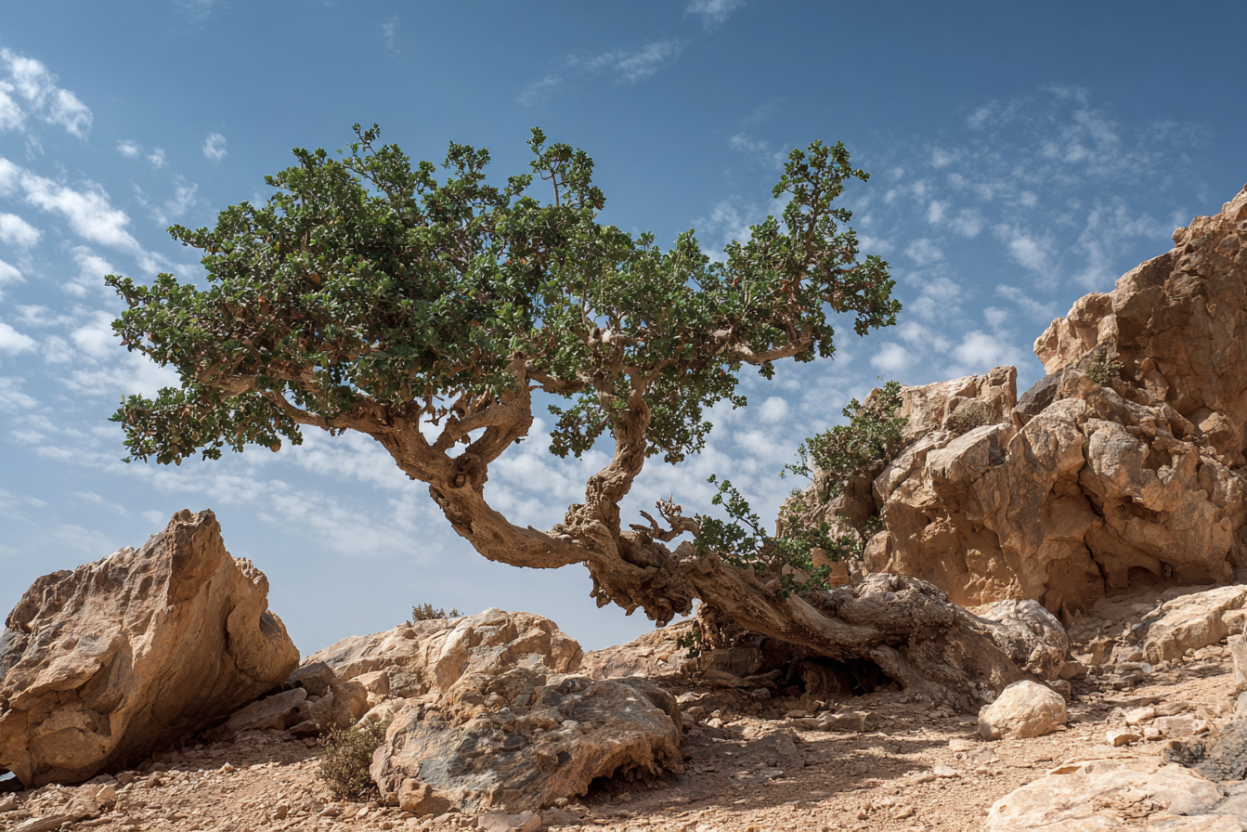
Frankincense trees are small to medium-sized deciduous trees, typically reaching 8 to 25 feet in height, though some specimens grow taller in optimal conditions. These hardy trees have evolved to thrive in some of the harshest environments on earth — rocky hillsides, limestone cliffs, and arid desert regions where few other plants survive.
The bark is papery and peeling, often appearing in shades of tan, gray, or reddish-brown. When cut or damaged, the bark exudes a milky-white oleoresin that hardens upon exposure to air, transforming into the familiar amber to pale yellow “tears” of frankincense. The leaves are compound, pinnate, and clustered at the ends of tangled branches, creating a sparse canopy. Small white or pale pink flowers appear during the dry season, giving way to small fruits containing seeds.
The tree’s most remarkable feature is its resilience. Boswellia trees can grow directly from rock faces with minimal soil, their roots penetrating deep into limestone crevices. This ability to draw life from stone has made them symbols of perseverance across cultures.
Origin
Frankincense is native to the Arabian Peninsula (particularly Oman and Yemen), the Horn of Africa (Somalia, Ethiopia, Eritrea), and the Indian subcontinent. The different species have distinct native ranges: Boswellia sacra dominates the Dhofar region of Oman and parts of Yemen; B. carterii grows primarily in Somalia; B. serrata is native to India; and B. frereana (known as “Maydi” or “King of Frankincense”) is found exclusively in the mountains of northern Somalia.
For over 5,000 years, the frankincense trade shaped civilizations. Ancient trade routes — the Incense Road — connected the Arabian Peninsula to Egypt, Mesopotamia, and the Mediterranean world. Cities rose and fell based on their control of this precious commodity. The Queen of Sheba’s legendary wealth came largely from her kingdom’s position on the frankincense trade routes.
Brief History
Archaeological evidence shows frankincense use dating back to at least 3000 BCE in Egypt, where it was used in temple rituals, embalming, and as a luxury cosmetic. The Ebers Papyrus (circa 1550 BCE) documents its medicinal applications. Ancient Egyptians called it “the sweat of the gods.”
In the Hebrew tradition, frankincense (Hebrew: “levonah”) was a required component of the sacred incense burned in the Tabernacle and later the Temple. It accompanied grain offerings as described in Leviticus. Greek physicians including Hippocrates and Dioscorides documented its healing properties. The Romans burned vast quantities — Emperor Nero reportedly burned an entire year’s harvest at his wife Poppaea’s funeral.
Indian Ayurvedic texts dating back thousands of years describe “Shallaki” (Boswellia serrata) as a treatment for arthritis and inflammation. Traditional Chinese Medicine incorporated frankincense (ru xiang) for moving blood and relieving pain. The resin traveled the Silk Road, becoming integrated into healing traditions across Asia.
Growing & Cultivation
Climate & Zones
Frankincense trees thrive in USDA zones 9b-11, requiring warm temperatures and low humidity. They are native to semi-arid and arid regions with distinct dry seasons. In the United States, they can potentially be grown outdoors in parts of Southern California, Arizona, South Florida, and Hawaii. For most growers, container cultivation with winter protection is necessary.
These trees require a distinct dry season to trigger resin production. Regions with Mediterranean or desert climates most closely match their native conditions. They can tolerate temperatures down to about 40°F (4°C) for brief periods but will not survive frost.
Soil Requirements
Frankincense trees demand extremely well-draining soil — in nature, they grow from rocky outcrops with minimal organic matter. A soil mix of coarse sand, perlite, and minimal compost (roughly 70% mineral, 30% organic) works well. pH should be slightly alkaline to neutral (7.0-8.0). Limestone-based soils are ideal, as they mimic the natural habitat.
For container growing, use a cactus/succulent mix amended with additional perlite or pumice. Ensure containers have multiple drainage holes. Standing water is fatal to these trees.
Water & Sunlight
Frankincense is highly drought-tolerant once established. Water deeply but infrequently, allowing soil to dry completely between waterings. In summer, this may mean watering every 2-3 weeks; in winter, monthly or less. Overwatering causes root rot and is the most common cause of failure in cultivation.
Provide full sun — at least 6-8 hours of direct sunlight daily. In extremely hot climates (above 100°F/38°C), light afternoon shade may prevent stress. Indoor growers should place trees in the brightest available location, ideally a south-facing window, or supplement with grow lights.
Propagation
Seed: Fresh seeds have the highest germination rates. Soak seeds in warm water for 24 hours before planting. Plant 1/2 inch deep in sandy soil mix at 75-85°F (24-29°C). Germination takes 1-3 weeks with fresh seed but may take longer or fail entirely with older seed. Keep soil barely moist during germination.
Cutting: Semi-hardwood cuttings taken in late spring can root, though success rates are moderate. Use rooting hormone and maintain high humidity around cuttings while keeping the soil barely moist. Rooting may take 6-8 weeks.
Air Layering: This method has higher success rates than cuttings. Select a branch, wound the bark, apply rooting hormone, wrap with moist sphagnum moss and plastic, and wait 2-3 months for roots to develop before severing.
Planting
Plant in spring after all danger of frost has passed. Space trees 15-20 feet apart if planting multiple specimens outdoors. For containers, start with a pot only slightly larger than the root ball — these trees prefer being somewhat root-bound. Repot every 2-3 years, moving up only one pot size.
Companion planting options include other drought-tolerant species: aloe, agave, rosemary, and lavender. Avoid planting near water-loving plants that would require irrigation schedules incompatible with frankincense needs.
Harvesting
Resin harvesting, called “tapping,” traditionally begins when trees are 8-10 years old, though wild trees may not be tapped until even older. Harvest occurs during the dry season — in native regions, this is typically April through June and September through November.
To harvest, make shallow incisions (2-3 inches long, 1/4 inch deep) in the bark using a special curved knife called a “mingaf.” The milky sap that exudes will harden over 10-14 days into “tears” of resin. These tears are then carefully scraped off by hand. A single tree may be tapped 2-3 times per season, with 2-3 week intervals between tappings to allow recovery.
Quality varies by harvest — the first tapping of the season typically produces lower-grade resin, while subsequent tappings yield clearer, more aromatic tears. The purest grades appear nearly translucent with a pale gold to silver-white color.
Drying & Storage
Freshly harvested resin continues to dry and mature over several weeks. Spread tears in a single layer in a dry, shaded area with good airflow. Avoid direct sunlight during initial drying as this can affect quality. Once fully hardened (typically 2-4 weeks after harvest), resin can be stored indefinitely.
Store dried frankincense tears in airtight glass containers away from heat and light. Properly stored resin maintains its aromatic properties for years — ancient frankincense found in Egyptian tombs still retained its scent. For powdered resin, use within 6-12 months for optimal potency.
Pest & Disease Management
Frankincense trees are remarkably pest-resistant, likely due to their resinous nature. The most common problems are cultural rather than pest-related. Overwatering leads to root rot (fungal). Scale insects occasionally appear, especially on stressed plants — treat with neem oil or insecticidal soap.
In their native habitat, the biggest threat to frankincense trees is over-harvesting and climate change. Sustainable harvesting practices allow trees to recover between tappings.
Companion Planting
Frankincense grows well alongside other Mediterranean and desert plants: rosemary, sage, thyme, lavender, and myrrh (Commiphora species). Avoid nitrogen-fixing plants that would enrich the soil too much — frankincense prefers lean conditions.
The Healing of Growing
While few readers will harvest their own frankincense resin, growing a Boswellia tree connects you to one of humanity’s most ancient and sacred plants. The act of caring for this Biblical tree — hands in soil, attention to its needs, patience as it grows — offers its own form of healing. Research confirms that gardening reduces cortisol, improves mood, and supports immune function. The soil contains beneficial bacteria (Mycobacterium vaccae) with documented antidepressant effects. When you nurture a frankincense tree, you’re participating in a tradition stretching back millennia, and you’re receiving benefits before you ever burn a single tear of resin.
Nutritional Profile
Note: Frankincense is not consumed as a food in significant quantities. While the resin has been chewed, used in beverages, and added to traditional recipes in small amounts, it is primarily valued for its therapeutic rather than nutritional properties. The following information addresses its composition when consumed.
Active Compounds
Frankincense resin contains boswellic acids (the primary therapeutic compounds), comprising approximately 25-35% of quality resin. These pentacyclic triterpenic acids include alpha-boswellic acid, beta-boswellic acid, and the most studied compound, acetyl-11-keto-β-boswellic acid (AKBA).
The resin also contains essential oils (5-10%), composed primarily of monoterpenes including alpha-pinene, limonene, and beta-myrcene. Additional components include polysaccharides, diterpenes, and various volatile compounds that contribute to its distinctive aroma.
Traditional Consumption Methods
In Oman and Yemen, frankincense water (“lubān” water) is made by soaking tears of resin in water overnight, producing a mildly bitter, aromatic beverage believed to support digestion. In India, Boswellia serrata resin has been consumed in traditional preparations. Some Middle Eastern cuisines incorporate small amounts of frankincense into rice dishes or desserts.
Bioavailability Considerations
Boswellic acids have limited water solubility and oral bioavailability. Research suggests consuming frankincense with fatty foods may enhance absorption. Standardized extracts designed for supplementation have been developed to address bioavailability challenges.
Culinary Uses
Edible Parts
The resin tears are the only part of the frankincense tree used in culinary applications. They can be chewed directly (traditional practice), dissolved in water, or ground into powder for incorporation into recipes.
Flavor Profile
Frankincense has a complex, resinous flavor — mildly bitter with warm, balsamic undertones. The taste is piney, slightly citrusy, with a clean, almost mentholated finish. The aroma is intensely fragrant — warm, rich, and sacred. When heated, the bitterness diminishes and the sweeter, more aromatic qualities emerge.
Preparation
Frankincense Water: Soak 4-5 small tears in 1 cup of water overnight or for 8-12 hours. Strain and drink. Traditionally consumed in the morning for digestive support.
Powdered Resin: Grind clean tears in a spice grinder or mortar and pestle. Use sparingly — 1/8 to 1/4 teaspoon at a time — as the flavor is potent.
Infused Honey: Combine clean resin tears with raw honey in a jar. Over several weeks, the honey absorbs aromatic compounds from the resin.
Culinary Pairings
Frankincense pairs well with citrus (lemon, orange), warming spices (cardamom, cinnamon, ginger), honey, rose water, and milk-based desserts. It complements Middle Eastern and North African cuisine traditions.
Storage
Whole resin tears store indefinitely in airtight containers away from heat and light. Ground resin should be used within 3-6 months for optimal flavor and potency. Frankincense water should be consumed within 24-48 hours and refrigerated if not used immediately.
Looking for recipes featuring frankincense? View Recipes on Chefts →
Wellness & Therapeutic Uses
Traditional Uses
Frankincense holds a unique position in the history of healing — it appears in the medical traditions of virtually every civilization that had access to it. Ayurvedic medicine has used Boswellia serrata (“Shallaki”) for over 3,000 years, primarily for joint health and inflammatory conditions. The Charaka Samhita, one of Ayurveda’s foundational texts, describes its use for arthritis, digestive disorders, and skin conditions.
In Traditional Chinese Medicine (TCM), frankincense (ru xiang, 乳香) is classified as a blood-moving herb that dispels stasis and alleviates pain. It is commonly combined with myrrh (mo yao) for trauma, wounds, and swelling. TCM texts dating to the Tang Dynasty (618-907 CE) document these applications.
Ancient Egyptian medicine, as recorded in the Ebers Papyrus, prescribed frankincense for infections, respiratory complaints, and as an ingredient in kohl (eye cosmetic) believed to prevent eye infections. Greek physician Dioscorides (1st century CE) documented its use for bleeding, wound healing, and digestive complaints in his De Materia Medica.
Arabian and Persian medicine, following the Unani tradition, used frankincense for memory enhancement, concentration, and as a tonic for the mind. This tradition influenced medieval European medicine through translations of Arabic texts.
Modern Research
Modern scientific investigation has validated many traditional uses, particularly regarding frankincense’s effects on inflammation. The boswellic acids in frankincense have been shown in multiple studies to inhibit 5-lipoxygenase (5-LOX), an enzyme involved in the production of inflammatory leukotrienes. This mechanism differs from NSAIDs and may offer advantages for certain conditions.
A systematic review published in BMC Complementary Medicine and Therapies (2020) analyzed 47 clinical trials involving Boswellia preparations, finding consistent evidence for benefits in osteoarthritis, inflammatory bowel disease, and asthma. Studies conducted in India, Germany, and the United States have demonstrated improved joint function and reduced pain scores in osteoarthritis patients taking Boswellia extracts.
Research on brain health has shown that AKBA (acetyl-11-keto-β-boswellic acid) may cross the blood-brain barrier and exhibits neuroprotective properties in animal models. Studies from Japanese and Iranian research teams have explored frankincense’s potential role in supporting cognitive function and emotional wellbeing.
Respiratory support is another area of active research. Studies have shown Boswellia extracts may benefit those with bronchial conditions, with German and Indian clinical trials demonstrating improvements in lung function and reduced symptoms in asthmatic patients.
Digestive health research, particularly from Indian institutions, has explored Boswellia’s effects on inflammatory bowel conditions, with multiple studies showing improvements in patients with ulcerative colitis.
Body Systems Supported
Musculoskeletal System: Research extensively documents frankincense’s support for joint health, mobility, and comfort. The anti-inflammatory mechanism targeting 5-LOX makes it particularly relevant for conditions involving joint inflammation.
Respiratory System: Traditional and modern use supports bronchial health. Inhaled as steam or taken internally, frankincense has been used for respiratory comfort.
Digestive System: Traditional use for digestive complaints is supported by research on inflammatory bowel conditions.
Nervous System: Traditional use for memory and focus, combined with modern research on neuroprotective properties, suggests support for cognitive function.
Immune System: Frankincense modulates inflammatory responses, which plays a role in immune function. Traditional use as a protective agent during illness reflects this understanding.
Integumentary System: Topical applications for wound healing and skin health have both traditional support and modern research.
Body Compounds Affected
Leukotrienes: Boswellic acids inhibit 5-lipoxygenase, reducing the production of pro-inflammatory leukotrienes. This is the most well-documented mechanism of action.
Cytokines: Research suggests frankincense may modulate the production of inflammatory cytokines including TNF-alpha, IL-1, and IL-6.
NF-κB: Studies indicate Boswellia extracts may inhibit nuclear factor kappa B, a key regulator of inflammatory gene expression.
Cortisol: Aromatherapy research suggests inhaling frankincense essential oil may help modulate cortisol levels and support stress response.
GABA: Some research indicates frankincense compounds may interact with GABA pathways, potentially explaining traditional use for calming and centering.
Methods of Use
Standardized Extracts
For therapeutic use, standardized Boswellia extracts (typically standardized to boswellic acid content, often 30-65% boswellic acids or higher) are most commonly used. Typical dosages in research range from 300-500mg taken 2-3 times daily with food. Look for products standardized to AKBA content for highest potency.
Resin (Internal)
Traditional use involves chewing small pieces of clean resin or drinking frankincense water. Start with 1-2 small tears soaked overnight in water, consumed on an empty stomach.
Essential Oil (Aromatic/Topical)
For aromatherapy, diffuse 3-5 drops or inhale directly. For topical use, dilute 2-3% in carrier oil (approximately 12 drops per ounce of carrier). Never take essential oil internally without guidance from a qualified practitioner.
Topical Applications
Resin can be powdered and mixed with carrier oils or creams for topical use. Infused oils are made by warming carrier oil with resin tears over low heat, then straining.
Cosmetic & Beauty Uses
Skin Benefits
Frankincense has been prized for skin care since Cleopatra’s era, and modern research supports its reputation. Studies indicate that boswellic acids and the essential oil may support skin cell renewal, making it valuable for mature skin. Its anti-inflammatory properties benefit irritated or sensitive skin.
Research suggests frankincense may help with:
- Fine lines and wrinkles — supports skin elasticity
- Uneven skin tone — traditional use for hyperpigmentation
- Acne and blemishes — antimicrobial and anti-inflammatory properties
- Scars and stretch marks — may support cellular regeneration
- Dry or mature skin — supports moisture retention
All skin types can benefit from frankincense, though it is particularly valued for mature, dry, and sensitive skin.
Hair Benefits
Frankincense supports scalp health through its anti-inflammatory and antimicrobial properties. It may help with:
- Dandruff and dry, flaky scalp
- Hair follicle health and hair strength
- Adding shine and luster to hair
- General scalp irritation
Application Methods
Facial Serum: Add 6-12 drops of frankincense essential oil per ounce of carrier oil (jojoba, rosehip, or argan work well). Apply 2-3 drops to clean, damp face morning and/or evening.
Anti-Aging Oil: Combine frankincense essential oil with rosehip seed oil and vitamin E oil. This combination supports collagen and skin renewal.
Toner: Add 5-10 drops of frankincense essential oil (or use frankincense hydrosol) to 4 oz of distilled water and witch hazel (50/50). Shake before use and apply with cotton pad.
Face Mask: Mix 1 tablespoon raw honey, 1 teaspoon frankincense powder (finely ground resin), and enough water to form a paste. Apply for 15-20 minutes, rinse with warm water.
Body Oil: Add frankincense essential oil to coconut or almond oil (2% dilution) for moisturizing body oil that supports skin health.
Hair Rinse: Add 3-5 drops of frankincense essential oil to your conditioner, or create a rinse by adding essential oil to water and apple cider vinegar (1 tablespoon vinegar per cup of water).
DIY Formulation Notes
Frankincense essential oil blends beautifully with lavender, rose, sandalwood, myrrh, geranium, and citrus oils for skincare. Use at 1-2% dilution for facial products, up to 3% for body products. Patch test before use, especially if you have sensitive skin.
For resin-based preparations, ensure the resin is clean and of high quality. Powdering resin finely helps it incorporate into products. Resin can be dissolved in warm oils (not water) by heating gently and stirring.
Shelf life for homemade frankincense products: oil-based preparations keep 6-12 months if stored properly in dark glass containers away from heat and light. Water-based preparations should be used within 1-2 weeks and refrigerated.
Frankincense is among the botanicals being explored for holistic cosmetic applications, where the wisdom of traditional beauty practices meets modern understanding of skin science.
Essential Oil Profile
Extraction
Frankincense essential oil is produced primarily through steam distillation of the hardened resin (tears). The process typically requires 3-10 kg of resin to produce 1 kg of essential oil, depending on the quality and species of frankincense. CO2 extraction is also used to produce a more complete aromatic profile, capturing heavier compounds lost in steam distillation.
The quality of essential oil depends heavily on the quality of resin used. Premium grades (clear, pale tears) produce superior oils with brighter, cleaner aromatic profiles. Different Boswellia species produce oils with distinct chemical profiles and aromas.
Chemical Constituents
Frankincense essential oil composition varies by species and origin but typically includes:
Monoterpenes (60-80%):
- Alpha-pinene (15-40%) — Research suggests respiratory support, anti-inflammatory properties
- Limonene (5-20%) — Uplifting, immune-supporting, studied for cellular health
- Sabinene (3-8%) — Antioxidant properties
- Beta-myrcene (5-15%) — Calming, analgesic properties studied in research
Sesquiterpenes (5-15%):
- Beta-caryophyllene — Anti-inflammatory, interacts with CB2 receptors
- Alpha-humulene — Research suggests anti-inflammatory effects
Alcohols (2-10%):
- Octanol, Octyl acetate — Contribute to the sweet, fruity top notes
Notable compound (Boswellia sacra): Sacred frankincense may contain incensole acetate, a compound studied for its potential effects on mood and brain function.
Aroma Profile
Classification: Base note (with middle note characteristics)
Scent Description: Frankincense essential oil offers a complex, layered aroma. The top notes are fresh, slightly citrusy, and bright. Middle notes reveal the classic frankincense character — warm, resinous, balsamic, with subtle spicy undertones. The dry-down is deep, rich, and meditative — warm amber, incense-like, with hints of honey.
Intensity: Medium to strong
Evolution: The scent deepens and sweetens over several hours on the skin, revealing more of its resinous, sacred character.
Blending
Frankincense blends well with:
- Citrus oils: Orange, lemon, bergamot, grapefruit
- Other resins: Myrrh, elemi, copaiba
- Woods: Sandalwood, cedarwood, cypress
- Florals: Lavender, rose, geranium, ylang ylang
- Spices: Cinnamon (small amounts), cardamom, ginger
- Herbs: Rosemary, basil, clary sage
Therapeutic Properties
Using compliant language, research and traditional use suggest frankincense essential oil may be:
- Calming and centering — Traditional use for meditation and stress
- Supportive for respiratory comfort — Steam inhalation and diffusion
- Beneficial for skin health — Cellular support and renewal
- Grounding — Supports emotional balance
- Immune-supporting — Traditional and aromatic use
How to Use
Diffusion
Add 3-5 drops to an ultrasonic diffuser or 1-2 drops to a personal inhaler. Diffuse for 30-60 minutes at a time. Particularly beneficial for meditation, prayer, or creating a calm atmosphere.
Topical Application
Always dilute before applying to skin:
- Standard adult dilution: 2-3% (12-18 drops per ounce of carrier oil)
- Sensitive skin: 1% (6 drops per ounce)
- Children (6-12): 1% (6 drops per ounce)
- Children (2-6): 0.5% (3 drops per ounce)
- Elderly: 1-2% (6-12 drops per ounce)
Apply diluted oil to wrists, behind ears, bottom of feet, or areas of concern.
Bath
Add 5-8 drops mixed with a dispersant (bath salts, milk, carrier oil) to warm bathwater. Do not add essential oil directly to water as it will float on the surface.
Steam Inhalation
Add 2-3 drops to a bowl of steaming (not boiling) water. Tent a towel over your head and the bowl, close eyes, and breathe deeply for 5-10 minutes.
Quality & Sourcing
When purchasing frankincense essential oil, look for:
- Species identification: The label should specify which Boswellia species (sacra, carterii, serrata, frereana)
- Country of origin: Oman, Somalia, India, Ethiopia, or Yemen are primary sources
- GC/MS testing: Reputable companies provide batch-specific gas chromatography/mass spectrometry reports
- Sustainable sourcing: Frankincense trees are under pressure; choose companies committed to sustainability
- Price: Quality frankincense essential oil is not inexpensive. Extremely cheap oils may be adulterated or synthetic
Red flags for adulteration: Very low price, lack of species information, no testing available, and oil that smells overly synthetic or flat.
Aromatherapy & Scent
The Aroma
Fresh Resin: Freshly harvested frankincense resin has a bright, lemony-pine aroma with subtle floral undertones. The scent is strongest when the resin is still slightly soft and sticky. When you rub or warm a tear between your fingers, the volatile oils release, filling the air with a clean, uplifting fragrance that hints at the deeper, more complex notes that emerge when burned.
Dried Resin: As resin ages and fully hardens, the scent becomes more subtle at room temperature but deepens in complexity. The citrus top notes fade somewhat, and the warm, balsamic, sacred character becomes more prominent. When heated or burned, the full aromatic profile emerges — this is the “church incense” scent known across cultures. Properly stored resin retains its aromatic potential for years or even decades.
The scent is strongest when resin is heated (burned on charcoal or a resin warmer), in the morning (resin releases more volatiles with temperature changes), and when freshly broken or crushed.
How Scent Affects Your Body
When you inhale frankincense aroma, volatile molecules enter your nose and contact olfactory receptors — specialized nerve cells that can detect thousands of different scent molecules. Unlike other sensory information that travels through the thalamus, olfactory signals travel directly to the limbic system, the brain’s emotional center, and to the hypothalamus, which controls hormone release.
This direct connection means that scent affects your body before conscious thought. Your stress response can shift, your mood can change, and physiological changes can begin within seconds of inhaling an aroma. This is why the scent of frankincense has been used in sacred spaces across cultures — the effect is immediate and bypasses the analytical mind.
Emotional & Mood Effects
Inhaling frankincense typically produces:
- Calming and grounding — The deep, resinous base notes anchor scattered thoughts and quiet mental chatter
- Meditative and contemplative states — Traditional use in prayer and meditation is supported by research showing it may enhance focus
- Emotional centering — Helps process grief, anxiety, and overwhelming emotions
- Clarity and focus — Clears mental fog while maintaining calm
- A sense of the sacred — The cultural and spiritual associations with frankincense can trigger a sense of reverence and connection
Research has explored frankincense’s mood-supporting properties. Studies on incensole acetate (found in some frankincense species) suggest it may activate ion channels in the brain associated with emotional warmth and reduced anxiety.
Body Compounds Affected
Research suggests frankincense aroma may influence:
- Cortisol: Aromatherapy studies indicate frankincense inhalation may help modulate cortisol levels, supporting a healthy stress response
- GABA: Some research suggests compounds in frankincense may interact with GABA receptors, contributing to calming effects
- Serotonin: The mood-lifting effects may involve serotonergic pathways
- Norepinephrine: The combination of calming yet clarifying effects suggests balanced influence on arousal pathways
Ways to Experience the Scent
Beyond essential oil, here are traditional and practical ways to experience frankincense aroma:
- Burning on charcoal: The traditional method — place a few tears on a lit charcoal disc in a heat-safe container
- Electric resin warmer: Gently heats resin without smoke, releasing aroma more slowly
- Resin tears in a bowl: Simply having tears in an open dish scents a room subtly, especially in warm weather
- Crushed resin sachets: Place crushed resin in cloth sachets for drawers, closets, or under pillows
- Simmering on stove: Add resin tears to a pot of water and simmer on low heat
- Steam inhalation: Add powdered resin or a few drops of essential oil to hot water and breathe the steam
- Growing a Boswellia tree: While it won’t scent a room like burning resin, proximity to the living plant offers subtle aromatic benefits
- Frankincense water: Drinking the water in which resin has soaked allows you to experience the aroma internally
Color Therapy
The Colors of Frankincense
Frankincense presents a palette of earth tones that reflect its connection to the desert landscapes where it grows:
- Resin tears: Range from pale ivory-white (highest grades) through golden yellow, amber, orange-brown, to deep reddish-brown (lower grades or different species). The most prized “silver” or “hojari” frankincense is nearly translucent with a pale golden hue.
- Tree bark: Tan, gray, and reddish-brown, with a papery, peeling texture
- Leaves: Deep green, clustered at branch ends
- Flowers: Small, white to pale pink
- Smoke: White to gray, creating visible spirals as it rises
Color Wavelengths
The dominant colors of frankincense resin fall within the yellow to orange range:
- Yellow: Approximately 570-590nm wavelength
- Amber/Orange: Approximately 590-620nm wavelength
- Gold: Falls between yellow and orange on the spectrum
- White (highest grades): Full spectrum, reflecting all visible wavelengths
How These Colors Affect the Body
Yellow (570-590nm): Associated with mental clarity, optimism, and digestive support in color therapy traditions. Yellow light is believed to stimulate the mind while maintaining cheerfulness. Viewing golden frankincense may support mental focus and positive mood.
Orange (590-620nm): Associated with creativity, warmth, emotional expression, and the sacral chakra in various traditions. Orange light is considered energizing yet grounding. The amber tones in frankincense may support creative thinking and emotional warmth.
White (full spectrum): Associated with purity, clarity, and completeness. The highest grades of frankincense, being nearly translucent white, carry associations with spiritual purity and enlightenment — perhaps why these grades have always commanded premium prices.
In color therapy principles, the warm golden-amber hues of frankincense are considered balancing to the solar plexus (seat of personal power and digestion) and supportive of confidence and clarity.
Body Compounds Affected
Research on color and light therapy suggests that exposure to warm golden and amber wavelengths may influence:
- Serotonin: Warm light exposure is associated with healthy serotonin levels
- Melatonin: Amber/orange light is less disruptive to melatonin production than blue light, making frankincense an appropriate evening meditation tool
- Cortisol: Warm, gentle light may support healthy cortisol rhythms
Using Frankincense for Color Therapy
Display quality resin: Keep a bowl of golden frankincense tears where you can see them — on a meditation altar, desk, or windowsill. The visual presence serves as a reminder to slow down while providing subtle color therapy benefits.
Watch the smoke: The visual experience of watching frankincense smoke rise and curl is itself meditative. The white smoke against any background creates a calming focal point.
Candle-lit viewing: View frankincense tears by candlelight, which enhances their golden glow and creates a warm, meditative atmosphere.
Intentional selection: Choose frankincense grades that appeal to you visually. If you’re drawn to the clearer, golden tears, trust that — your aesthetic preference may reflect what your body needs.
Frequency & Vibration
The Frequency of Frankincense
According to bio-frequency research pioneered by Bruce Tainio using calibrated frequency monitoring equipment, essential oils vibrate at measurable frequencies. Frankincense essential oil has been measured at approximately 147 MHz, making it one of the highest-frequency oils commonly available.
For context, according to this research:
- Healthy human body: 62-78 MHz
- Cold/flu onset: 58 MHz
- Disease states: Below 58 MHz
- Fresh herbs: 20-27 MHz
- Dried herbs: 12-22 MHz
- Fresh produce: Up to 15 MHz
- Processed/canned food: Near 0 MHz
- Rose essential oil: ~320 MHz (highest measured)
- Frankincense essential oil: ~147 MHz
Proponents of vibrational medicine suggest that high-frequency substances may help “raise” the vibration of the human body, supporting health and wellbeing.
Human Frequency Interaction
The principle of entrainment in physics suggests that when two vibrating entities are in proximity, the stronger or more stable frequency tends to influence the weaker or less stable one. Vibrational medicine practitioners propose that exposure to high-frequency plants and oils may help support human frequency.
This may help explain why frankincense has been used in sacred and healing contexts across cultures — before modern equipment could measure frequencies, people intuitively recognized that this substance “felt” different, more elevated, more conducive to spiritual states.
According to this framework, using frankincense — whether burning the resin, diffusing the oil, or simply being in its presence — may support the body’s optimal vibrational state.
Essential Oil Frequency
The distillation process concentrates the volatile compounds of frankincense, which may explain the higher measured frequency of the essential oil compared to the raw resin. Different extraction methods may affect frequency:
- Steam distilled essential oil: ~147 MHz (most common measurement)
- CO2 extracted oil: May have slightly different profile due to preservation of heavier compounds
- Raw resin: Lower frequency than extracted oil, but still considered high compared to most substances
Vibrational Applications
Personal frequency support: Diffuse frankincense essential oil in living spaces, apply diluted oil to pulse points, or burn resin during meditation to invite its high-frequency energy into your environment.
Space clearing: Traditional use of frankincense for “purifying” spaces aligns with the idea of raising environmental frequency. Burning frankincense after illness, conflict, or stagnation may help “reset” the vibrational tone of a space.
Combining with other high-frequency practices: Frankincense pairs well with other frequency-supporting practices such as prayer, meditation, sound healing, grounding/earthing, and time in nature.
Intentional use: Some practitioners suggest that intention amplifies the frequency effects of any substance. Using frankincense with conscious awareness and gratitude may enhance its vibrational benefits.
Note: Frequency measurement of essential oils is an area where research is still emerging. While Tainio’s measurements are widely cited in aromatherapy circles, they have not been replicated in peer-reviewed scientific literature. The information above reflects the claims of bio-frequency researchers and should be understood as part of a complementary wellness perspective.
The Living Plant
Benefits of Presence
While most people experience frankincense through its resin or essential oil, growing a living Boswellia tree offers unique benefits. Research on biophilic design and forest bathing demonstrates that simply being around living plants reduces stress hormones, improves mood, and supports immune function.
A frankincense tree in your home or garden connects you to one of humanity’s most ancient and sacred plants. The visual reminder of this Biblical tree — the gift of wise men, the incense of temples — can prompt moments of reflection and gratitude throughout the day.
Air Purification
While Boswellia species have not been specifically tested in the NASA Clean Air Study, they belong to the Burseraceae family known for producing aromatic volatile compounds. Living frankincense trees release low levels of terpenes and other volatile organic compounds that may contribute to air quality.
As with all plants, Boswellia trees participate in oxygen/carbon dioxide exchange, contribute to humidity regulation, and bring the general air-quality benefits associated with indoor greenery.
Phytoncides
Plants release phytoncides — antimicrobial volatile organic compounds — as part of their defense systems. Forest bathing research, particularly from Japan and Korea, has documented that exposure to phytoncides increases Natural Killer (NK) cell activity, supporting immune function.
Resinous trees, including those in the Burseraceae family, are particularly notable producers of antimicrobial volatiles. While specific research on Boswellia phytoncides is limited, the aromatic compounds present in frankincense trees likely include terpenes with antimicrobial properties similar to those found in pine and cypress forests.
Visual & Psychological Benefits
Research consistently demonstrates that viewing plants reduces stress, improves attention, and supports recovery from illness. Patients with plants in hospital rooms recover faster than those without. Workers with views of greenery report higher job satisfaction and lower fatigue.
A frankincense tree offers these general plant-presence benefits plus the unique association with its sacred history. For those who value the spiritual significance of frankincense, having the living tree present may enhance feelings of connection, reverence, and peace.
Growing Indoors vs Outdoors
Indoor Growing: Frankincense trees can be grown indoors in containers with proper care. Provide maximum light (south-facing window or grow lights), excellent drainage, and minimal watering. Expect slower growth indoors. The tree will not reach resin-producing maturity indoors in most cases, but you benefit from its presence.
Outdoor Growing: In USDA zones 9b-11, frankincense can be grown outdoors year-round. Outdoor trees receive optimal light, experience natural seasonal cycles, and can potentially reach maturity and produce resin. Even in cooler climates, trees can be moved outdoors during warm months.
Whether indoors or out, the act of caring for a frankincense tree — observing its growth, meeting its needs, witnessing its resilience — provides the documented psychological and physical benefits of plant care while connecting you to an ancient and sacred botanical tradition.
Touch & Physical Interaction
Gardening Therapy
Horticultural therapy is an established therapeutic practice with documented benefits for mental health, cognitive function, physical rehabilitation, and overall wellbeing. Caring for a frankincense tree brings these benefits while connecting you to one of humanity’s most treasured plants.
The specific tasks of frankincense care — checking soil moisture, pruning as needed, rotating for even light exposure, repotting as the tree grows — provide opportunities for mindful engagement and gentle physical activity.
Soil Contact Benefits
When caring for any plant, including frankincense, contact with soil offers surprising health benefits:
Grounding/Earthing: Direct skin contact with earth allows electron transfer from the ground to your body. Research suggests this may reduce inflammation, improve sleep, and support stress response.
Mycobacterium vaccae: This soil bacterium, present in most healthy soils, has been studied extensively for its effects on mood. Research demonstrates that exposure to M. vaccae stimulates serotonin-producing neurons and may have antidepressant and immune-supporting effects.
Microbiome support: Exposure to the diverse microbial community in healthy soil may support a healthy human microbiome. Our modern, sanitized environments may lack the microbial diversity our immune systems evolved to encounter.
The Tactile Experience
The resin: Fresh frankincense tears are slightly sticky and warm to the touch. As they harden, they become more crystalline. Rolling tears between your fingers releases aroma and provides pleasant tactile stimulation. The warmth of your hands softens the resin slightly.
The bark: Frankincense tree bark has a distinctive papery texture that peels in layers. It’s smooth in places, rough in others — a texture that invites touch and exploration.
Harvesting (if possible): The traditional practice of tapping frankincense — making careful incisions in the bark and later collecting hardened tears — is deeply tactile and meditative. For those fortunate enough to grow mature trees, this hands-on harvest connects you to harvesters across thousands of years of human history.
Harvesting & Processing
Harvesting frankincense resin: Traditional harvesting is a skilled practice requiring patience and seasonal awareness. The repetitive motion of making incisions, the waiting, the return to collect tears — all provide meditative focus. The sense of accomplishment in gathering your own resin connects you to human activity stretching back millennia.
Processing resin: Sorting tears by quality, cleaning away bark fragments, grinding resin for various uses — these tasks engage the hands and focus the mind. The sensory experience (touch, smell, sight) of working with frankincense provides multi-modal engagement that supports mindfulness and present-moment awareness.
Creating preparations: Making infused oils, salves, or incense blends with frankincense involves hands-on work that can be deeply satisfying. The combination of historical connection, aromatic pleasure, and creative engagement makes frankincense preparation especially rewarding.
Water-Based Applications
Teas & Infusions
Frankincense Water (Traditional Method):
The simplest water-based preparation involves soaking frankincense tears in room-temperature water. Unlike herbs that release compounds readily into hot water, frankincense resin does not dissolve easily — instead, water extracts water-soluble compounds and aromatic molecules over time.
Method:
- Use 4-5 small tears (or equivalent amount) of clean, high-quality frankincense
- Place in 1 cup of water (ideally filtered or spring water)
- Cover and let stand overnight or for 8-12 hours
- Strain and drink first thing in the morning on an empty stomach (traditional practice)
- The taste is mildly bitter and slightly resinous
Traditional uses: Digestive support, general tonic, respiratory health, memory and cognitive support. In Oman and Yemen, this practice is passed down through generations.
Hot Infusion: Some practitioners add frankincense tears to hot (not boiling) water and steep for 15-20 minutes. This extracts more aromatic compounds but may alter some constituents.
Herbal Baths
A frankincense bath combines aromatherapy, hydrotherapy, and topical absorption for a deeply relaxing experience.
Full Bath:
- Add 8-10 drops of frankincense essential oil mixed with a dispersant (1 cup Epsom salt, 1/2 cup milk, or 1 tablespoon carrier oil) to warm bathwater
- Alternatively, place ground frankincense resin (1-2 tablespoons) in a muslin bag and steep in the bath
- Soak for 20-30 minutes
- Best in the evening for relaxation and sleep support
Foot Bath:
- Use 4-5 drops of essential oil in a dispersant for a foot soak
- Excellent for grounding after a stressful day
- Warm water opens pores on feet, allowing absorption
Hydrosols
Frankincense hydrosol (also called floral water or hydrolat) is the water portion that remains after steam distillation of the resin. It contains water-soluble aromatic compounds and trace amounts of essential oil.
Properties: Gentler than essential oil, safe for direct skin application without dilution, subtle aroma
Uses:
- Facial toner (spritz directly on face)
- Body spray for subtle aromatherapy
- Room spray for gentle atmosphere enhancement
- Added to baths
- As a base for skincare preparations
- Meditation preparation — mist face and space before practice
Frankincense hydrosol is particularly beneficial for mature skin and for those who find the essential oil too intense.
Compresses
Hot Compress:
Add 3-5 drops of frankincense essential oil to a bowl of hot water. Soak a clean cloth, wring out excess water, and apply to areas of concern. Hot compresses may support muscle comfort and relaxation.
Cold Compress:
Same method with cold water. Cold compresses may help with swelling or inflammation. The aromatic benefits combine with the temperature therapy.
Steam Inhalation
One of the most effective ways to experience frankincense aromatherapy is through steam inhalation, which delivers volatile compounds directly to the respiratory system.
Method:
- Bring water to a boil, then remove from heat and let cool for 1-2 minutes
- Add 2-4 drops of frankincense essential oil OR a few small pieces of ground resin
- Tent a towel over your head and the bowl
- Close your eyes and breathe deeply through your nose for 5-10 minutes
- Take breaks if needed
Benefits: Respiratory comfort, clearing congestion, emotional centering, opening airways
Caution: Keep eyes closed to avoid irritation from volatile compounds. Do not use boiling water directly. Not recommended for children without supervision.
Hair Rinses
Frankincense can be incorporated into hair rinses for scalp health and added shine:
Method:
- Add 5-8 drops of frankincense essential oil to 2 cups of water and 2 tablespoons apple cider vinegar
- After shampooing, pour rinse through hair, massage into scalp, leave for 2-3 minutes, then rinse with water
- Alternatively, use frankincense hydrosol as a final rinse (no need to wash out)
Benefits: Scalp health, dandruff relief, shine, and the aromatic experience of frankincense surrounding you throughout the day
Historical, Cultural & Biblical Significance
Biblical References
Frankincense holds a place of extraordinary honor in Scripture, appearing from the earliest books of the Law through the Gospels. Its Hebrew name, levonah (לְבוֹנָה), derives from a root meaning “white” — a reference to the pale milky sap that exudes from the tree.
The Gift of the Magi: Perhaps the most famous Biblical reference appears in Matthew 2:11 (KJV): “And when they were come into the house, they saw the young child with Mary his mother, and fell down, and worshipped him: and when they had opened their treasures, they presented unto him gifts; gold, and frankincense, and myrrh.” The wise men’s gift of frankincense recognized Jesus’ divinity and priestly role — it was the incense of priests, offered to God alone.
The Sacred Incense: In Exodus 30:34-38, God gave Moses the precise formula for the holy incense to be burned in the Tabernacle: “And the LORD said unto Moses, Take unto thee sweet spices, stacte, and onycha, and galbanum; these sweet spices with pure frankincense: of each shall there be a like weight.” This incense was so sacred that anyone who made it for personal use was to be “cut off from his people.”
The Grain Offering: Leviticus 2:1-2 prescribes frankincense as part of the grain offering (meal offering): “And when any will offer a meat offering unto the LORD, his offering shall be of fine flour; and he shall pour oil upon it, and put frankincense thereon.”
The Showbread: Leviticus 24:7 describes frankincense placed on the showbread in the Holy Place: “And thou shalt put pure frankincense upon each row, that it may be on the bread for a memorial, even an offering made by fire unto the LORD.”
Symbol of Prayer: In Revelation 8:3-4, frankincense appears again as incense representing the prayers of saints: “And another angel came and stood at the altar, having a golden censer; and there was given unto him much incense, that he should offer it with the prayers of all saints upon the golden altar which was before the throne.”
Song of Solomon: Frankincense appears in the poetry of love in Song of Solomon 3:6 and 4:6, 14, associated with beauty, purity, and sacred devotion.
Throughout Scripture, frankincense symbolizes prayer rising to God, purity, holiness, and the priestly ministry. Its presence at Jesus’ birth foreshadowed His role as our great High Priest.
Ancient Civilizations
Ancient Egypt: The Egyptians were among the earliest documented users of frankincense. The Ebers Papyrus (c. 1550 BCE), one of the oldest preserved medical documents, lists frankincense for various healing applications. Egyptians used it in the elaborate embalming process, burned it in temple rituals to honor the sun god Ra, and employed it as a cosmetic — most famously, Queen Hatshepsut’s expedition to the “Land of Punt” (c. 1493 BCE) sought frankincense trees for her temples. Egyptian women used frankincense-based kohl as eye cosmetic believed to prevent infection.
Ancient Greece: Greek physicians documented frankincense’s medicinal properties extensively. Hippocrates (460-370 BCE), the father of Western medicine, recommended frankincense for a variety of complaints. Dioscorides (40-90 CE) described its uses in his De Materia Medica, which remained the standard pharmacological reference for 1,500 years. The Greeks burned frankincense in temples to Apollo, Demeter, and other deities.
Ancient Rome: Pliny the Elder (23-79 CE) wrote extensively about frankincense in his Natural History, documenting its sources, grades, and uses. The Romans consumed enormous quantities — Pliny complained about the wealth flowing to Arabia for incense. Emperor Nero reportedly burned an entire year’s harvest of frankincense at his wife Poppaea’s funeral (65 CE). Roman physicians used frankincense for wounds, hemorrhages, and inflammatory conditions.
Ancient Hebrew/Jewish Tradition: Beyond the Temple use prescribed in Scripture, Jewish tradition held frankincense in high regard. The Talmud discusses the sacred incense compound (ketoret) and the families charged with its preparation. Frankincense trade brought wealth to the kingdoms along the Incense Road.
Eastern Traditions
Ayurveda (India): In the Indian system of medicine, Boswellia serrata is known as “Shallaki” or “Salai guggul.” Ayurvedic texts dating back over 3,000 years describe its use for joint conditions, digestive disorders, respiratory problems, and skin ailments. According to Ayurvedic classification, frankincense has bitter and pungent tastes, a heating energy, and reduces Vata and Kapha doshas. It is considered particularly valuable for conditions involving Ama (toxins) and inflammation. The Charaka Samhita, one of Ayurveda’s foundational texts, describes therapeutic applications that align remarkably with modern research findings.
Traditional Chinese Medicine (TCM): Frankincense entered Chinese medicine through Silk Road trade, likely during the Tang Dynasty (618-907 CE). Known as “Ru Xiang” (乳香), meaning “breast-like perfume” or “milk fragrance,” it is classified as an herb that “invigorates blood and dispels stasis.” TCM pairs frankincense with myrrh (Mo Yao) to enhance therapeutic effects for trauma, wounds, pain, and swelling. It is used for bi syndrome (joint pain), traumatic injuries, and conditions involving blood stagnation.
Unani Medicine: The Greco-Arabic tradition of Unani medicine, developed from Greek medical knowledge preserved and expanded by Arabic scholars, uses frankincense (known as “Kundur” or “Luban”) for memory enhancement, cognitive support, and as a general tonic. This tradition influenced medieval European medicine through translations of Arabic medical texts.
Indigenous Knowledge
Arabian Peninsula: In Oman and Yemen, frankincense has been central to culture and economy for millennia. The Dhofar region of Oman, where the finest Boswellia sacra grows, was the heart of the ancient frankincense trade. Omani traditional medicine uses frankincense water (lubān water) as a daily tonic for digestion and overall health. Local women burn frankincense to scent hair and clothing, and the resin is chewed to freshen breath and support oral health. Traditional harvesting knowledge — when to tap trees, how many times per season, which grades indicate quality — has been passed down through families for generations.
Horn of Africa: In Somalia, Ethiopia, and Eritrea, frankincense harvesting has been a family and community tradition for thousands of years. Somali frankincense (“Maydi” from B. frereana and grades from B. carterii) is renowned worldwide. Traditional uses include burning for purification, using the smoke to fumigate dwellings, and various medicinal applications for skin conditions and respiratory complaints.
European Heritage
Medieval Monastery Gardens: During the Middle Ages, when much classical knowledge was preserved by monasteries, frankincense remained important in both religious practice and healing. Monks maintained knowledge of its preparation and uses. Church incense, containing frankincense, was believed to purify sacred spaces and carry prayers heavenward.
Renaissance Herbals: European herbalists including John Gerard and Nicholas Culpeper documented frankincense in their influential works. Culpeper (1616-1654) associated frankincense with the Sun and noted its uses for wounds, bleeding, and respiratory complaints. These herbals helped preserve and transmit traditional knowledge into the modern era.
Cultural Symbolism
Across cultures, frankincense has symbolized: purity (its white sap and purifying smoke); the sacred (reserved for religious ceremonies and temples); wealth and luxury (once worth its weight in gold); healing (trusted for physical ailments across civilizations); and the divine (burned as offering to God/gods).
In wedding traditions across the Middle East, frankincense is burned to bless unions. In funeral rites, it has accompanied the deceased across cultures from Egypt to Rome. In art, frankincense appears in countless depictions of the Nativity, the Magi, and Temple worship.
What all these cultures observed — the calming, healing, sacred quality of frankincense — they documented faithfully. While they may not have known the Creator by name, they were witnessing His design. Modern research confirms what harvesters in Oman, monks in medieval Europe, and Ayurvedic practitioners in India have understood for millennia: frankincense is a remarkable gift for human wellbeing.
Safety & Precautions
Contraindications
Frankincense is generally considered safe for most adults when used appropriately. However, it should be avoided or used with caution in the following circumstances:
- Known allergy to Boswellia species or plants in the Burseraceae family
- Active gastrointestinal conditions (may cause stomach upset in some individuals)
- Before scheduled surgery (discontinue at least 2 weeks prior due to potential effects on blood clotting)
- Autoimmune conditions requiring immunosuppressive therapy (may modulate immune function)
Drug Interactions
Frankincense may interact with certain medications. Consult a qualified healthcare provider before using frankincense if you take:
Blood thinners/Anticoagulants: Including warfarin (Coumadin), aspirin, clopidogrel (Plavix), and other antiplatelet medications. Frankincense may have additive effects on bleeding risk.
Anti-inflammatory medications: Including NSAIDs (ibuprofen, naproxen) and corticosteroids. Frankincense has anti-inflammatory properties that may create additive effects.
Immunosuppressants: Frankincense modulates immune function and may affect the efficacy of immunosuppressive drugs.
Lipid-lowering drugs: Some research suggests potential interactions with cholesterol medications.
P-glycoprotein substrates: Research indicates boswellic acids may inhibit P-glycoprotein, potentially affecting the transport and metabolism of certain drugs.
CYP450 substrates: Some evidence suggests frankincense compounds may affect certain liver enzymes involved in drug metabolism.
Pregnancy & Nursing
There is insufficient evidence to establish the safety of frankincense during pregnancy or breastfeeding. While it has been used traditionally in some cultures during pregnancy, modern guidance recommends caution.
Pregnancy: Avoid internal use of Boswellia supplements and essential oil during pregnancy. Historical use as an emmenagogue (menstruation-promoter) suggests caution. Gentle aromatic use (diffusion in well-ventilated areas) is generally considered lower risk but discuss with your healthcare provider.
Breastfeeding: Insufficient data exists on the safety of frankincense during lactation. Avoid internal use and topical application to breast area. If diffusing, ensure adequate ventilation.
Always consult with a qualified healthcare provider before using any herbal product during pregnancy or breastfeeding.
Children
Boswellia supplements: Not recommended for children under 12 without guidance from a qualified healthcare provider. Limited research exists on pediatric dosing.
Essential oil:
- Under 2 years: Avoid topical use; aromatic use only with extreme caution in well-ventilated spaces
- 2-6 years: If topical use is considered, use maximum 0.5% dilution (3 drops per ounce of carrier oil); diffuse sparingly
- 6-12 years: Maximum 1% dilution for topical use (6 drops per ounce of carrier oil)
- Over 12 years: May use adult guidelines with caution
Always patch test before topical use on children. Keep essential oils out of reach of children.
Elderly
Frankincense is generally well-tolerated by older adults. Special considerations include:
- Start with lower doses and increase gradually
- Be aware of potential drug interactions, particularly with blood thinners commonly prescribed to elderly patients
- Monitor for gastrointestinal effects (nausea, acid reflux)
- Essential oil sensitivity may be increased; use lower dilutions for topical application
Pets
Dogs: USE WITH CAUTION. PetMD classifies frankincense as a “pet-safe essential oil,” and it is not considered inherently toxic to dogs. However:
- Never apply undiluted essential oil to dogs
- Use only in well-ventilated areas where the dog can leave if desired
- Watch for signs of respiratory irritation (coughing, sneezing) or lethargy
- Consult a veterinarian before using frankincense products on or around dogs, especially for dogs with respiratory conditions, seizure disorders, or liver problems
- Some pet products formulated with properly diluted frankincense exist — choose reputable, pet-specific formulations
Cats: EXTREME CAUTION REQUIRED. Cats lack certain liver enzymes necessary to metabolize many essential oil compounds. While frankincense is not on the most toxic lists for cats, all essential oils pose risk to felines:
- Avoid applying any essential oil directly to cats
- Cats groom themselves, which can lead to ingestion of oils on their fur
- Diffuse only in very well-ventilated areas where the cat can leave freely
- Do not diffuse around cats with respiratory conditions
- Signs of toxicity include drooling, vomiting, tremors, ataxia, respiratory distress
- When in doubt, avoid essential oil use around cats entirely
Birds: AVOID. Birds have extremely sensitive respiratory systems. The ASPCA advises against using any essential oil diffusers in homes with birds.
If you suspect your pet has been exposed to essential oils and is showing symptoms, contact your veterinarian or the ASPCA Animal Poison Control Center (888-426-4435) immediately.
Allergies & Sensitivities
Allergic reactions to frankincense are uncommon but can occur. People with known sensitivities to other resins or Burseraceae family plants may be at higher risk. Before topical use, perform a patch test: apply a small amount of diluted oil to the inner forearm, cover with a bandage, and wait 24 hours. If redness, itching, or irritation develops, do not use.
Frankincense essential oil is not considered phototoxic (unlike some citrus oils), so sun sensitivity is not typically a concern after application.
Dosing Guidelines
Boswellia supplements (standardized extracts): Common research dosages range from 300-500mg of standardized extract taken 2-3 times daily with food. Higher doses up to 1200mg three times daily have been used in some studies. Follow product label instructions or work with a qualified healthcare provider.
Frankincense water (traditional): 4-5 small resin tears soaked in 1 cup water overnight, strained and consumed once daily.
Essential oil (topical): Always dilute — 2-3% dilution for adults (12-18 drops per ounce of carrier oil).
Duration of use: Most studies have used frankincense for 4-12 weeks. Extended use beyond 12 weeks should be discussed with a healthcare provider.
Quality & Sourcing
The quality of frankincense products varies dramatically. To ensure safety and efficacy:
- Choose reputable suppliers who can verify species, origin, and purity
- For supplements, look for products standardized to boswellic acid content (often 30-65% boswellic acids or standardized to AKBA content)
- For essential oil, request GC/MS (gas chromatography/mass spectrometry) testing reports
- Be aware that frankincense trees are under ecological pressure; choose sustainably sourced products when possible
- Avoid products with very low prices, which may indicate adulteration
Signs of Adverse Reaction
Mild reactions (reduce dose or discontinue):
- Nausea or stomach upset
- Acid reflux
- Skin irritation (from topical use)
- Headache
Serious reactions (discontinue immediately and seek medical attention):
- Difficulty breathing
- Severe skin reaction (rash, hives, blistering)
- Signs of allergic reaction (swelling of face, lips, tongue, or throat)
- Unusual bleeding or bruising
Disclaimer
This information is for educational purposes only. It is not intended to diagnose, treat, cure, or prevent any disease. Always consult with a qualified healthcare provider before using any herbal product, especially if you are pregnant, nursing, taking medications, or have a medical condition. If you experience any adverse reaction, discontinue use immediately and seek medical attention.
Want Personalized Guidance?
Every body is unique. What works for one person may not be right for another. If you’d like personalized support in incorporating frankincense into your wellness journey, consider working with a qualified practitioner who can assess your individual needs.
Sources & References
Peer-Reviewed Studies
- Effectiveness of Boswellia and Boswellia extract for osteoarthritis patients: a systematic review and meta-analysis – BMC Complementary Medicine and Therapies, 2020, China
- Boswellia serrata, a potential antiinflammatory agent: an overview – Indian Journal of Pharmaceutical Sciences, 2011, India
- A pilot, randomized, double-blind, placebo-controlled trial to assess the safety and efficacy of a novel Boswellia serrata extract in the management of osteoarthritis of the knee – Phytomedicine, 2019, India
- Effects of Boswellia serrata gum resin in patients with bronchial asthma: results of a double-blind, placebo-controlled, 6-week clinical study – European Journal of Medical Research, 1998, India
- Boswellia serrata: an overall assessment of in vitro, preclinical, pharmacokinetic and clinical data – Clinical Pharmacokinetics, 2011, Germany
- Effects of Frankincense Compounds on Infection, Inflammation, and Oral Health – Molecules, 2022, International Review
- Frankincense (乳香 Rǔ Xiāng; Boswellia Species): From the Selection of Traditional Applications to the Novel Phytotherapy for the Prevention and Treatment of Serious Diseases – Evidence-Based Complementary and Alternative Medicine, 2013, International Review
- Efficacy of Boswellia serrata Extract and/or an Omega-3-Based Product for Improving Pain and Function in People Older Than 40 Years with Persistent Knee Pain – Nutrients, 2023, Spain
- Dietary Indian frankincense (Boswellia serrata) ameliorates murine allergic asthma through modulation of the gut microbiome – Journal of Functional Foods, 2022, USA
- A novel herbal composition containing extracts of Boswellia serrata gum resin and Aegle marmelos fruit alleviates symptoms of asthma in a placebo controlled double-blind clinical study – Phytomedicine, 2018, India
Traditional Medicine Sources
- Boswellia Monograph – Memorial Sloan Kettering Cancer Center Integrative Medicine Database
- Boswellia Serrata, A Potential Antiinflammatory Agent: An Overview – Comprehensive review of traditional Ayurvedic applications, Indian Journal of Pharmaceutical Sciences, 2011
- Anti-inflammatory and anti-cancer activities of frankincense: Targets, treatments and toxicities – Seminars in Cancer Biology, 2020, Review of traditional and modern applications
Institutional Sources
- The Essentials of Essential Oils Around Pets – ASPCA Animal Poison Control Center
- Are Essential Oils Dangerous to Pets? – ASPCA Professional, 2024
Historical References
- Ebers Papyrus (c. 1550 BCE) – Ancient Egyptian medical text documenting frankincense medicinal uses
- Dioscorides, De Materia Medica (c. 50-70 CE) – Greek pharmacological reference describing frankincense
- Pliny the Elder, Natural History (c. 77 CE) – Roman documentation of frankincense trade and uses
- Charaka Samhita – Ancient Ayurvedic text describing Shallaki (Boswellia) applications
Biblical References
- Matthew 2:11 (KJV) – Gift of the Magi
- Exodus 30:34-38 (KJV) – Sacred incense formula
- Leviticus 2:1-2, 24:7 (KJV) – Grain offerings and showbread
- Revelation 8:3-4 (KJV) – Incense and prayers of saints
- Song of Solomon 3:6, 4:6, 4:14 (KJV) – Poetic references