Black Cohosh (Actaea racemosa)
If you struggle with the waves of heat, the sleepless nights, the mood swings that seem to come from nowhere — you are not alone. Millions of women navigate the transition of menopause searching for relief that does not come with a list of frightening side effects. For centuries, long before pharmaceutical companies existed, women turned to a quiet woodland plant growing in the shaded forests of eastern North America — black cohosh.
This remarkable plant is one of many gifts the Creator embedded into nature for our benefit. Long before laboratories existed, black cohosh was already here — provided by a Creator who knew we would need it. Every compound within this plant, every mechanism by which it supports the body, reflects the wisdom of the Designer who provided for every human need.
This information is for educational purposes only and is not intended to diagnose, treat, cure, or prevent any disease. Always consult with a qualified healthcare provider before making changes to your health regimen.
The Plant
Common Names: Black Cohosh, Black Bugbane, Black Snakeroot, Fairy Candles, Rattleroot, Rattlesnake Root, Rattletop, Rattleweed, Squawroot, Macrotys, Bugbane, Bugwort, Rheumatism Weed
Botanical Name: Actaea racemosa L. (syn. Cimicifuga racemosa (L.) Nutt.)
Family: Ranunculaceae (the buttercup family — a diverse family of flowering plants that includes delphinium, anemone, and clematis)
Description
Black cohosh is a tall, stately herbaceous perennial that rises from a thick, dark, knotted rhizome — the part prized for its therapeutic properties. The plant can reach impressive heights of 4 to 8 feet when in bloom, making it one of the most dramatic woodland wildflowers in eastern North America. The stems are erect, smooth, and grooved.
The leaves are large and compound, arranged in groups of three (ternately compound), with sharply toothed, dark green leaflets that can span 2 to 3 feet across at the base of the plant. Each leaflet is ovate to oblong with serrated margins. The foliage emerges in spring with a slight bronze-purple tint before maturing to deep green.
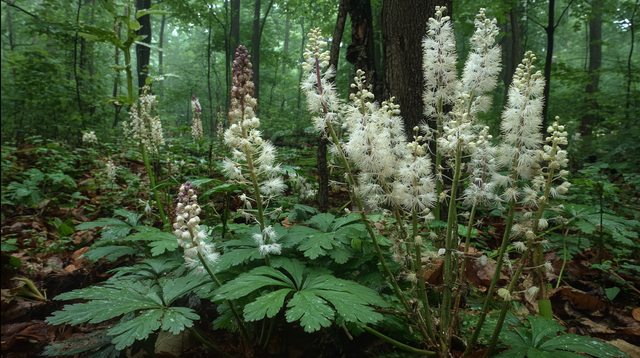
In late spring through midsummer (June to September, depending on location), black cohosh sends up towering, wandlike racemes densely packed with small, creamy white flowers. These elegant spires, sometimes called “fairy candles,” have no petals — what you see are clusters of numerous stamens that give the flower heads a feathery, bottlebrush appearance. The flowers emit a distinctive, somewhat unpleasant, fetid odor that attracts flies and beetles as pollinators. This smell also earned it the name “bugbane,” as it was once believed to repel insects.
After flowering, the plant produces small, dry, brown seed capsules (follicles) that split open along one side when ripe. Each follicle contains two rows of small, flat, brown seeds. The seeds rattle in the dried capsules when shaken by wind — hence the names rattleroot and rattletop.
The rhizome is the medicinal part. It is thick, dark brown to black on the outside, whitish inside when freshly cut, and densely covered with fibrous roots. “Cohosh” comes from the Algonquin word meaning “gnarly root,” which perfectly describes it.
Origin
Black cohosh is native to the rich, moist deciduous forests of eastern North America. Its natural range stretches from southern Ontario, Canada, southward through the Appalachian Mountains to Georgia, and westward to Missouri and Arkansas. It thrives in the understory of hardwood forests, particularly in cove forests and along shaded slopes, where it grows alongside species like tulip poplar, sugar maple, and basswood.
Today, black cohosh still grows wild throughout these regions, though wild populations are under increasing pressure from commercial harvesting. The plant was brought to Europe in the early 18th century, initially as an ornamental garden plant. By the mid-19th century, its medicinal properties had been recognized across the Atlantic, and German pharmaceutical companies began producing standardized extracts that remain popular in Europe today.
Brief History
Black cohosh has been used by humans for centuries. The Cherokee, Iroquois, Algonquin, and Delaware peoples used the rhizome for an extensive range of conditions — from rheumatism and kidney troubles to gynecological support, sore throats, colds, and backaches. The Delaware combined it with other herbs like stoneroot as a tonic.
European settlers learned of the plant from Native American communities and quickly adopted it into folk medicine. By the 1820s, black cohosh was an official drug in American medical practice. The Eclectic Medical movement of the 19th century championed its use, with Dr. John King and other Eclectic physicians promoting it for inflammatory conditions and women’s complaints. It was exported to Europe in the mid-1800s, and German researchers began serious clinical investigation in the 1940s and 1950s, ultimately producing the standardized isopropanolic extract that has been the subject of most clinical trials.
Growing & Cultivation
Climate & Zones
Black cohosh is hardy in USDA zones 3 through 8, tolerating extreme winter cold down to -40°F (-40°C) as a dormant rhizome. It thrives in the cool, moderate temperatures of its native eastern North American forest habitat, growing best between 50–79°F (10–26°C). It does not tolerate sustained summer heat above 90°F (32°C), particularly when combined with direct sunlight and dry conditions. In warmer zones (7–8), adequate shade and consistent moisture are essential.
Soil Requirements
Black cohosh prefers rich, moist, well-drained soil high in organic matter — think of a forest floor covered in decomposing leaves. The ideal soil pH is slightly acidic to near neutral, between 5.0 and 6.5, though propagation trials have shown the greatest root mass development at pH levels between 6 and 7. Amending soil with compost, leaf mold, or well-rotted organic matter will mimic the plant’s natural woodland environment. In clay soils or areas prone to waterlogging, raised beds are recommended.
Water & Sunlight
This is a woodland plant that requires consistent moisture but not waterlogged conditions. Deep mulching with shredded leaves or bark helps maintain the cool, moist root environment this species demands. During dry spells, supplemental watering is important — drought causes rapid wilting and leaf scorch.
Black cohosh prefers partial shade to full shade. In its natural habitat, it grows under 50% to 80% shade provided by a mature forest canopy. It blooms more consistently in partial shade than in deep shade. Fewer than four hours of direct sun per day is ideal, and afternoon sun should be avoided as it can scorch the leaves. At higher elevations (above 3,400 feet), it can tolerate as little as 35% shade, which may actually increase root yields by 18–20%.
Propagation
Seed: Black cohosh seeds require a period of warm stratification (about 70°F for 2–4 weeks) followed by cold stratification (34–40°F for 2–3 months) before germination. Seeds can be sown outdoors in fall and will germinate the following spring. Germination is often erratic, and patience is needed — it can take 1 to 2 years for seedlings to establish.
Division: The most reliable method. Divide mature rhizomes in fall after the plant has gone dormant, or in early spring before new growth emerges. Each division should have at least one bud (“eye”) and a portion of the root system. Plant divisions 18 to 24 inches apart at the same depth they were growing.
Planting
Plant in spring or fall. Space plants 18 to 24 inches apart to allow for their mature spread. Plant rhizome divisions about 2 inches deep. Water thoroughly after planting and mulch heavily. Black cohosh is slow to establish — allow 2 to 3 years before expecting flowering, and 3 to 5 years before rhizomes are large enough to harvest.
Companion plants: Black cohosh thrives alongside other shade-loving woodland plants including hostas, ferns, astilbe, Solomon’s seal, trillium, wild ginger, and native woodland wildflowers.
Harvesting
The rhizome and roots are harvested in late autumn after the plant has gone dormant and the aerial parts have died back. This is when the concentration of active compounds is at its peak. Carefully dig around the plant and lift the rhizome. Leave a portion of the rhizome with buds in the ground to allow the plant to regenerate. Wash rhizomes thoroughly and cut into pieces for drying.
Drying & Storage
Cut cleaned rhizomes into slices or small pieces and dry at 95–100°F in a dehydrator, or air-dry in a warm, well-ventilated area out of direct sunlight. Drying typically takes 3 to 7 days depending on thickness and conditions. Properly dried material should snap cleanly rather than bend. Store in airtight containers in a cool, dark location. Dried black cohosh root will retain potency for approximately 1 to 2 years when stored properly.
Pest & Disease Management
Black cohosh is relatively pest-free. Common issues include slugs (attracted to the moist, shady habitat), leaf spot diseases in humid conditions, and occasional rust. Organic prevention includes maintaining good air circulation, removing affected leaves, and using organic slug deterrents. The moist shade environment can also promote powdery mildew in some years.
Conservation Note
Black cohosh is listed as an “at-risk” herb by United Plant Savers due to overharvesting from wild populations to meet global demand. Growing your own is one of the most responsible ways to obtain this plant. When purchasing, look for cultivated or “woods-grown” sources rather than wildcrafted material. A proposal to include it in CITES Appendix II was considered but rejected in 2002, though conservation concerns remain active.
The Healing of Growing
Growing black cohosh offers benefits beyond the harvest itself. The act of gardening — hands in soil, bare feet on earth, time spent outdoors — has been shown to reduce cortisol, improve mood, and support immune function. The soil contains beneficial bacteria (Mycobacterium vaccae) with documented antidepressant effects. When you grow your own black cohosh, you receive healing before you ever consume it. The slow, patient process of tending this woodland plant connects you to seasonal rhythms and the quiet restoration that comes from spending time in nature.
Wellness & Therapeutic Uses
Traditional Uses
Black cohosh holds a deep place in the ethnobotanical heritage of North America. The Cherokee, Iroquois, Algonquin, and Delaware peoples used the rhizome for a remarkably broad range of conditions. Cherokee herbalists traditionally used it for women’s reproductive health, including menstrual irregularities. The Algonquin people used it for rheumatic pain and sore throat. The Iroquois used it for kidney troubles, backaches, constipation, colds, hives, and rheumatism. The Delaware combined it with stoneroot as a tonic.
European settlers adopted the plant after observing Native American uses, and by the 1820s it was an official drug in American medical practice. Eclectic physicians of the 19th century used it extensively for inflammatory conditions, particularly rheumatism, and for women’s health concerns. In Europe, standardized extracts have been used for menopausal support for over 60 years, with Germany’s Commission E approving its use for this purpose.
Modern Research
Menopausal symptom support is the most extensively studied application of black cohosh. A 2010 meta-analysis of nine randomized placebo-controlled trials found that preparations containing black cohosh improved vasomotor symptoms (hot flashes and night sweats) by an overall average of 26% compared to placebo (Shams et al., 2010, Alternative Therapies in Health and Medicine, USA). A 2012 Cochrane Review examined all randomized controlled trials of black cohosh monopreparations for menopausal symptoms in over 2,000 women, noting that while evidence was mixed, several trials showed significant benefits (Leach & Moore, 2012, Cochrane Database of Systematic Reviews, Australia). A comprehensive 2020 systematic review of 35 clinical studies involving over 43,000 women found consistent evidence supporting the efficacy of the isopropanolic extract for climacteric complaints (Beer & Neff, 2013/2020 update, Climacteric, Germany).
Bone health support is an emerging area of research. In vitro studies have shown that black cohosh extract stimulates osteoprotegerin production by human osteoblasts and enhances osteoblast differentiation — suggesting potential support for bone density maintenance. A triterpenoid glycoside isolated from black cohosh (ACCX) was found to potently block osteoclastogenesis (the formation of bone-resorbing cells) by modulating RANKL and TNFα signaling pathways (Qiu et al., 2007, Chemistry & Biology, USA). Animal studies in ovariectomized rats have demonstrated that black cohosh positively influences osteoporotic bone and may support fracture healing (Kolios et al., 2010, Planta Medica, Germany).
Anti-inflammatory properties have been documented. Phenolic compounds from black cohosh, including fukinolic acid, have been identified as potent neutrophil elastase inhibitors, suggesting meaningful anti-inflammatory activity. Isoferulic and caffeic acids present in the plant also contribute to this activity.
Mood and sleep support: Because black cohosh appears to interact with serotonin receptor subtypes (particularly 5-HT1A, 5-HT1D, and 5-HT7), research suggests it may support mood regulation and sleep quality during the menopausal transition. The plant contains N-methylserotonin, a serotonin analog, which is thought to contribute to its serotonergic activity (Powell et al., 2025, Plant Physiology, USA).
Body Systems Supported
Reproductive system: Black cohosh is primarily known for its support of the female reproductive system, particularly during the menopausal transition. Research suggests it may support healthy hormone balance without acting as a direct estrogen.
Nervous system: Through its serotonergic activity and potential effects on dopaminergic pathways, black cohosh may support the central nervous system, particularly in relation to thermoregulation, mood, and sleep.
Musculoskeletal system: Both traditional use and modern research support its role in joint comfort. Its anti-inflammatory compounds and potential bone-supportive properties make this a key system of interest.
Endocrine system: Black cohosh may influence hypothalamic function and thermoregulation, possibly acting through neurotransmitter pathways rather than direct hormonal activity.
Body Compounds Affected
Research suggests black cohosh may influence several key body compounds. Serotonin pathways appear to be a primary mechanism — black cohosh extract has been shown to bind to serotonin receptors (5-HT7 and 5-HT1A) and acts as a mixed competitive ligand and partial agonist (Burdette et al., 2003, Journal of Agricultural and Food Chemistry, USA). The plant contains N-methylserotonin, a naturally occurring serotonin analog. Research also suggests involvement with dopamine and norepinephrine pathways, with some studies showing binding to dopamine receptors. Black cohosh may also influence μ-opioid receptors, which could contribute to its traditional use for pain-related conditions. Its anti-inflammatory compounds may affect prostaglandin and cytokine levels (Ruhlen et al., 2008, Integrative Cancer Therapies, USA).
Methods of Use
Tea/Decoction
Because the medicinal part is the rhizome (a hard, woody root), a decoction is more effective than a simple infusion. Simmer 1 teaspoon of dried, chopped rhizome in 1 cup of water for 20 to 30 minutes. Strain and drink up to 3 times daily. The taste is bitter and somewhat astringent.
Tincture
A tincture (alcohol extract) is the most common traditional preparation. Typical dosages range from 1 to 2 mL (approximately 20–40 drops) of a 1:5 tincture taken 2 to 3 times daily. Many herbalists consider tincture the preferred preparation for this plant.
Standardized Extract (Capsule/Tablet)
The most clinically studied form. Common dosages in clinical trials have ranged from 20 to 40 mg of standardized extract per day, typically standardized to contain 2.5% to 5.7% triterpene glycosides. Clinical trials have used dosages from 8 to 160 mg daily, with a median of 40 mg, for periods of 8 to 54 weeks.
Cosmetic & Beauty Uses
Skin Benefits
Black cohosh has a history of topical use for skin concerns, though it is far more commonly used internally. Traditionally, it was applied directly to the skin for acne, warts, and moles — though these uses have largely fallen out of practice. Modern research has explored black cohosh extract as a melanogenesis inhibitor, suggesting it may help support even skin tone. Patent research has identified the root extract as having potential skin-brightening properties through suppression of melanin production.
The anti-inflammatory compounds in black cohosh — particularly isoferulic acid, caffeic acid, and fukinolic acid — may support skin comfort and reduce irritation when applied topically. Its antioxidant properties may also contribute to protecting skin from oxidative stress.
Hair Benefits
Research has explored black cohosh extract for hair retention. Patent filings have documented that topical formulations containing black cohosh extract may help reduce hair loss, particularly eyebrow loss associated with chemotherapy. The extract’s vasodilatory and anti-inflammatory effects are believed to contribute to this action by supporting healthy circulation to the scalp and hair follicles.
Application Methods
Topical applications of black cohosh are generally done using infused oils or diluted tinctures added to carrier creams and lotions. Because this plant can cause skin sensitivity in some individuals, a patch test is always recommended before widespread topical use. The root can be infused into jojoba or olive oil over 4 to 6 weeks for use in topical preparations at concentrations of 1–5%.
DIY Formulation Notes
Black cohosh extract can be incorporated into homemade formulations at 0.5 to 5% of the total formula. It pairs well with carrier oils such as jojoba, sweet almond, and rosehip seed oil. Avoid combining with other strongly active botanicals until you know how your skin responds. Homemade preparations containing black cohosh should be used within 2 to 4 weeks if water-based, or 3 to 6 months if oil-based.
Black cohosh is among the botanicals being explored for holistic cosmetic applications, where the wisdom of traditional beauty practices meets modern understanding of skin science.
Aromatherapy & Scent
The Aroma
Black cohosh is not known for a pleasant aroma. The fresh flowers have a distinctive, somewhat unpleasant, fetid odor — earning the plant names like “bugbane” and “bugwort.” The scent has been described as sharp, acrid, and slightly rank, which attracts fly and beetle pollinators rather than bees or butterflies. When the leaves are crushed, they release a mildly herbaceous, bitter scent. The dried root has a musty, earthy, slightly bitter smell that intensifies when cut or ground.
The root retains its aroma for a moderate period when dried — typically 1 to 2 years in proper storage. The scent is not typically used for aromatherapy purposes due to its bitter, unpleasant character.
How Scent Affects Your Body
When you inhale any plant’s volatile molecules, those molecules travel through the nose and bind to olfactory receptors. These receptors send signals directly to the limbic system (the emotional brain) and the hypothalamus (the hormone control center) — bypassing conscious thought entirely. This means scent affects the body before you decide how to react. However, black cohosh is not typically employed as an aromatherapy plant due to its unappealing scent profile.
Practical Scent Uses
While black cohosh is not an aromatherapy herb, its strong, bitter scent when grown outdoors may serve as a natural insect deterrent in garden areas. The primary therapeutic interactions with this plant come through internal consumption and topical application rather than inhalation.
Color Therapy
The Colors of Black Cohosh
Black cohosh offers a striking visual contrast across its parts. The flowers are creamy white to pure white, arranged in tall, elegant spires that glow in the dappled shade of the woodland understory. The leaves are deep green throughout the growing season, sometimes emerging with bronze-purple tones in spring. The stems are green to dark green. The rhizome — the medicinal heart of the plant — is dark brown to black on the exterior with lighter whitish flesh inside, giving the plant its common name.
Color Wavelengths
The dominant visible colors of black cohosh are white (flowers) and green (foliage). White light contains the full visible spectrum (380–700nm), providing full-spectrum light energy. Green wavelengths fall between 495–570nm, the most abundant wavelength in nature.
How These Colors Affect the Body
The white flowers of black cohosh offer full-spectrum visual input, associated with purifying, clarifying energy in color therapy traditions. The deep green foliage provides the most universally calming color wavelength — green is associated with balance, restoration, heart-centered calm, and connection to nature. Research on the restorative effects of green environments consistently shows reduced cortisol levels, improved mood, and faster recovery from mental fatigue. Having black cohosh in a shade garden provides ongoing exposure to the calming green wavelength throughout the growing season, with the striking white flower spires offering visual contrast and brightness during summer.
Using Black Cohosh for Color Therapy
Plant black cohosh in areas where you spend time outdoors for its calming green foliage. The dramatic white flower spires make it an excellent focal point in shade gardens, providing visual brightness in areas that can otherwise feel visually heavy. Cut flower spires can be brought indoors for their striking visual presence, though their scent may be unappealing in enclosed spaces.
Frequency & Vibration
The Frequency of Black Cohosh
Specific MHz frequency measurements for black cohosh have not been widely documented in the available bio-frequency literature. As a medicinal root plant rather than an aromatic herb, its frequency profile has not received the same attention as plants like rose, lavender, or frankincense. Black cohosh does not produce a commercially available essential oil, so it does not appear in Bruce Tainio’s essential oil frequency measurements.
Human Frequency Interaction
According to bio-frequency research, a healthy human body vibrates at approximately 62–78 MHz, with disease onset potentially correlating with lower frequencies. Proponents of vibrational medicine suggest that consuming or being around plants with higher frequencies may support the body’s own vibrational state through the principle of entrainment, where a stronger frequency influences a weaker one. While specific measurements for black cohosh are not available, its documented ability to influence neurotransmitter activity (serotonin, dopamine) and its traditional status as a powerful medicinal plant suggest complex energetic interactions worthy of further investigation.
Vibrational Applications
While we cannot assign a specific frequency number to black cohosh based on current research, its presence in a garden contributes to the overall vibrational environment of living plants. Spending time near living black cohosh — gardening with it, observing its growth cycles, harvesting it mindfully — engages multiple pathways of energetic interaction. Frequency measurements in this area remain emerging, and more research is needed.
The Living Plant
Benefits of Presence
Simply being around living black cohosh provides benefits beyond any extract or preparation. Research on biophilic design and nature exposure consistently demonstrates that living plants reduce stress, improve mood, restore attention, and promote feelings of calm. Black cohosh, as a dramatic and visually striking woodland plant, offers particular value as a garden presence — its towering flower spires and lush green foliage create a sense of wild, untamed nature in a cultivated space.
Air Purification
Black cohosh is primarily an outdoor woodland plant and has not been studied in the NASA Clean Air Study or similar indoor air purification research. As an outdoor garden plant, it contributes to the general benefits of plant life — oxygen production through photosynthesis and participation in the broader ecosystem of soil health, pollinator support (it hosts Spring Azure, Holly Blue, and Appalachian Azure butterflies), and organic matter cycling.
Phytoncides
While specific phytoncide measurements for black cohosh have not been widely published, all living plants release volatile organic compounds as part of their natural defense mechanisms. The distinctive, somewhat pungent scent of black cohosh flowers and foliage indicates the presence of volatile compounds that may have antimicrobial properties. Forest bathing (shinrin-yoku) research has demonstrated that exposure to plant-released phytoncides increases Natural Killer (NK) cell activity in the immune system — and any time spent in a garden rich with living plants, including black cohosh, may contribute to these benefits.
Visual & Psychological Benefits
Research consistently shows that viewing plants reduces physiological stress responses. Patients in healthcare settings with plant views recover faster. Office workers with access to greenery report improved focus and reduced mental fatigue. Black cohosh, with its dramatic vertical flower spires reaching 4 to 8 feet, provides a visually compelling presence that draws the eye upward — a movement associated with feelings of hope and aspiration in environmental psychology.
Growing Indoors vs Outdoors
Black cohosh is not well-suited to indoor growing. It is a tall, woodland perennial that requires dormancy, winter cold, and the natural light cycles of a deciduous forest understory to thrive. It is best grown outdoors in a shaded garden setting. Its height (up to 8 feet in bloom) also makes it impractical for most indoor spaces. For maximum benefit, grow it where you can interact with it regularly — in a shade garden, along a woodland path, or near a meditation or reading area.
Touch & Physical Interaction
Gardening Therapy
Working with black cohosh connects you to the established practice of horticultural therapy. Tending this plant — preparing the soil, planting, mulching, watering, and eventually harvesting — engages the body in purposeful, rhythmic movement that has been shown to reduce anxiety, lower blood pressure, and improve overall well-being. The patience required by this slow-growing perennial (3 to 5 years to harvestable size) teaches a different kind of relationship with time, one that mirrors natural rhythms rather than modern urgency.
Soil Contact Benefits
When you garden barefoot or with hands in the soil, you receive benefits from grounding (earthing) — the transfer of free electrons from the earth into the body, which research suggests may reduce inflammation and improve sleep. The soil around black cohosh is rich in organic matter, and exposure to soil bacteria, particularly Mycobacterium vaccae, has been documented to have antidepressant-like effects by stimulating serotonin production in the brain. This means that the very act of tending the soil around your black cohosh plant may support the same neurotransmitter pathways the plant itself is believed to influence.
The Tactile Experience
Black cohosh offers a rich tactile experience across its parts. The leaves are smooth to slightly textured on the upper surface with a more pronounced vein structure underneath. The compound leaf structure feels satisfying to handle — broad and slightly papery. The stems are smooth and firm. The flower spires are soft and feathery to the touch, with the numerous stamens creating a delicate, brushlike texture. The rhizome, when harvested, is rough, woody, and knotted — a deeply grounding tactile experience that connects you to the earth.
Harvesting & Processing
The autumn harvest of black cohosh rhizomes is a meditative and physically grounding practice. Digging carefully around the root crown, lifting the heavy, dark rhizome from the earth, washing it clean, and cutting it into pieces for drying engages the hands, the senses, and the awareness in a way that modern life rarely provides. The repetitive actions of slicing and arranging pieces for drying create a contemplative rhythm. The strong, earthy scent of freshly cut rhizome provides intense olfactory engagement. This hands-on processing is a form of therapy in itself.
Water-Based Applications
Teas & Decoctions
Because the medicinal part of black cohosh is the hard, woody rhizome, a decoction (simmering) is the appropriate water-based preparation rather than a simple infusion (steeping). Place 1 teaspoon of dried, chopped rhizome in 1 to 2 cups of cold water. Bring to a gentle boil, then reduce heat and simmer for 20 to 30 minutes. Strain and allow to cool slightly before drinking. The resulting tea is dark, bitter, and astringent. It may be consumed up to 3 times daily. Honey or lemon may be added to improve palatability.
Herbal Baths
A strong decoction of black cohosh root can be added to bathwater for a full-body soak. Prepare a concentrated decoction using 2 to 3 tablespoons of dried root simmered in 1 quart of water for 30 minutes. Strain and add to warm (not hot) bathwater. This preparation has been traditionally used for muscle and joint discomfort. Soak for 20 to 30 minutes. A foot bath can be prepared with a smaller amount of decoction for those who cannot take a full bath.
Compresses
A hot compress made with black cohosh decoction has been traditionally applied to areas of muscle or joint discomfort. Soak a clean cloth in warm decoction, wring slightly, and apply to the affected area for 15 to 20 minutes. Repeat as needed. Cold compresses using the same preparation may be used for areas of swelling.
Hair Rinses
A diluted decoction of black cohosh root can be used as a scalp rinse to support circulation to the scalp. After shampooing, pour the cooled decoction over the scalp, massage in gently, and leave for 2 to 3 minutes before rinsing with cool water. This application draws on the plant’s vasodilatory properties.
Historical, Cultural & Biblical Significance
Biblical References
Black cohosh is not directly mentioned in Scripture. It is native exclusively to North America and would not have been known in the biblical world. However, the buttercup family (Ranunculaceae) to which it belongs includes plants found throughout the ancient Near East, and God’s provision of healing plants for every region and every people is a theme woven throughout Scripture. “And God said, Let the earth bring forth grass, the herb yielding seed, and the fruit tree yielding fruit after his kind, whose seed is in itself, upon the earth: and it was so” (Genesis 1:11, KJV).
Ancient Civilizations
Black cohosh was not known to the ancient civilizations of Egypt, Greece, Rome, or the Near East, as it is exclusively a North American species. Its documented history begins with the indigenous peoples of eastern North America.
Indigenous Knowledge
The deepest historical roots of black cohosh use lie with the Native American peoples of eastern North America. The Algonquians, Cherokee, Iroquois, and Delaware all used the rhizome extensively. The Cherokee used it for conditions related to women’s health, rheumatism, and as a general tonic. The Algonquin people used it for kidney troubles and rheumatic pain. The Iroquois used it for hives, backaches, constipation, colds, and a broad range of other conditions. The Delaware combined it with other herbs as part of compound preparations. “Cohosh” itself comes from the Algonquin language, meaning “gnarly root” — a practical, descriptive name that speaks to the close relationship between these peoples and their plant medicines.
While these cultures may not have known the Creator by name in the way Scripture reveals Him, they were observing His design — and their careful, generations-long documentation of black cohosh’s properties has been largely confirmed by modern research.
European Heritage
European settlers learned of black cohosh from Native Americans in the colonial period. Botanists described it in the early 18th century, and it was exported to Britain initially as an ornamental. Botanical-medical writers including Johann David Schöpf (1787), Benjamin Smith Barton (1803), Peter Smith (1812), and Jacob Bigelow (1817) all documented its uses.
The Eclectic Medical movement of the mid-1800s was instrumental in popularizing black cohosh. Dr. John King championed its use, and it became one of the most widely prescribed botanicals in American practice. By the 1820s, it was an official drug. This knowledge crossed the Atlantic, and German researchers began the systematic clinical investigation that continues to this day. The German pharmaceutical company Schaper & Brümmer developed the standardized isopropanolic extract (marketed as Remifemin) that has been the subject of most modern clinical trials.
Cultural Symbolism
Black cohosh carries practical rather than highly symbolic meaning in American culture. Its many folk names tell its story — “bugbane” and “bugwort” for its insect-repellent reputation, “snakeroot” from the frontier belief that it could treat snakebite, “rattleweed” and “rattletop” for the sound of seeds in dried capsules. In the language of gardens and herbalism, it symbolizes women’s strength, resilience, and the wisdom of woodland medicine.
Safety & Precautions
Contraindications
Black cohosh should not be used by individuals with hormone-sensitive conditions including breast cancer, endometrial cancer, ovarian cancer, uterine fibroids, or endometriosis without the guidance of a qualified healthcare provider. While research has not confirmed that black cohosh acts as a direct estrogen, the cautious approach is warranted given its activity on pathways related to the endocrine system.
Individuals with liver conditions should exercise caution. While a causal link has not been definitively established, rare cases of liver injury have been associated with black cohosh use. Anyone with existing liver disease should consult a physician before use and discontinue use immediately if symptoms of liver problems develop (unusual fatigue, abdominal pain, dark urine, jaundice).
Drug Interactions
The NIH Office of Dietary Supplements states that black cohosh is not known to have any clinically important interactions with medications, though this has not been systematically studied. However, caution is advised with the following:
Hepatotoxic medications: Medications that can stress the liver (acetaminophen, methotrexate, statins) should be used cautiously alongside black cohosh due to the rare reports of liver effects. Serotonin-raising medications: Because black cohosh may interact with serotonin receptors, caution is warranted when combining with SSRIs, SNRIs, or other serotonergic medications. A case report has documented potential serotonin toxicity when combined with prescription serotonin-raising drugs. Hormonal therapies: Including tamoxifen, aromatase inhibitors, and hormone replacement therapy — consult with an oncologist or prescribing physician. Blood pressure medications: Black cohosh has demonstrated hypotensive effects in animal studies. Sedatives: May have additive effects.
Pregnancy & Nursing
Black cohosh is not recommended during pregnancy, particularly in the first trimester. It has been reported to stimulate blood flow to the pelvic area and uterus and is classified as a potential uterine stimulant. While approximately 45% of nurse-midwives in one survey reported using it to support labor induction at term, safety during pregnancy has not been established through rigorous study. Not recommended during breastfeeding without guidance from a qualified healthcare provider.
Children
Black cohosh is not generally recommended for children. There is insufficient safety data for pediatric use. Its primary applications relate to conditions of adult women, and there is no established tradition or research basis for use in children.
Elderly
Older adults may use black cohosh with appropriate caution. Lower starting doses are advisable. Given that elderly individuals often take multiple medications, the potential for drug interactions should be carefully evaluated. Monitor for any liver-related symptoms, dizziness, or blood pressure changes.
Pets
Dogs: Toxic. Black cohosh can cause vomiting, diarrhea, lethargy, and in severe cases, neurological signs in dogs. Keep the plant and all preparations out of reach.
Cats: Toxic. Black cohosh can cause vomiting, diarrhea, and more serious symptoms. Cats are generally more sensitive to plant toxins than dogs. Seek veterinary attention immediately if ingestion is suspected.
Horses: Safety data is limited. Given that the entire Ranunculaceae family contains compounds that can be irritating to livestock, caution is warranted.
If you suspect pet ingestion, contact your veterinarian or the ASPCA Poison Control Center at (888) 426-4435 immediately.
Allergies & Sensitivities
Individuals with allergies to other plants in the Ranunculaceae (buttercup) family should exercise caution. Skin sensitivity reactions are possible with topical application — always perform a patch test. Some individuals experience gastrointestinal discomfort with oral use.
Dosing Guidelines
Clinical trials have used standardized extracts at 20 to 40 mg per day (standardized to 2.5%–5.7% triterpene glycosides) as the most common dosing range. Higher doses up to 160 mg/day have been studied without significant adverse effects. The median dose in the Cochrane review was 40 mg daily. Duration of use in studies ranged from 8 to 54 weeks. Many practitioners recommend limiting continuous use to 6 months, though some European guidelines permit longer use under practitioner supervision.
Signs of overdose or overuse may include nausea, vomiting, dizziness, nervous system or visual disturbances, reduced pulse rate, and increased perspiration.
Quality & Sourcing
Adulteration is a significant concern with black cohosh. Studies have found that some commercial products contain Asian Actaea species rather than true Actaea racemosa. Look for products that specify the botanical name Actaea racemosa (or Cimicifuga racemosa), are standardized to triterpene glycoside content, and have undergone third-party testing. GC/MS testing and identity verification through markers like cimiracemoside C (present in true black cohosh) and the absence of cimifugin (found in Asian species) are indicators of authenticity.
Signs of Adverse Reaction
Mild reactions that may resolve: gastrointestinal discomfort, headache, heaviness in the legs, weight gain.
Serious reactions requiring medical attention: signs of liver problems (unusual fatigue, loss of appetite, abdominal pain, dark urine, yellowing of skin or eyes), severe allergic reactions, significant changes in blood pressure, or neurological symptoms.
Disclaimer
This information is for educational purposes only. It is not intended to diagnose, treat, cure, or prevent any disease. Always consult with a qualified healthcare provider before using any herbal product, especially if you are pregnant, nursing, taking medications, or have a medical condition. If you experience any adverse reaction, discontinue use immediately and seek medical attention.
Want Personalized Guidance?
Every body is unique. What works for one person may not be right for another. If you’d like personalized support in incorporating black cohosh into your wellness journey, consider working with a qualified practitioner who can assess your individual needs.
Sources & References
Peer-Reviewed Studies
- Ethnobotany, Phytochemistry, Traditional and Modern Uses of Actaea racemosa L. (Black cohosh): A Review – Progress in the Chemistry of Organic Natural Products, 2021, International
- Efficacy of black cohosh-containing preparations on menopausal symptoms: a meta-analysis – Alternative Therapies in Health and Medicine, 2010, USA
- Black cohosh (Cimicifuga spp.) for menopausal symptoms (Cochrane Review) – Cochrane Database of Systematic Reviews, 2012, Australia
- Black cohosh (Cimicifuga racemosa) for menopausal symptoms: a systematic review of its efficacy – Pharmacological Research, 2008, Italy
- Black Cohosh Acts as a Mixed Competitive Ligand and Partial Agonist of the Serotonin Receptor – Journal of Agricultural and Food Chemistry, 2003, USA
- Black Cohosh: Insights into its Mechanism(s) of Action – Integrative Cancer Therapies, 2008, USA
- A Triterpene Glycoside from Black Cohosh that Inhibits Osteoclastogenesis by Modulating RANKL and TNFα Signaling Pathways – Chemistry & Biology, 2007, USA
- Structure-Guided Identification of Black Cohosh Triterpenoids with In Vitro Activity against Multiple Myeloma – Journal of Natural Products, 2020, Austria
- Benefits of Black Cohosh (Cimicifuga racemosa) for Women Health: An Up-Close and In-Depth Review – Pharmaceuticals, 2022, International
- On the Biosynthesis of Bioactive Tryptamines in Black Cohosh (Actaea racemosa L.) – Plant Physiology, 2025, USA
- Black cohosh (Cimicifuga racemosa): a systematic review of adverse events – American Journal of Obstetrics & Gynecology, 2008, UK
- Review & meta-analysis: isopropanolic black cohosh extract iCR for menopausal symptoms — an update on the evidence – Climacteric, 2020, Germany
Institutional Sources
- Black Cohosh — Health Professional Fact Sheet – National Institutes of Health, Office of Dietary Supplements, USA
- Black Cohosh (StatPearls) – National Library of Medicine, 2023, USA
- Actaea racemosa — Plants of the World Online – Royal Botanic Gardens, Kew, UK
- Black cohosh (Actaea racemosa): an annotated bibliography – US Forest Service, USA
Traditional Medicine & Ethnobotanical Sources
- Distinguishing Black Cohosh from Look-Alikes – United Plant Savers, USA
- The Phytochemistry of Cherokee Aromatic Medicinal Plants – Medicines, 2018, USA
- Black Cohosh Cultivation & Growing Guide – United Plant Savers, USA
- Black Cohosh (Actaea racemosa L.) — Forest Farming – Cooperative Extension System, USA
Safety Sources
- Black Cohosh Uses, Benefits & Dosage – Drugs.com (clinical pharmacology reference), USA
- Black Cohosh (Herbal Medicine Review) – American Family Physician, 2003, USA
- Safety and Efficacy of Black Cohosh During Pregnancy and Lactation – American Botanical Council / HerbClip, 2007, USA