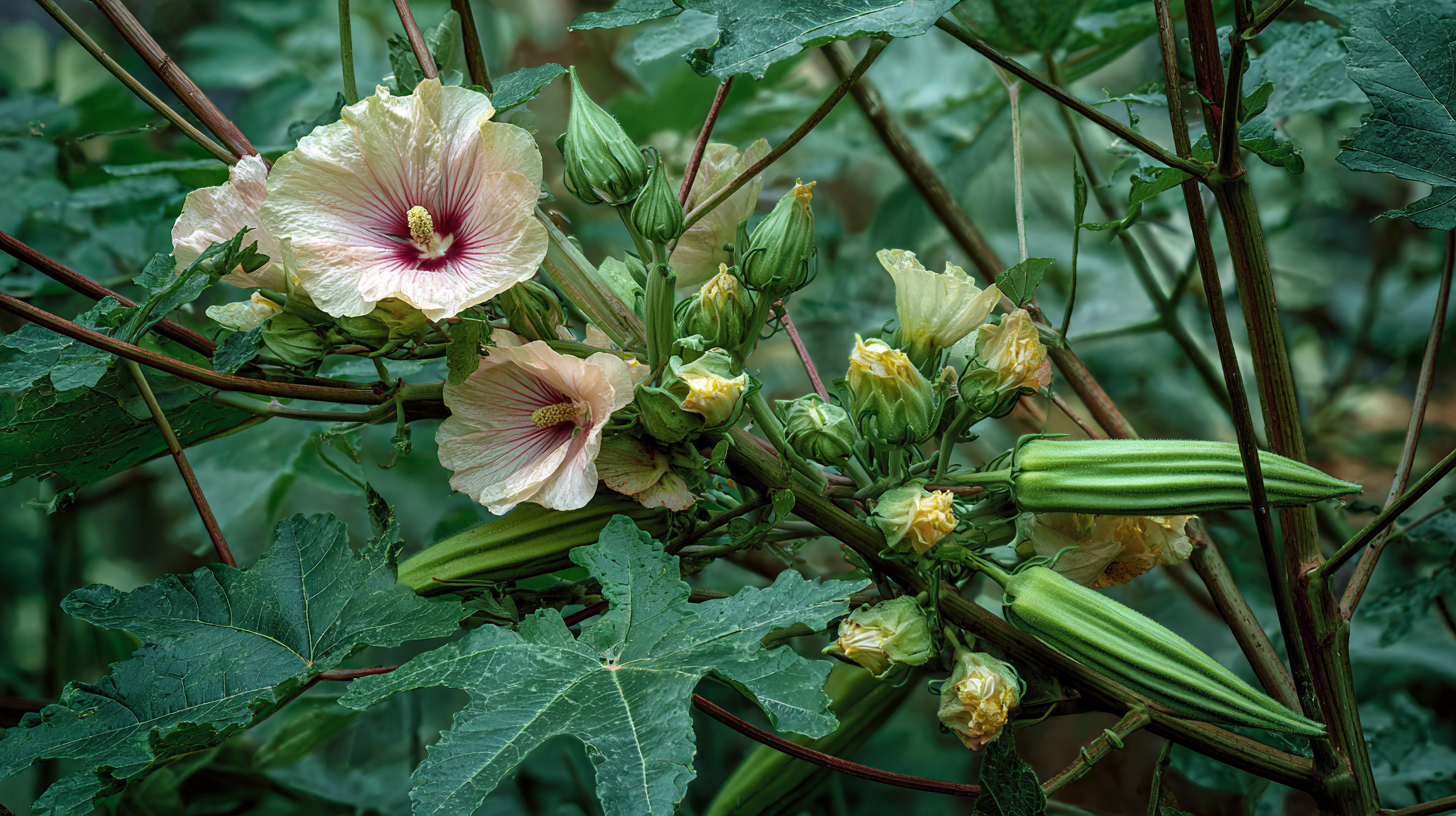
Okra (Abelmoschus esculentus)
If you struggle with blood sugar balance, sluggish digestion, or stubborn inflammation, you are not alone — and the Creator may have already provided support growing right in your backyard. Okra is one of the most quietly powerful vegetables on the planet, a food so rich in mucilage, antioxidants, and essential nutrients that modern research is only now catching up with what traditional healers across Africa, India, and the American South have known for centuries.
This remarkable plant is one of many gifts the Creator embedded into nature for our benefit. Long before laboratories existed, okra was already here — provided by a God who knew we would need it, who designed its pods to nourish, its fibers to soothe, and its seeds to sustain.
This information is for educational purposes only and is not intended to diagnose, treat, cure, or prevent any disease. Always consult with a qualified healthcare provider before making changes to your health regimen.
The Plant
Common Names: Okra, Lady’s Finger, Gumbo, Bhindi (Hindi), Bamia (Arabic/Greek), Quiabo (Portuguese), Gombo (French), Krajiab Khiaw (Thai)
Botanical Name: Abelmoschus esculentus (L.) Moench (syn. Hibiscus esculentus L.)
Family: Malvaceae (the mallow family, which includes hibiscus, cotton, and cacao)
Description
Okra is a warm-season, upright annual that grows rapidly to a height of 3 to 6 feet, sometimes reaching 8 feet under ideal conditions. Its stems are sturdy, slightly woody at the base, and covered with fine bristly hairs. The leaves are large, palmate, with 5 to 7 lobes, deep green, and rough-textured — resembling those of its cousin, hibiscus.
The flowers are among the most beautiful in the vegetable garden: large, creamy yellow with a deep burgundy or maroon center, each lasting only a single day. They are strikingly similar to hibiscus blooms, a reminder of the family connection. After pollination, the flower gives way to the signature ridged, tapered pod — the edible fruit — which grows quickly and should be harvested young, typically at 2 to 4 inches long, before it becomes tough and fibrous.
Inside the pod, rows of small, round, pale seeds are embedded in the plant’s hallmark mucilage — the thick, slippery substance that gives okra its distinctive texture and much of its medicinal value. The taproot is strong and deep, which contributes to okra’s remarkable heat and drought tolerance.
Origin
Okra is native to tropical Africa, likely originating in the region around Ethiopia and the upper Nile. From there it spread across North Africa, the Middle East, and into India, where it became a staple crop. Arab traders carried it along the Silk Road and into the Mediterranean. The transatlantic slave trade brought okra to the Americas, where enslaved Africans planted it in their gardens and introduced it into Southern cooking — giving rise to gumbo, a word derived from the Bantu “ki ngombo,” meaning okra.
Today okra is cultivated commercially throughout the tropics and subtropics, with major production in India, Nigeria, Sudan, Egypt, Pakistan, and the southeastern United States. It thrives in heat that would wilt most vegetables, making it one of the most reliable warm-season crops in the world.
Brief History
Okra’s use dates back thousands of years. The ancient Egyptians were cultivating it by at least the 12th century BCE. It appears in the writings of Spanish Moors who encountered it in North Africa. By the 1600s, it was established in the Caribbean and the American South. Thomas Jefferson recorded growing it at Monticello. In the Deep South, okra became inseparable from regional identity — the foundation of gumbo, the centerpiece of fried-vegetable platters, and a symbol of resilience in communities that grew it with little more than sunlight and faith.
Growing & Cultivation
Climate & Zones
Okra thrives in USDA Hardiness Zones 5 through 12, but performs best in Zones 7 through 11 where summers are long and hot. It requires warm soil — at least 65°F for germination, with 75–90°F being ideal. Okra loves heat. While it can be grown as far north as Zone 5 with careful timing and season extension, it is truly in its element in the hot, humid conditions of the southeastern United States, the tropics, and the subtropics.
Soil Requirements
Okra is not fussy about soil, but it performs best in well-draining, fertile loam with a pH of 6.0 to 6.8. It tolerates clay and sandy soils if drainage is adequate. Work in compost or well-rotted manure before planting. In containers, use a high-quality potting mix with perlite for drainage. Avoid waterlogged conditions — okra’s deep taproot will rot in standing water.
Water & Sunlight
Okra demands full sun — a minimum of 6 to 8 hours of direct sunlight daily. More is better. It is remarkably drought tolerant once established, thanks to that deep taproot, but consistent moisture during flowering and pod production improves both yield and tenderness. Water deeply once or twice per week rather than shallow daily watering. Overwatering shows as yellowing lower leaves and wilting despite moist soil.
Propagation
Seed: Okra is almost exclusively grown from seed. Soak seeds overnight in warm water to soften the hard seed coat and speed germination. Direct sow outdoors after all frost danger has passed and soil has warmed to at least 65°F. Plant seeds 1 inch deep, 12 to 18 inches apart, in rows 3 feet apart. Germination takes 7 to 14 days. In shorter-season areas, start seeds indoors 3 to 4 weeks before the last frost in biodegradable pots — okra resents root disturbance during transplanting.
Saving Seed: Allow a few pods to mature fully on the plant until brown and dry. Crack open and collect the round seeds. Store in a cool, dry place. Okra seeds remain viable for 2 to 4 years.
Planting
Plant after the last frost when soil is reliably warm. In the Deep South (Zones 8–9), this is typically mid-April to May. Space plants 12 to 18 inches apart. Okra grows tall and wide — give it room. Companion plants include peppers, eggplant, basil, and melons, which share its love of heat. Avoid planting near brassicas (cabbage, broccoli), which prefer cooler conditions.
Harvesting
Harvest pods when they are 2 to 4 inches long — young, tender, and easy to snap. Check plants every 1 to 2 days during peak production, as pods can grow an inch or more overnight in hot weather. Pods left too long become woody, tough, and fibrous. Cut pods with a sharp knife or pruning shears, leaving a short stem. Morning harvest is best, after dew has dried. Wear gloves and long sleeves — okra’s tiny spines can irritate skin.
Regular harvesting stimulates continued production. A well-maintained okra plant can produce for 10 to 12 weeks or until frost.
Drying & Storage
Fresh okra stores in the refrigerator for 2 to 3 days. Do not wash before storing — moisture accelerates decay. For longer preservation, slice and blanch for 3 minutes, then freeze on a baking sheet before transferring to freezer bags. Okra can be dehydrated by slicing into thin rounds and drying at 135°F until brittle — dried okra stores for up to a year in airtight containers. Pickling is another popular preservation method.
Pest & Disease Management
Common pests include aphids, corn earworms, stink bugs, and flea beetles. Companion planting with basil and marigolds helps deter aphids and whiteflies. Neem oil spray addresses most soft-bodied pests. Root-knot nematodes can be problematic in sandy Southern soils — rotate crops and plant marigolds as a trap crop. Diseases include powdery mildew (improve air circulation), fusarium wilt (rotate crops, choose resistant varieties), and Southern blight (avoid overhead watering). Remove and destroy affected plants promptly.
Companion Planting
Okra grows well with peppers, eggplant, melons, cucumbers, sunflowers, and basil. Its tall stature can provide beneficial afternoon shade for lettuce and spinach in hot climates. Avoid planting near brassicas or anything that prefers cool conditions.
The Healing of Growing
Growing okra offers benefits beyond the harvest itself. The act of gardening — hands in soil, bare feet on earth, time spent outdoors — has been shown to reduce cortisol, improve mood, and support immune function. The soil contains beneficial bacteria (Mycobacterium vaccae) with documented antidepressant effects. When you grow your own okra, you receive healing before you ever consume it. There is something deeply grounding about tending a plant that thrives in the heat most people try to escape — okra teaches you that what seems harsh can be exactly the condition needed for abundance.
Nutritional Profile
Macronutrients
Per 100g of raw okra (approximately 1 cup sliced):
Calories: 33 | Protein: 1.9g | Carbohydrates: 7.5g | Dietary Fiber: 3.2g | Sugars: 1.5g | Total Fat: 0.2g | Saturated Fat: 0.03g
Okra is exceptionally low in calories and high in fiber relative to its volume, making it an excellent food for blood sugar management and digestive health.
Vitamins
Vitamin C: 23mg (26% DV) — Supports immune function, collagen production, and acts as a powerful antioxidant that protects cells from oxidative damage. Vitamin C also enhances iron absorption from plant foods.
Vitamin K: 31µg (26% DV) — Essential for proper blood clotting and bone metabolism. Vitamin K works synergistically with calcium and vitamin D to support bone density.
Vitamin A: 36µg RAE (4% DV) — Supports vision, immune function, and skin integrity. Okra provides beta-carotene, the plant-based precursor to vitamin A.
Folate (B9): 60µg (15% DV) — Critical for DNA synthesis, cell division, and neural tube development in pregnancy. Folate also supports healthy homocysteine metabolism, which is important for cardiovascular health.
Thiamin (B1): 0.2mg (17% DV) — Essential for energy metabolism and proper nerve function. Thiamin helps convert carbohydrates into usable energy.
Vitamin B6: 0.2mg (13% DV) — Supports neurotransmitter synthesis, including serotonin and dopamine production. Also involved in over 100 enzymatic reactions in protein metabolism.
Minerals
Magnesium: 57mg (14% DV) — Essential for over 300 enzymatic reactions in the body. Supports muscle and nerve function, blood sugar regulation, blood pressure management, and bone health. Many Americans are deficient in magnesium.
Manganese: 0.79mg (34% DV) — A trace mineral critical for bone formation, blood clotting, and the metabolism of amino acids, cholesterol, and carbohydrates. Also a cofactor for the antioxidant enzyme superoxide dismutase (SOD).
Calcium: 82mg (6% DV) — Supports bone and teeth structure, muscle contraction, nerve signaling, and blood clotting.
Potassium: 299mg (6% DV) — Critical for heart rhythm, muscle contractions, and fluid balance. Works in opposition to sodium to regulate blood pressure.
Copper: 0.11mg (12% DV) — Supports iron metabolism, connective tissue formation, and immune function.
Phosphorus: 61mg (5% DV) — Works with calcium for bone and teeth formation. Also essential for energy production (ATP) and DNA/RNA structure.
Iron: 0.62mg (3% DV) — Essential for oxygen transport in the blood. The vitamin C in okra enhances absorption of its plant-based (non-heme) iron.
Phytonutrients & Active Compounds
Okra is rich in bioactive compounds that extend far beyond basic nutrition:
Mucilage (Polysaccharides): The most distinctive compound in okra. This thick, viscous fiber is composed primarily of D-galactose, L-rhamnose, and galacturonic acid. It forms a gel-like coating in the digestive tract that may slow glucose absorption, soothe inflamed mucous membranes, and support healthy cholesterol levels.
Quercetin: A potent flavonoid antioxidant found abundantly in okra. Research suggests quercetin may support cardiovascular health, reduce inflammation, and modulate histamine release.
Catechins: The same group of polyphenols found in green tea. These compounds support cellular protection against oxidative stress.
Isoquercetin: A glycoside of quercetin with improved bioavailability, contributing to okra’s antioxidant capacity.
Pectin: A soluble fiber that may support healthy cholesterol and blood sugar levels by slowing nutrient absorption in the gut.
Oxalic acid: Present in moderate amounts. Worth noting for individuals prone to kidney stones (calcium oxalate type).
Nutrient Notes
Okra’s nutrient density is impressive for its calorie count. It provides meaningful amounts of vitamin C, vitamin K, folate, and manganese in fewer than 35 calories per cup. The mucilage fiber is not destroyed by cooking — in fact, slow cooking releases more of it, which is why gumbo becomes thick and silky. The vitamin C in okra enhances absorption of its own iron content, a natural synergy. Consuming okra with healthy fats (olive oil, butter) improves absorption of its fat-soluble vitamins A and K.
Connection to Body Compounds
The B-vitamins in okra (particularly B6 and folate) support serotonin and dopamine production. The magnesium content may help regulate cortisol, the body’s primary stress hormone. The antioxidant compounds (quercetin, catechins) help modulate inflammatory cytokines including IL-6 and TNF-alpha.
Culinary Uses
Edible Parts
Pods: The primary edible part. Young pods (2–4 inches) are tender and mild. Larger pods become tough and fibrous. The mucilage inside is released during cooking, which thickens soups and stews.
Leaves: Young okra leaves are edible and used in some African and Asian cuisines as cooked greens or in soups. Mild flavor, slightly mucilaginous.
Seeds: Mature, dried okra seeds can be roasted and ground as a caffeine-free coffee substitute — a practice with roots in the Civil War South. The seeds also yield an edible oil with a composition similar to olive oil.
Flowers: The beautiful blossoms are edible, with a mild, slightly sweet flavor similar to squash blossoms.
Flavor Profile
Fresh young okra has a mild, grassy, slightly sweet flavor with subtle earthy undertones. When raw, it is crisp with a faint bean-like quality. Cooking mellows the flavor and brings out a richer, more complex taste. The mucilage — that slippery texture — intensifies with longer cooking in liquids and diminishes with high-heat, dry cooking methods. Dried okra has a more concentrated, slightly nutty flavor.
Preparation
The “slime question” defines okra’s reputation. For those who enjoy the mucilage, long-simmered dishes like gumbo are ideal — the pods break down and create a rich, silky broth. For those who prefer less mucilage, high-heat methods are the answer: roasting at 425°F, grilling, frying, sautéing in a hot skillet, or pickling in vinegar all reduce the slippery texture dramatically. Cutting okra releases more mucilage, while cooking pods whole preserves a firmer texture. Adding acidic ingredients (tomatoes, lemon juice, vinegar) also reduces mucilage.
Culinary Pairings
Okra pairs beautifully with tomatoes, onions, garlic, corn, peppers, shrimp, sausage, rice, black-eyed peas, cornmeal (for frying), lemon, cumin, coriander, curry spices, coconut milk, and olive oil. It is central to Southern, Cajun, Creole, Indian, Middle Eastern, West African, Ethiopian, Caribbean, and Brazilian cuisines.
Storage
Store unwashed fresh okra in a paper bag or loosely wrapped in paper towels in the refrigerator crisper drawer. Use within 2 to 3 days for best quality. For freezing, wash, trim ends, blanch for 3 minutes, ice-bath, dry, and freeze flat on a sheet pan before bagging. Frozen okra keeps 10 to 12 months.
Ready to cook with okra? View Recipes on Chefts →
Wellness & Therapeutic Uses
Traditional Uses
Okra has been used as a healing food across cultures for centuries. In traditional African medicine, the mucilage was used to soothe digestive complaints, ease sore throats, and support joint flexibility. Ayurvedic practitioners in India have historically used okra to support urinary health, cool the body, and promote healthy elimination. In traditional Turkish and Middle Eastern medicine, okra was valued for its demulcent (soothing) properties and used for inflammatory conditions of the gut and respiratory tract. Throughout the American South, okra water — made by soaking cut pods overnight — has long been a folk approach to blood sugar support.
Modern Research
Blood Sugar Support: A 2026 systematic review and meta-analysis of 14 randomized controlled trials (836 participants) found that okra supplementation was associated with significant reductions in fasting blood sugar, postprandial glucose, HbA1c, and insulin resistance in individuals across the diabetes spectrum. The mucilage and soluble fiber in okra may slow glucose absorption in the intestines. (Systematic Review, Journal of Human Nutrition and Dietetics, 2026, Iran/International)
Lipid/Cholesterol Support: A 2024 systematic review and meta-analysis of clinical studies found that okra supplementation substantially improved lipid profiles — reducing LDL cholesterol, total cholesterol, and triglycerides while increasing HDL cholesterol — in individuals with prediabetes, type 2 diabetes, and obesity. (Nutrients, 2024, South Africa)
Anti-Inflammatory Properties: A 2023 randomized, double-blind, placebo-controlled clinical trial found that 1000mg of okra three times daily for three months improved glycemic control, lipid profiles, and reduced markers of chronic inflammation in type 2 diabetic patients without tangible adverse effects. (Acta Diabetologica, 2023, Iran)
Comprehensive Biological Activities: A 2025 review consolidated evidence for okra’s broad biological activities, including antidiabetic, antihyperlipidemic, antifatigue, vasoprotective, hepatoprotective, antitumor, anti-inflammatory, and antimicrobial effects, noting that the plant is increasingly recognized as a functional food with significant pharmacological potential. (Molecules, 2025, International)
Mucilage as Functional Compound: Research has highlighted okra mucilage’s potential as a natural antidiabetic agent and its promise for pharmaceutical and nutraceutical applications due to its rheological properties, low cost, non-toxicity, and biocompatibility. (Plants, 2021, Brazil/International)
Digestive Support: The mucilage in okra acts as a demulcent — a substance that coats and soothes mucous membranes throughout the digestive tract. Traditional use for gastric inflammation, dysentery, and intestinal irritation is consistent with the compound’s known properties. The soluble fiber promotes healthy bowel movements and feeds beneficial gut bacteria.
Body Systems Supported
Digestive System: Mucilage soothes the gut lining, fiber supports regularity and feeds beneficial microbiota, and pectin supports healthy bowel function.
Cardiovascular System: Research suggests okra may support healthy cholesterol ratios, blood pressure (via potassium and magnesium), and vascular function.
Endocrine System: Multiple clinical trials demonstrate okra’s association with improved blood sugar regulation and insulin sensitivity.
Immune System: Vitamin C, antioxidant flavonoids, and polysaccharides support immune cell function and modulate inflammatory responses.
Integumentary System (Skin): Vitamin C supports collagen synthesis. Antioxidants protect against oxidative damage. Mucilage applied topically provides soothing hydration.
Nervous System: B-vitamins and magnesium support nerve function and neurotransmitter production.
Musculoskeletal System: Calcium, magnesium, vitamin K, and manganese all contribute to bone health. Anti-inflammatory compounds may support joint comfort.
Body Compounds Affected
The B-vitamins (particularly B6 and folate) in okra support the production of serotonin and dopamine. The magnesium content may help modulate cortisol levels. Quercetin and other flavonoids modulate inflammatory cytokines including IL-6 and TNF-alpha. The soluble fiber influences insulin response by slowing glucose absorption. Antioxidant compounds support nitric oxide production for vascular health.
Methods of Use
Tea/Infusion (Okra Water)
Cut 2–4 fresh okra pods into pieces or poke holes throughout. Soak in 8–16 oz of water overnight (8–12 hours) at room temperature. Strain and drink first thing in the morning. This cold infusion extracts mucilage and water-soluble compounds without heat. Traditional use: daily for blood sugar support.
Whole Food (Cooked or Raw)
The most common and effective method. Include okra in the diet 3–5 times per week through soups, stews, roasted dishes, or raw preparations. Cooking releases additional mucilage. Consuming the whole food provides the full spectrum of fiber, nutrients, and bioactive compounds.
Powder (Dried & Ground)
Dried okra pods and seeds can be ground into a fine powder. Typical supplemental doses in research studies range from 1000–3000mg daily. Can be mixed into smoothies, soups, or encapsulated. The powder retains mucilage and many active compounds.
Cosmetic & Beauty Uses
Skin Benefits
Okra’s mucilage acts as a natural humectant and emollient, making it particularly beneficial for dry, dehydrated, and mature skin. The mucilage forms a hydrating film on the skin surface that helps lock in moisture — a principle similar to hyaluronic acid serums but entirely plant-derived. The high vitamin C content supports collagen synthesis, while flavonoid antioxidants (quercetin, catechins) help protect against oxidative damage from UV exposure and environmental pollutants.
Research from 2026 demonstrated that okra seed extract provided protective effects against UV-induced skin damage in both acute and chronic exposure models, reducing epidermal thickening and collagen disruption. (Journal of Photochemistry and Photobiology B, 2026)
Okra is suitable for all skin types but particularly beneficial for dry, sensitive, and aging skin.
Hair Benefits
Okra mucilage has become a popular natural hair gel and conditioner, particularly in the natural hair community. The mucilage provides slip for detangling, defines curls without crunchiness, and adds moisture without weighing hair down. To make okra gel, simmer sliced okra pods in water for 15–20 minutes until the liquid becomes thick and gel-like, strain out the solids, and use as a styling gel or deep conditioning treatment. The vitamins and minerals in okra support scalp health, and the mucilage helps seal moisture into hair strands.
Application Methods
Face mask: Blend raw okra into a paste, apply to clean skin, leave 15–20 minutes, rinse. Hydrating and soothing for dry or irritated skin.
Hair gel: Simmer 8–10 chopped okra pods in 2 cups water for 15–20 minutes. Strain, cool, and store in a jar in the refrigerator for up to 2 weeks. Apply to wet hair for curl definition and moisture.
Bath additive: Simmer sliced okra in a pot of water, strain, and add the mucilaginous liquid to bathwater for whole-body skin soothing.
DIY Formulation Notes
Okra-based preparations have a short shelf life due to the plant-based mucilage. Refrigerate all homemade okra preparations and use within 1 to 2 weeks. A few drops of rosemary essential oil or vitamin E can extend shelf life slightly. Pairs well with coconut oil, aloe vera, and honey in formulations. The mucilage acts as a natural thickener, reducing the need for synthetic gelling agents.
Okra is among the botanicals being explored for holistic cosmetic applications, where the wisdom of traditional beauty practices meets modern understanding of skin science.
Aromatherapy & Scent
The Aroma
Okra is not typically known as an aromatic plant. The fresh plant has a mild, grassy, green scent — similar to fresh green beans or garden vegetation. When the pods are cut open, a slightly earthy, vegetal aroma is released along with the mucilage. The leaves, when crushed, release a more distinctly herbaceous, slightly peppery scent. The flowers carry a faint, sweet fragrance typical of the mallow family.
Dried okra has a more concentrated earthy, hay-like aroma. The scent is subtle — you need to be close to detect it. Roasting or frying okra transforms the aroma entirely, producing warm, nutty, savory notes that are inviting and appetite-stimulating.
How Scent Affects Your Body
While okra is not used in aromatherapy the way lavender or rosemary might be, the science of scent still applies. When you smell fresh-cut okra — or the aroma of okra cooking — volatile molecules enter the nose, contact olfactory receptors, and send signals directly to the limbic system and hypothalamus within seconds. The green, garden-fresh scent of okra plants connects to the broader research on green space exposure: studies show that the scent of living plants and freshly cut vegetation may reduce cortisol and promote a sense of calm.
Emotional & Mood Effects
The green, mild scent of living okra plants may contribute to a grounding, calming effect consistent with general plant-presence research. The cooking aroma of okra — particularly when fried or simmered in gumbo — evokes comfort, nostalgia, and connection to home and heritage for many people, which carries its own emotional and mood-supporting value.
Ways to Experience the Scent
The most practical way to experience okra’s scent is by growing it. Tending an okra garden puts you in direct contact with the plant’s subtle aroma while also providing the documented benefits of green-space exposure. Cooking with fresh okra releases its signature aroma throughout the kitchen — an experience that combines nutrition with sensory pleasure.
Color Therapy
The Colors of Okra
Okra offers a range of colors across its lifecycle. The pods are typically deep green, though burgundy and red varieties (such as ‘Red Burgundy’ and ‘Jing Orange’) exist. The leaves are rich, dark green. The flowers are a striking creamy yellow with a deep maroon-purple center — one of the most beautiful blossoms in the vegetable garden. The seeds inside are pale green when young, darkening to gray-green or brown when mature.
Color Wavelengths
Green (pods and leaves): 495–570nm. Green light falls in the middle of the visible spectrum and is the color the human eye is most sensitive to. Green is associated with balance, calm, heart-centered energy, and connection to nature.
Yellow (flowers): 570–590nm. Yellow wavelengths are associated with mental stimulation, optimism, clarity, and uplifted mood.
Purple/Maroon (flower center, some pod varieties): 380–450nm. Violet and deep red wavelengths are associated with calming the nervous system, meditative states, and spiritual reflection.
How Okra’s Colors Affect the Body
The dominant green of okra’s foliage provides the balancing, calming influence documented in color therapy research. Studies on green environments consistently show reduced stress hormones and improved mood. The brief daily appearance of okra’s yellow flowers adds a burst of uplifting, optimistic energy. Having okra plants in the garden or on a sunny patio provides passive color therapy simply through visual exposure.
Using Okra for Color Therapy
Grow okra where you can see it regularly — near a kitchen window, along a garden path, or on a sunny deck. The daily check on your okra plants becomes a moment of green-space exposure. Eating the green pods contributes to “eating the rainbow,” the principle that consuming a variety of colorful plant foods provides a spectrum of beneficial phytonutrients.
Frequency & Vibration
The Frequency of Okra
Specific MHz frequency measurements for okra have not been widely documented in the bio-frequency literature in the way that essential oil-producing plants (rose, frankincense, lavender) have been measured. Okra does not yield an essential oil, so it does not appear in Bruce Tainio’s essential oil frequency charts.
However, as a living plant, okra vibrates at a molecular level — this is basic physics. All organic matter has measurable electromagnetic properties. As a fresh, living, rapidly-growing plant with high water content and active photosynthesis, okra would be expected to have a frequency consistent with healthy, vital plant matter.
Human Frequency Interaction
According to bio-frequency research, the healthy human body resonates between 62–78 MHz. Proponents of vibrational medicine suggest that consuming fresh, living, or minimally processed plant foods may support the body’s natural frequency more effectively than processed, devitalized foods. Fresh okra — consumed raw, lightly cooked, or as okra water — retains its living enzymes and vital energy more fully than heavily processed forms.
Vibrational Applications
The most practical application of frequency principles with okra is simply to consume it as close to its living state as possible — fresh from the garden, lightly prepared, and combined with other high-vitality whole foods. Growing your own okra and harvesting it moments before preparation preserves whatever vibrational qualities the living plant carries.
Note: Frequency measurements of plants and foods represent an area where research is emerging. The principles above reflect the framework of vibrational medicine proponents and should be understood in that context.
The Living Plant
Benefits of Presence
Simply being around living okra plants provides benefits beyond any future harvest. Research on biophilic design — the human need for connection to nature — demonstrates that visual exposure to living plants reduces stress, improves mood, enhances concentration, and supports faster recovery from illness. Okra’s lush green foliage, dramatic daily flowers, and rapid visible growth make it a particularly rewarding plant to be near.
Air Purification
Okra is not featured in the NASA Clean Air Study (which focused on indoor houseplants), as it is primarily an outdoor garden plant. However, like all actively photosynthesizing plants, okra absorbs carbon dioxide and releases oxygen during daylight hours. Its large leaf surface area contributes meaningfully to oxygen production in a garden setting. Dense plantings of okra can contribute to improved air quality in an immediate outdoor environment.
Phytoncides
While okra is not documented as a significant producer of phytoncides (the antimicrobial volatile compounds associated with forest bathing and conifers), its green, growing presence contributes to the general plant-derived compounds in a garden atmosphere. Time spent in any productive garden — including an okra patch — exposes you to a variety of plant-released volatiles that contribute to the documented benefits of nature exposure.
Visual & Psychological Benefits
Okra is a visually rewarding plant. It grows fast enough that you can observe daily progress, which provides a sense of accomplishment and forward momentum. The large, tropical-looking leaves create a lush, abundant aesthetic. The daily appearance of beautiful hibiscus-like flowers offers a brief, reliable burst of beauty. Research in healthcare settings has demonstrated that patients with views of greenery and growing plants experience faster recovery, lower pain perception, and improved mood.
Growing Indoors vs Outdoors
Okra is primarily an outdoor, full-sun plant. It can be grown in large containers (at least 3–5 gallons) on sunny patios, decks, or balconies. Indoor growing is possible only with strong supplemental lighting (high-output grow lights providing 8+ hours of intense light daily) and is generally not practical for most home growers. For the best “living plant” benefits, grow okra outdoors where its presence becomes part of your daily garden experience.
Touch & Physical Interaction
Gardening Therapy
Okra is a rewarding plant for horticultural therapy. Its fast growth provides visible daily progress. The routine of checking plants, harvesting pods, and managing the garden creates structure and purpose. The repetitive motion of picking okra — reach, assess, cut, collect — is meditative and grounding. For anyone dealing with stress, grief, or restlessness, tending an okra garden offers productive, meaningful engagement with the physical world.
Soil Contact Benefits
Working in the soil around okra plants exposes your hands (and bare feet, if you garden barefoot) to Mycobacterium vaccae, a soil bacterium with documented antidepressant effects. Research has shown that contact with this bacterium stimulates serotonin production. Additionally, direct contact with the earth provides grounding/earthing benefits — the transfer of electrons from the ground into the body, which research suggests may reduce inflammation, improve sleep, and normalize cortisol rhythms.
The Tactile Experience
Okra has a distinctive feel. The leaves are large, rough, and slightly prickly. The stems are sturdy and fibrous, covered with fine bristly hairs. The pods have a ribbed texture with a slight fuzz — young pods snap crisply, while older ones feel woody and resist bending. The flowers are soft, delicate, and silky. Slicing a fresh pod reveals the slippery mucilage inside — a unique tactile experience. Wear gloves when harvesting if you have sensitive skin, as the tiny spines on stems and leaves can cause irritation.
Harvesting & Processing
The daily harvest ritual during okra’s productive season is itself a form of therapy. Walking through the garden in the morning, inspecting each plant, selecting pods at just the right size, and filling a basket creates a connection to seasonal rhythm and provision. Processing okra for preservation — slicing, blanching, freezing, or stringing pods to dry — provides extended hands-on engagement with the plant. The sensory experience of preparing okra for cooking, feeling the mucilage between your fingers, hearing the snap of a fresh pod, connects you to the food in a way that buying it packaged never can.
Water-Based Applications
Teas & Infusions
Okra Water (Cold Infusion): The most popular water-based preparation. Cut 2–4 fresh okra pods into pieces or poke holes throughout whole pods. Soak in 2 cups of room-temperature water overnight (8–12 hours). Strain and drink first thing in the morning on an empty stomach. This cold extraction method draws out mucilage and water-soluble vitamins without destroying heat-sensitive compounds. Traditional use: daily, particularly for blood sugar support.
Okra Pod Tea (Hot Infusion): Slice 3–4 fresh or dried okra pods. Steep in 8 oz of hot (not boiling) water for 15–20 minutes. Strain and drink warm. The heat releases more mucilage, resulting in a slightly thicker liquid. Can be consumed 1–2 times daily.
Okra Seed Tea: Dried, roasted okra seeds can be steeped as a caffeine-free, coffee-like beverage. Roast dried seeds at 300°F until golden brown, grind coarsely, and brew like coffee.
Herbal Baths
Okra’s mucilage makes it an excellent bath additive for dry, irritated, or inflamed skin. Simmer 8–10 sliced okra pods in a pot of water for 20 minutes, strain, and add the thick liquid to warm bathwater. Soak for 20–30 minutes. The mucilage creates a soothing, skin-softening bath. A foot soak using the same preparation can soothe dry, cracked feet.
Compresses
Warm compress: Soak a cloth in warm okra tea or mucilage water and apply to areas of dry, irritated skin or minor inflammation. The mucilage provides a soothing, protective coating. Particularly useful for minor skin irritation, chapped hands, or dry patches.
Hair Rinses
Use strained, cooled okra water (from simmering pods) as a final hair rinse after shampooing. Pour over hair, work through to ends, and leave in or rinse out after 5–10 minutes. The mucilage adds moisture, reduces frizz, and enhances curl definition. Particularly valued in the natural hair care community as a protein-free conditioning treatment.
Historical, Cultural & Biblical Significance
Biblical References
Okra is not directly mentioned in Scripture. The plant is native to tropical Africa and did not grow in the ancient Near East during biblical times. However, the mallow family (Malvaceae) to which okra belongs is referenced — Job 30:4 (KJV) mentions “mallows” gathered as food by the poor: “Who cut up mallows by the bushes, and juniper roots for their meat.” While this likely refers to a different mallow species native to the Middle East, the family connection is notable. God designed the entire mallow family with nourishing, mucilaginous properties — okra being one of the most abundant expressions of that design.
Ancient Civilizations
The ancient Egyptians cultivated okra along the Nile by the 12th century BCE. The plant was valued for both food and fiber. Egyptian physicians documented the use of mucilaginous plants for soothing digestive and urinary complaints. From Egypt, okra spread along trade routes to the Mediterranean, carried by Arab traders who recognized its value as a food crop in hot climates. The Spanish Moors encountered it in North Africa and brought it to southern Europe by the 12th century.
Eastern Traditions
In Ayurvedic medicine, okra (known as bhindi) has been used for centuries. Ayurvedic practitioners recognized its cooling nature and mucilaginous properties, using it to support digestive health, ease urinary discomfort, and promote healthy elimination. It is classified as sweet and cooling, making it suitable for balancing Pitta dosha (the body’s fire element). In traditional Indian medicine, okra was also valued for its ability to strengthen the body during recovery from illness.
Indigenous Knowledge
Okra’s journey to the Americas is inseparable from the story of the African diaspora. Enslaved Africans brought okra seeds across the Atlantic, hiding them in their hair and clothing — one of the few tangible connections to home they could carry. They planted okra wherever they were forced to labor, and it became a cornerstone of survival food. The word “gumbo” itself comes from the Bantu word “ki ngombo,” meaning okra. West African cultures had used okra for centuries before the transatlantic trade — as food, medicine, and fiber. The preservation of okra cultivation in the Americas represents both botanical knowledge and cultural resilience.
While various cultures may not have known the Creator by name, they were observing His design — and their observations align with what modern research confirms about okra’s nutritional and therapeutic properties.
European Heritage
Okra entered European awareness through Arab traders and the Moorish occupation of Spain and Portugal. By the 17th century, it was being cultivated in southern France and the Mediterranean. European colonists in the Americas initially viewed okra with suspicion, but adopted it from African and Creole cooks. By the 18th century, Thomas Jefferson was growing it at Monticello and documenting its cultivation. The plant became thoroughly woven into Southern American identity, where it remains a staple of regional cuisine and cultural heritage.
Cultural Symbolism
In the American South, okra symbolizes resilience, provision, and cultural continuity. It thrives in brutal heat that defeats most crops — a living metaphor for strength under pressure. In West African traditions, okra represents fertility and abundance due to its prolific seed production. In Indian culture, bhindi is considered an everyday food of the people — humble, accessible, and nourishing. Across all these contexts, okra represents the principle that God provides abundantly through humble means.
Safety & Precautions
Contraindications
Okra is generally recognized as safe when consumed as a food in normal dietary amounts. However, individuals with a history of calcium oxalate kidney stones should be cautious, as okra contains moderate levels of oxalic acid. Those with known allergies to plants in the Malvaceae family (hibiscus, cotton, cacao) should introduce okra cautiously.
Drug Interactions
Metformin and diabetes medications: Okra’s mucilage has been shown in some research to interfere with the absorption of metformin when consumed simultaneously. Individuals taking metformin or other diabetes medications should separate okra consumption from medication by at least 2 hours and consult their healthcare provider. Because okra may independently support lower blood sugar, concurrent use with diabetes medications could theoretically increase the risk of hypoglycemia.
Blood thinners: Okra contains vitamin K, which plays a role in blood clotting. Individuals taking warfarin or other anticoagulants should maintain consistent okra intake rather than dramatically increasing or decreasing consumption, and inform their prescriber.
Pregnancy & Nursing
Okra is considered safe to consume during pregnancy and breastfeeding when eaten as a normal part of the diet. Its folate content is actually beneficial for fetal neural tube development. No adverse effects from dietary okra consumption during pregnancy have been documented. However, concentrated okra supplements or extracts have not been studied extensively in pregnant or nursing women — consult a qualified healthcare provider before using supplemental doses.
Children
Okra is safe for children of all ages when prepared as food. It can be introduced as a solid food after 6 months of age, prepared in age-appropriate textures (mashed for infants, small pieces for toddlers). The mucilage is not a choking hazard and is easily digestible. Supplemental concentrated doses are not recommended for children without professional guidance.
Elderly
Okra is an excellent food for older adults. Its soft texture when cooked makes it easy to chew and swallow. The fiber supports digestive regularity, a common concern in aging. The calcium, magnesium, and vitamin K support bone health. Older adults on blood thinners or diabetes medications should follow the interaction guidance above.
Pets
Dogs: Safe. Plain okra (raw or cooked without seasoning, butter, or oil) is not toxic to dogs and can be offered as an occasional treat in small amounts. Avoid fried, seasoned, or heavily prepared okra. Dogs prone to kidney or bladder stones should avoid okra due to its calcium oxalate content.
Cats: Safe in small amounts. Plain, cooked okra is not toxic to cats. However, cats are obligate carnivores and derive little nutritional benefit from vegetables. Offer only a tiny piece if your cat shows interest. Never feed seasoned okra, especially anything containing onion or garlic, which are toxic to cats.
Horses: Generally safe. Okra is not listed as toxic to horses.
Allergies & Sensitivities
Okra allergy is rare but possible. Individuals allergic to other Malvaceae plants may experience cross-reactivity. The tiny spines on okra plants and pods can cause contact irritation, itching, or mild dermatitis in some people — this is a physical reaction to the spines, not a true allergy. Wearing gloves when harvesting prevents this. Patch test any topical okra preparations on a small area of skin before widespread application.
Dosing Guidelines
As a food, okra can be consumed freely as part of a balanced diet. For okra water, 1–2 cups daily is the most common traditional approach. In clinical research, supplemental okra powder doses have ranged from 1000–3000mg daily. Start with lower amounts and increase gradually, particularly if you are not accustomed to high-fiber foods — rapid increase in fiber can cause temporary gas and bloating.
Quality & Sourcing
Choose firm, bright green (or deep red for burgundy varieties) pods that snap crisply. Avoid pods that are limp, brown-tipped, or longer than 4 inches (likely tough). Organic okra avoids pesticide residues. When purchasing dried okra or okra powder, source from reputable suppliers who test for contaminants. Growing your own is the most reliable way to ensure quality.
Signs of Adverse Reaction
Mild reactions include gas, bloating, or loose stools (usually from a sudden increase in fiber intake — reduce amount and increase gradually). Allergic reactions are rare but would present as itching, swelling, hives, or difficulty breathing — discontinue use and seek medical attention immediately.
Disclaimer
This information is for educational purposes only. It is not intended to diagnose, treat, cure, or prevent any disease. Always consult with a qualified healthcare provider before using any herbal product, especially if you are pregnant, nursing, taking medications, or have a medical condition. If you experience any adverse reaction, discontinue use immediately and seek medical attention.
Want Personalized Guidance?
Every body is unique. What works for one person may not be right for another. If you’d like personalized support in incorporating okra into your wellness journey, consider working with a qualified practitioner who can assess your individual needs.
Sources & References
Peer-Reviewed Studies
- Therapeutic potential of okra (Abelmoschus esculentus) in dysglycaemia and metabolic dysfunction: A systematic review and meta-analysis across the diabetes spectrum – Journal of Human Nutrition and Dietetics, 2026, Iran/International
- Effect of Abelmoschus esculentus L. (Okra) on Dyslipidemia: Systematic Review and Meta-Analysis of Clinical Studies – Nutrients, 2024, South Africa
- Clinical efficacy and safety of okra (Abelmoschus esculentus (L.) Moench) in type 2 diabetic patients: a randomized, double-blind, placebo-controlled, clinical trial – Acta Diabetologica, 2023, Iran
- An Overview of the Current Scientific Evidence on the Biological Properties of Abelmoschus esculentus (L.) Moench (Okra) – Molecules, 2025, International
- Okra (Abelmoschus esculentus L.) as a Potential Functional Food Source of Mucilage and Bioactive Compounds with Technological Applications and Health Benefits – Plants, 2021, Brazil
- Okra (Abelmoschus Esculentus) as a Potential Dietary Medicine with Nutraceutical Importance for Sustainable Health Applications – Molecules, 2021, International
- Protective effects of okra seed extract against acute and chronic UV-induced skin damage – Journal of Photochemistry and Photobiology B, 2026, International
Traditional Medicine Sources
- Ayurvedic documentation of Abelmoschus esculentus (bhindi) as a cooling, Pitta-balancing food used for digestive and urinary support — referenced within multiple review articles cited above.
- West African traditional use of okra mucilage for digestive soothing, documented in ethnobotanical literature referenced in the 2021 and 2025 reviews above.
Institutional Sources
- USDA SNAP-Ed: Okra Nutrition Facts – USDA, United States
Historical References
- The history of okra’s journey from Africa to the Americas via the transatlantic slave trade and its role in the development of Southern and Creole cuisine is documented in numerous ethnobotanical and food history sources, including references in the peer-reviewed reviews cited above.